Chapter 5 - The Hearing, the Healing, the Home
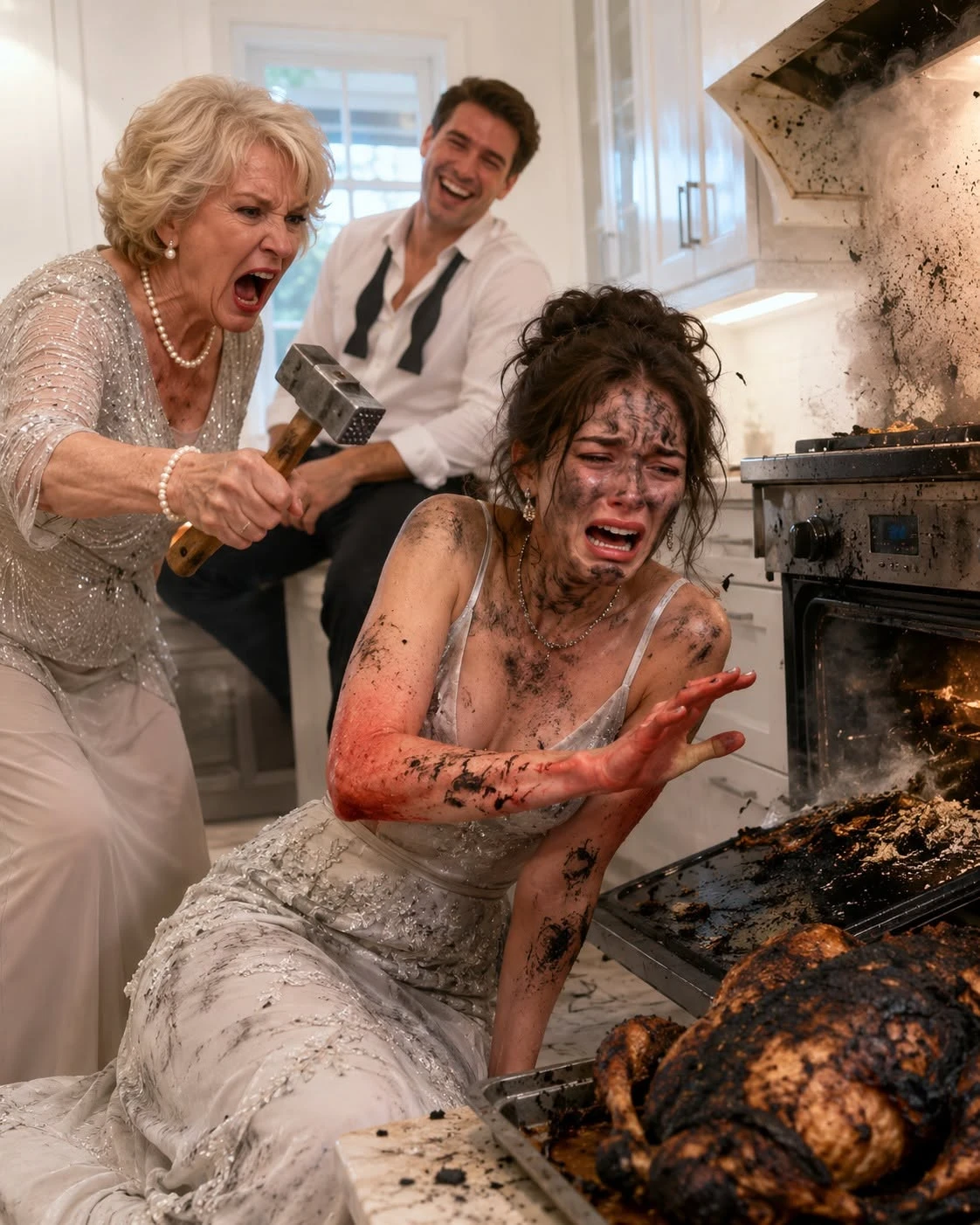
Table of Contents 5
The hearing was set for the second week of December, a cold gray morning that made the courthouse look like it had been carved from old stone and regret. I arrived with my arm in a brace, my left hand still weak but no longer useless, and a calm so complete it startled even me.
Fiona walked beside me in a navy coat, carrying the binder that had become the graveyard of David and Barbara’s excuses.
They were already there.
Barbara wore a dark suit she seemed to believe projected innocence. David had put on a tie and the expression of a man trying to look wounded enough to be forgiven. When he saw me, he started to rise, then thought better of it. Barbara did not bother pretending. She glared at my brace as if it had personally insulted her.
The judge listened to the police report, the hospital records, the photographs, the trust documents, and the kitchen footage. There was no drama in the room, only the kind of cold, measured truth that cannot be bullied into changing shape.
Barbara’s lawyer tried to argue self-defense. He did not say it convincingly.
Then Fiona played the clip.
The room went silent except for the faint static of the old kitchen speaker. Barbara’s voice came through sharp and unmistakable: “That’s for ruining the turkey.”
No one spoke after that for several seconds.
The judge looked at Barbara over her glasses with a kind of tired disappointment that was almost worse than anger.
By the end of the hearing, the restraining order was extended. The court recognized the house as my sole property under the trust. David’s financial claims were dismissed. Barbara’s attempt to paint herself as a helpless older woman had collapsed under the weight of her own words.
Outside the courthouse, Barbara launched into one final performance, her face red with fury.
“You’ll regret this when you’re alone,” she snapped.
I stopped beside her, still and composed. “I’m not alone.”
That was when she noticed who had come with me.
Dr. Ruiz, who had become more than a surgeon and less than a miracle, stood with two residents from my department. One held flowers. Another held a small card signed by nurses, techs, and staff from the pediatric wing. My sister was there too, arms wrapped around herself because she was trying not to cry. And just behind them stood Mr. Alvarez, one of my former patients, now nine, with a shaved head growing back in soft curls.
He took one look at Barbara and hid behind his mother’s coat.
Then he spotted me and grinned.
“Dr. Maya!” he shouted. “My mom says you’re the reason I’m still bossing everybody around.”
That broke me open in the best possible way.
Not into grief. Into gratitude.
I knelt carefully, ignoring the ache in my hand, and let him place a sticker on my coat. He chose a silver star.
“Did your hand get better?” he asked.
“Almost,” I said.
“Good,” he said with absolute seriousness. “We still need you.”
I looked up and saw it all at once: my sister’s tears, Dr. Ruiz’s steady smile, my colleagues gathered around me like proof that a life could be larger than betrayal, larger than fear, larger than the house I had once thought was the center of everything.
David stood a few feet away, alone now, and for the first time I saw him not as my husband or even my enemy, but as a man stripped of excuses. Barbara was already talking to her attorney in a furious whisper. Neither of them looked like conquerors anymore.
They looked like people who had gambled on cruelty and lost.
A month later, I returned to work part-time. The first time I scrubbed in for a procedure again, my left hand was supported by a customized brace and my heart hammered so hard I could feel it in my throat. Dr. Ruiz had told me I might not return to the exact same precision for a while, but pediatric neurosurgery is not built on one perfect hand. It is built on training, judgment, patience, and the stubborn refusal to give up when the body demands adaptation.
I learned to work differently. Slower at first. Then stronger.
My team adjusted with me. Patients waited with the kind of trust only children can offer. And every time I walked into the pediatric ward, I remembered why I had spent so many years protecting a life that didn’t always protect me back.
In January, the last loose ends were tied. David signed the divorce papers after realizing there would be no reconciliation, no financial rescue, no home to return to. Barbara moved into a small senior apartment after burning through whatever social capital she had left. David moved with her for three weeks before the arrangement collapsed under its own miserable logic. I heard later he finally got a job at a car dealership two towns over. It was the first time he had earned a paycheck in years.
I did not call to congratulate him.
Instead, I spent my weekends reclaiming the house room by room. I painted over the kitchen wall where the oven had smoked black. I removed the old family photos Barbara had hung as if she were the matriarch of a kingdom she had stolen by force of volume. I replaced the deadbolt, then the curtains, then the mattress. I turned the guest room into a reading room. The dining table became a place for people who loved me to gather without fear.
On the first warm evening of spring, I hosted a small dinner.
My sister came. Dr. Ruiz came. Two nurses came. Mr. Alvarez and his mother came for dessert, bringing homemade flan that made the entire house smell like cinnamon and milk. We ate too much, laughed too loudly, and talked about everything except the year that had nearly broken me.
After everyone left, I stood alone in my kitchen and looked at the place where the turkey had burned, where the mallet had fallen, where my old life had ended in the sharpest sound I had ever heard.
Then I lifted my left hand—healed, scarred, and still mine—and rested it on the counter.
It was not the same hand it had been before.
Neither was I.
But I was here. I was whole enough. I was safe.
And the people who had tried to make me powerless had given me something they never expected to lose:
A reason to build a better life without them.
Other posts