Chapter 4 - The Lie They Tried to Sell
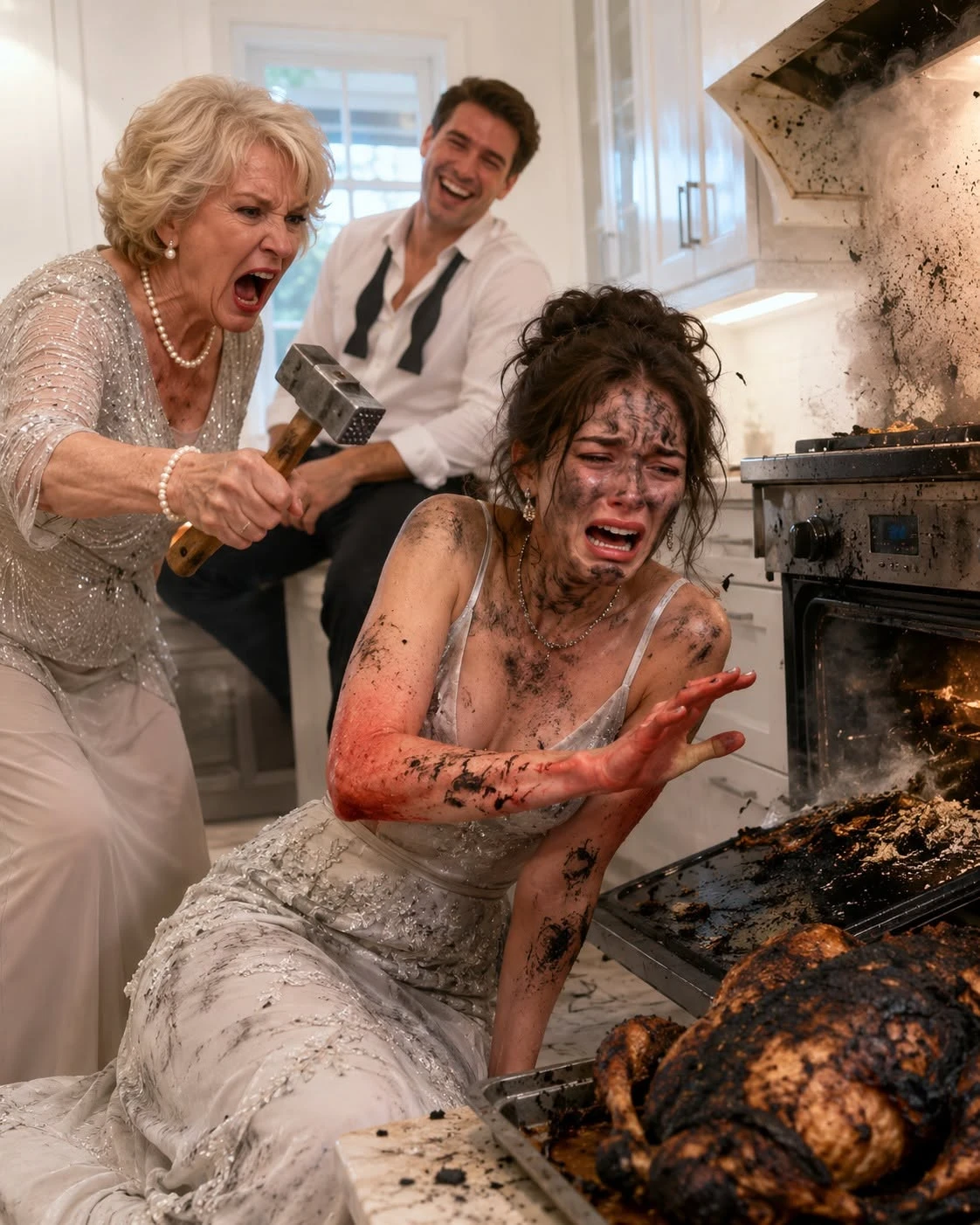
Table of Contents 5
By Wednesday, David and Barbara had transformed themselves into victims in the only way people like that know how: by telling half-truths with enough confidence to make strangers doubt the rest.
Barbara called my sister, then my aunt, then one of my cousins, all of whom wisely ignored her after Fiona sent a summary of the police report. But social media was less careful. A blurry post appeared in a neighborhood group about “an ungrateful daughter-in-law” who had “kicked an elderly woman out on Thanksgiving.” The comments filled with sympathy before someone recognized the house in the background and posted, very quietly, that the property had always been under Maya Lin’s trust.
Once that happened, the story started to collapse under its own weight.
David tried damage control. He told anyone who would listen that I was stressed from work, that doctors exaggerated, that Barbara had “only defended herself after Maya started screaming about the turkey.” He even posted a pathetic, polished statement about “family conflict” and “a private misunderstanding being weaponized.”
It might have worked on people who didn’t know us.
It did not work on my staff.
By the next morning, a video had spread among a small circle of people David had underestimated: nurses, residents, and one former patient’s mother who remembered me because I had once sat with her son for twenty minutes explaining a brain scan in language a frightened eleven-year-old could understand.
No one posted the kitchen footage publicly. That would have been too easy and too cruel, and besides, Fiona had already warned me not to hand them any more drama than necessary. But enough people had seen the timestamped still images. Enough people knew that the silence in that kitchen had not been mine alone. Enough people understood that a woman with fractures and a splint was not the same as a woman who had attacked anyone.
Most importantly, the legal side had already begun moving.
Barbara was furious when she learned the trust would not bend around her temper. David was furious when the joint account transfer failed and the car insurance lapsed because he had not updated a single document in his own name. His phone calls to me shifted from angry to pleading in less than a week.
Maya, please.
We can work this out.
Mom didn’t mean it.
I know you’re hurt.
You don’t want to do this publicly.
The hypocrisy was so thick I could almost smell it through the screen.
I didn’t answer.
Instead, I went back to the hospital for the first follow-up appointment with Dr. Ruiz. My hand was still wrapped, but the swelling had lessened enough for her to reassess the nerve response. She moved my fingers with careful hands while I watched her face for truth.
“You’ve got healing to do,” she said. “But the repair held. You’ll need therapy. Weeks, maybe months. There will be pain.”
“I can handle pain.”
She gave me a look that suggested she believed I could handle most things except, perhaps, idiots.
“Then handle rest too,” she said.
I almost smiled.
The staff treated me gently when they saw the splint, but I refused special pity. I wasn’t interested in becoming a tragedy in anyone’s mouth. I wanted my life back, not a halo.
The next real blow came from David himself.
He showed up at the recovery apartment building after hours, apparently thinking he could catch me without Fiona. He wasn’t allowed upstairs, so he waited in the lobby like a man with an appointment he didn’t deserve. When I came down to collect a package, there he was, holding a paper bag from my favorite bakery—the same one he had mocked for being “too expensive” whenever I bought pastries for my residents.
He looked tired, unshaven, and carefully sorry in the way people rehearse in mirrors.
“Can we talk?” he asked.
I kept my distance. “No.”
“I know you’re angry.”
“Angry is not the word.”
He swallowed. “Barbara’s been hard to live with. You know that. You know she gets upset.”
I stared at him. “You let her smash my hand and then you came home to eat dinner.”
He flinched. “I panicked.”
“No,” I said quietly. “You were comfortable.”
That landed. I could tell it did.
He stepped closer. The doorman shifted, ready to intervene. “You’re making a huge mistake,” David said, his voice low now. “If you go through with this, people will think you’re cruel. They’ll say you abandoned your husband and his mother after she stayed with us for years.”
“She stayed because I allowed it,” I said. “And you know what else? She wasn’t staying for me.”
His face hardened. “You don’t know everything.”
“Then enlighten me.”
He almost did. I saw it happen—something desperate and ugly rising behind his eyes.
Instead, he looked away.
That was answer enough.
I moved to step around him, but he caught my good wrist lightly, not hard enough to leave a mark, but enough to remind me how quickly men like him confuse restraint with ownership.
“Don’t,” I said.
He let go, but too slowly. The doorman was already there.
“Sir,” he said firmly, “you need to leave.”
David muttered a curse and backed away, the bakery bag sagging in his hand.
The next day Fiona called with an update from the hearing. Barbara had tried to contest the restraining order by claiming I was “emotionally unstable” and “obsessed with control.” She brought no evidence, only outrage. David attempted to pivot to property rights, but the trust documents and payment records made that argument die in the courtroom before it had a chance to breathe.
“Her attorney was not happy,” Fiona said dryly.
I leaned back against the pillow. “Barbara has an attorney?”
“Not for long, if she keeps lying to him.”
A beat of silence passed before Fiona added, “There’s something else.”
My pulse sped up. “What?”
“The kitchen camera captured a few seconds after the impact. Barbara said, and I’m quoting exactly, ‘That’s for ruining the turkey.’ It’s on the recording, clear as day.”
I shut my eyes.
There it was.
The final thing their story could not survive.
Not just violence. Not an accident. Not a misunderstanding. Intent.
By Friday, David stopped calling.
Barbara did not.
She left one voicemail after another, each more frantic than the last. At first she was threatening. Then crying. Then suddenly old, frightened, and furious all at once.
“You’ve embarrassed this family,” she hissed in one message. “You ungrateful little girl, after everything I did—”
I deleted it before she could finish.
The best part of justice is not the dramatic part people imagine. It is the quiet. It is the moment a person realizes no one is coming to rescue them from consequences they manufactured themselves.
And in those quiet days, while my hand slowly began to heal, I started to understand something I had not allowed myself to believe before:
They had not only broken my hand.
They had broken the illusion that keeping the peace was the same as keeping myself safe.
Other posts