Chapter 5 - The Hearing on the Twelfth Floor
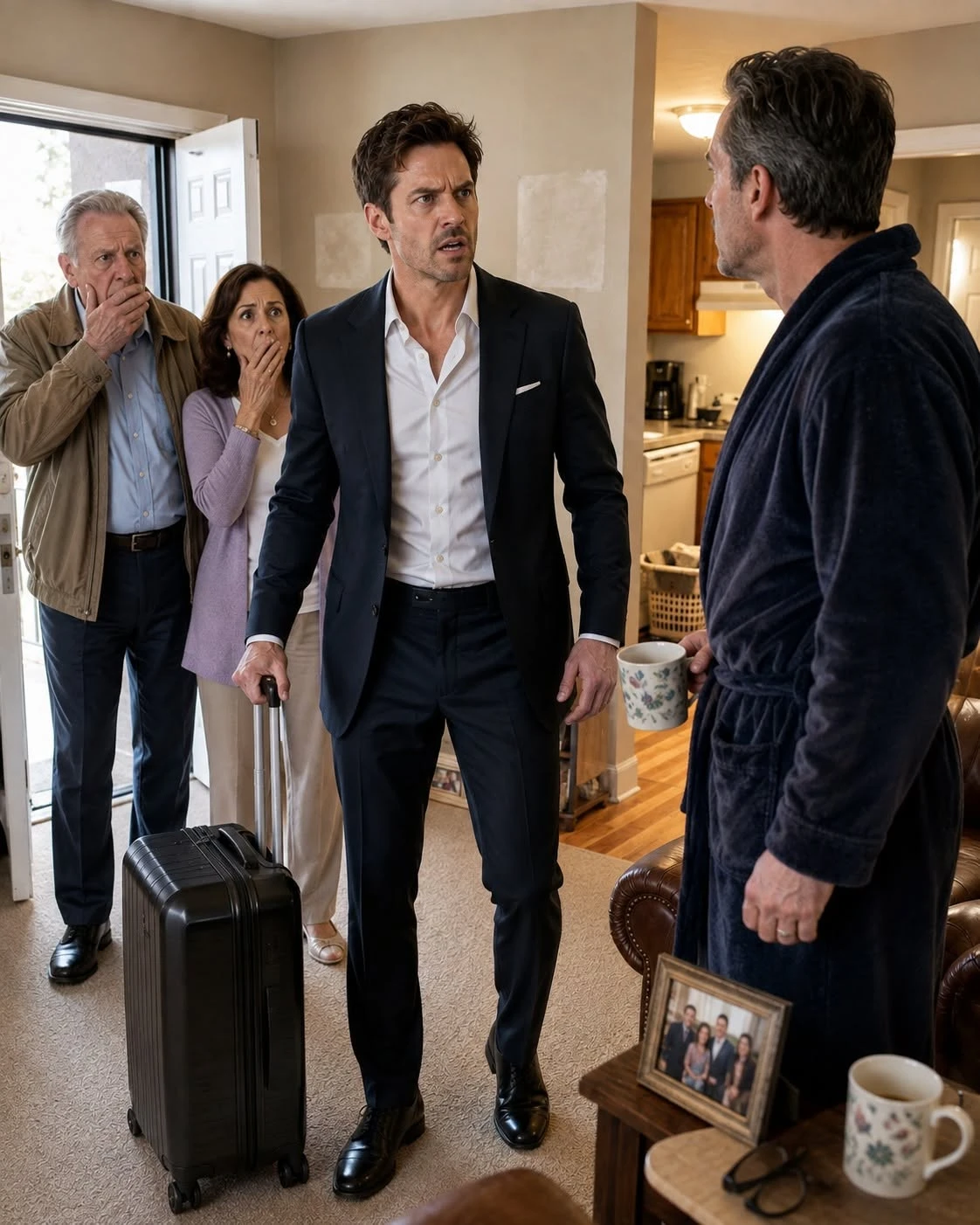
Table of Contents 6
The hearing was scheduled three days later on the twelfth floor community room, because apparently that was the fastest way the city could pretend it was taking us seriously.
By then, everyone on my floor knew something ugly had happened. People who had never said hello to me before suddenly brought coffee, printed screenshots, and old mail they had saved “just in case.” Mrs. Lopez had become a one-woman evidence collection office. Harold had a list of every midnight scream, every package delivery, and every time Mrs. Keene had been seen entering the building after hours.
Owen, despite everything, showed up in a clean shirt and with a folder of his own.
“I should probably hate this place,” he told me before the hearing started.
I thought about that. “Do you?”
He glanced down the hall where people were gathering with their arms crossed and faces hard.
“No,” he said. “I think I hate what people do when they think nobody will challenge them.”
That, more than anything, was the lesson of the week.
The hearing itself should have been boring. Landlords, lawyers, building compliance officers, city reps, police reports, everybody trying to sound calm while the room vibrated with anger. Instead, it became the kind of public unmasking that never looks dramatic until the exact second the truth lands.
Mrs. Keene was there, dressed more plainly than usual. The man in the dark coat was not. He had disappeared, which somehow made him seem even more dangerous.
They started by claiming the occupancy change had been a clerical error. Then they claimed Briarstone Residential Solutions had acted independently. Then, when the forged documents came out, they claimed the signatures might have been copied from prior correspondence.
Rachel spoke next.
She told the room exactly how she had been tricked by emails that looked like they had come from me, how they had used old family details and my overseas status to make her believe I had authorized a temporary arrangement. She admitted she had been angry with me for years, which made her easier to manipulate, and the honesty of that admission changed the room. People trust flawed confessions more than polished lies.
Then Owen took the floor.
He laid out his own chain of events: the listing, the supposed leasing agent, the move-in inventory, the midnight screams, the threats of eviction when he started asking questions. He handed over a folder containing everything he had downloaded from his email and bank records. He was calm in a way I hadn’t expected.
“I was not trespassing,” he said. “I was also lied to. I was also paying rent. And I was also told to disappear quietly.”
The room went silent.
A city compliance officer asked for the utility records. Another officer requested the notary audit. One of the building board members, who looked increasingly pale, muttered that they had never approved third-party occupancy transfers.
That was when I stood up.
My hands were shaking, but I had reached the point where fear no longer outweighed anger.
“I left this apartment because I had to work overseas,” I said. “I kept paying for my life from another continent. I answered every official email I received. And while I was away, someone decided my home was idle space to be harvested. They took my photos, my furniture, my records, and then they tried to use a stranger to make me look crazy when I came back.”
I held up the picture of my father, still in its frame.
“This was on my wall when I left. It was in storage when I returned. That means somebody knew exactly what mattered enough to hide.”
For a moment nobody moved.
Then Mrs. Keene’s composure cracked.
Not fully. Just enough.
She said, “You think this started with us?”
Everyone turned.
She looked as if she regretted speaking, but once the words were out, she kept going.
“The building owner was behind on taxes. Briarstone promised a rescue plan. We were told to stabilize occupancy, minimize vacant losses, and hold units under temporary contracts until the owner could refinance. They said it was temporary. They said nobody would be harmed.”
“Then why hide the records?” Rachel asked.
Mrs. Keene gave a short, bitter laugh. “Because once they started making money, the temporary part ended.”
That was the final crack.
Not in the heart of the fraud—the evidence had already done that—but in the illusion that this was a one-off mistake. It wasn’t. It was a system built on enough small lies that each person inside it could convince themselves they were only doing one harmless part.
The police arrested Mrs. Keene before the hearing was over. The city compliance officer suspended the building’s management contract the same day. Briarstone turned out to be a shell company with offices in three states and a trail of complaints too long for anyone to ignore once the press got hold of it.
But the most important moment came after the formalities ended.
Maya arrived.
I hadn’t told her to come. I had expected her to stay angry, and if I’m being honest, I would have understood. I had been absent for too long, too often, in too many ways. But there she was at the back of the community room, carrying a cardboard folder and wearing the expression of someone who had made a decision she hadn’t wanted to make.
She looked at me first, then at Rachel, then at the mess of people and papers and damage.
“I got your message,” she said.
I blinked. “What message?”
She held up her phone. “The one that said if I cared about the apartment, I should check the cloud folder you left me from two years ago.”
My breath caught.
“I never sent that,” I said.
She opened the folder and slid it across the table.
Inside were screenshots of old messages, photos, and one saved video from the day I had left for the overseas assignment. In it, I stood in my living room and told Maya I was keeping the apartment exactly as it was until I came home. The camera panned across the walls, the photos, the books, the mug on the counter, all of it.
It was the proof no forged lease could overwrite.
Maya’s eyes were shiny, but her voice was steady.
“I don’t know who sent the message,” she said, “but they made one mistake. They reminded me you actually loved this place.”
That sentence hit me harder than the legal victory.
Because it was true.
Not perfect-love. Not always-present love. But real love, the kind that leaves a space untouched because it matters.
Maya looked at the blue mug in my hands and smiled through tears.
“I remember that cup,” she said.
So did I.
And for the first time since coming home, I felt like the apartment was mine again—not because of a lease or a key, but because the people who mattered could finally see what had been taken from us.
Other posts