Chapter 2 - A Lease That Shouldn’t Exist
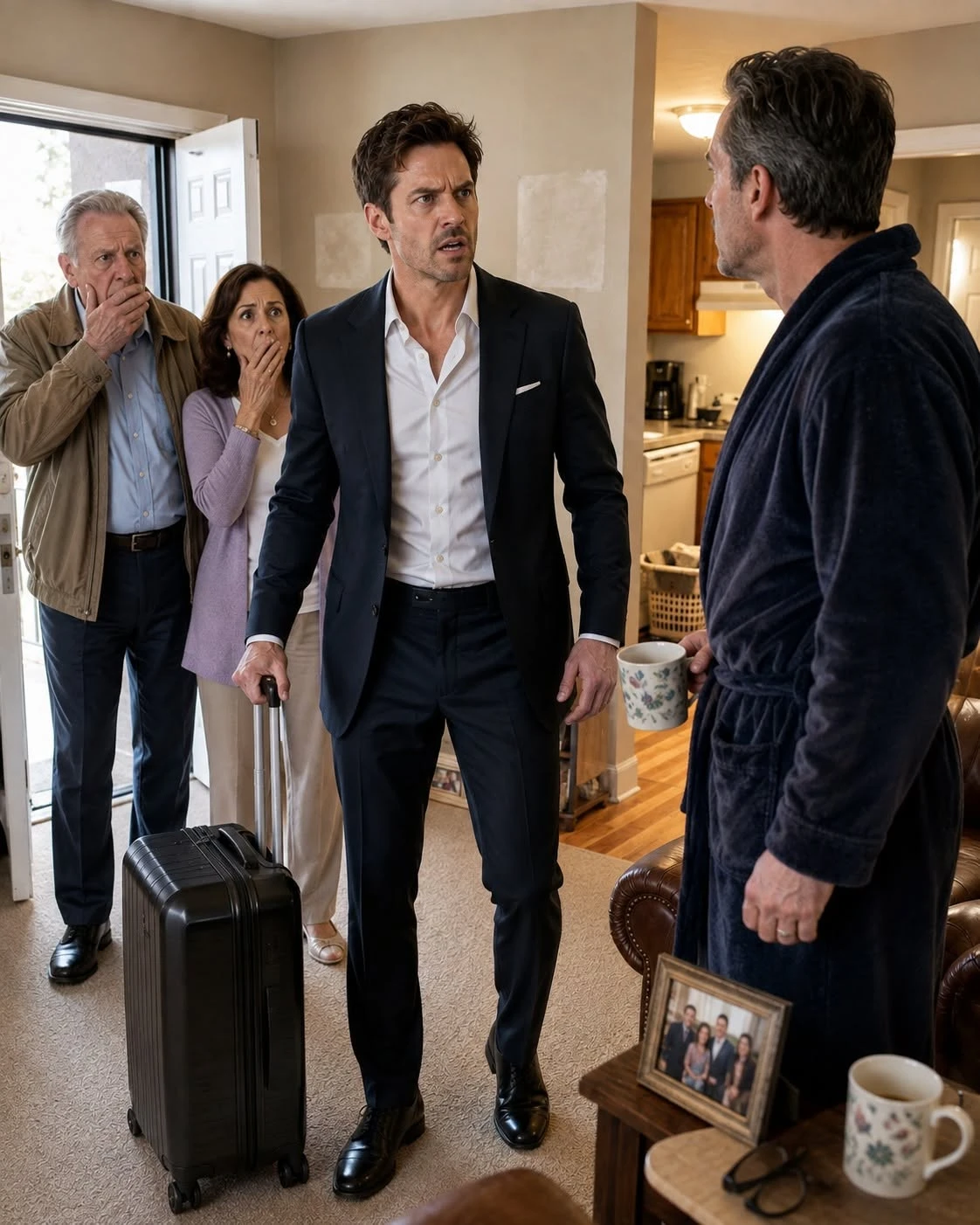
Table of Contents 6
The police arrived to a hallway full of old people, whispered theories, and one very confused man standing in my bathrobe.
I wish I could say they immediately saw the absurdity of it all and sorted everything out. Instead, they did what police always seem to do when two men both swear they belong in the same apartment: they treated us like equal possibilities.
One officer asked me for ID. Another asked the man—who introduced himself as Owen Hart—where he had moved in from. A third wrote down my name, his name, and the apartment number with the expression of someone already exhausted by the universe.
Owen handed over the lease with a stiffness that made him look insulted to even be questioned. He had a driver’s license, a utility confirmation email, and a folder full of printed documents that all seemed, at first glance, horribly real.
My lease had indeed ended. But the record in the building system showed a new occupant, effective eight weeks earlier, with monthly payments already made through an online portal.
The lease bore my name.
Not just my name. My signature, or what looked enough like it to fool anyone who didn’t know the angle I used on the tail of my D’s.
I stared at it until the words blurred.
“This is forged,” I said.
Mrs. Keene, the building manager, arrived five minutes later in a pressed blazer and enough perfume to choke a horse. She looked at me, then at Owen, then at the lease, and she got that precise, fake smile of a person who has already decided who will be inconvenient.
“Mr. Mercer,” she said, in a tone that suggested she was only now remembering me, “you were marked as overseas. Your unit was listed for temporary occupancy.”
“Marked by who?”
She hesitated.
That was answer enough.
Owen looked from her to me. “You told me the apartment was newly available. Furnished. Quiet. Short-term lease only.”
“I told you?” Mrs. Keene repeated, offended. “Sir, the office handled your application.”
“My application?” I laughed once, sharply. “I never applied for anything. I left this apartment locked and empty.”
Her expression did not change, but I saw her eyes flick toward the police.
The officers wanted calm facts, not emotional ones. So they made us all sit separately in the hallway while they ran the lease information, the payment records, and the unit history.
That was when the first real crack appeared in the lie.
The security deposit had been paid from a third-party account, not Owen’s. And the forwarding address on my old mail had been changed to a post office box on the east side of town.
The building’s computer system showed I had authorized the change.
I had not.
My phone buzzed in my hand with a banking alert before anyone could speak. A transfer had been attempted from an old savings account I only used for emergencies. The withdrawal had failed because of a daily limit, but the attempt itself made my stomach turn.
Someone knew exactly where my money was.
I spent the next hour on the phone with my bank, my company’s HR department, and the airline that had booked my return. The results came back like punches: my overseas contract had not exactly ended early by accident. A “notice of transition” had been submitted on my behalf, using an email address I did not recognize. My apartment had been flagged in the building’s system as “vacant pending reassignment.” And my old utility portal now showed a replacement account under my name, opened from a device I had never owned.
Owen sat on the opposite side of the hallway looking increasingly sick. He had the posture of a man who was used to being dismissed and had just realized he might have been tricked into stealing somebody else’s life.
“You really didn’t know?” I asked him quietly when the police stepped away.
He swallowed hard. “No. I work as a freelance project consultant. I took this place because the rent was lower than anything else downtown. I met a leasing agent through the building office. There was a video tour. A signed lease. Everything looked legitimate.”
“Then why the screams?” I asked.
He looked embarrassed enough to die.
“I have nightmares,” he said. “Bad ones. I lost my brother in a house fire three years ago. Sometimes I wake up yelling before I even know where I am.”
So that was the midnight terror the neighbors had been hearing.
Not a monster.
A grieving man with a haunted sleep.
That should have made me feel better. It did not. If anything, it made the whole thing worse, because it meant Owen was a victim too. He had not stormed into my home. He had been handed a key and a lie and told to call them both his own.
Mrs. Keene finally returned from her office with a stack of printed records, and there I found the second piece of the puzzle that made my blood run cold.
On the lease paperwork, listed under emergency contact, was a familiar name.
Rachel Mercer.
My ex-wife.
She and I had been divorced for six years. She had not lived in this apartment in nearly a decade. The paperwork showed she had signed off on a forwarding change and “personal property retention” form three weeks earlier.
“Impossible,” I said.
But my phone rang before I could say anything else.
It was Rachel.
And for the first time since I had walked through my own front door, I was afraid of the person on the other end more than the stranger wearing my robe.
Other posts