Chapter 3 - The Woman Who Answered My Calls
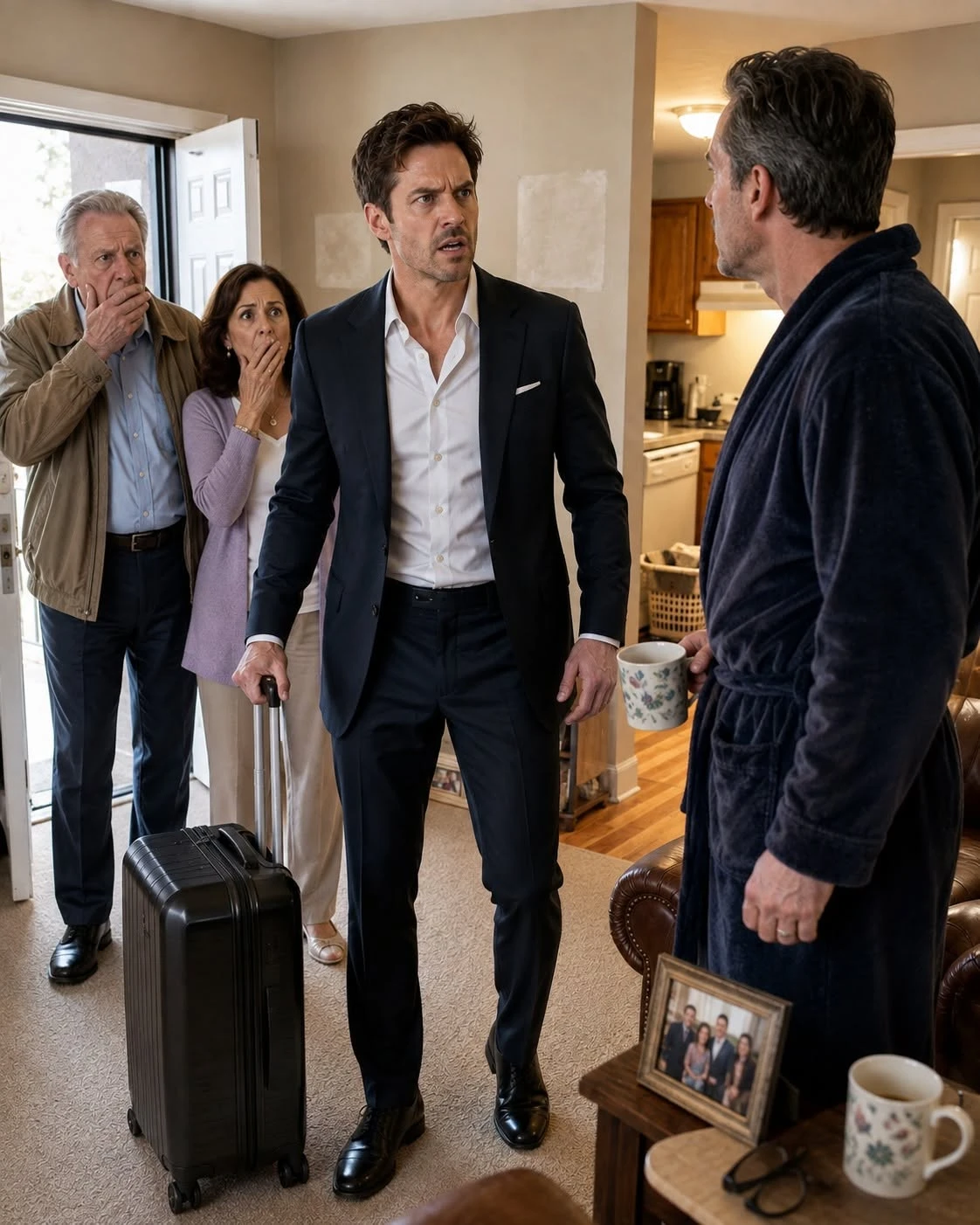
Table of Contents 6
Rachel answered on the second ring, as if she had been waiting for me.
“Daniel?” she said, and the way she said my name made my chest tighten. It wasn’t guilt. It was shock, then anger, and finally something that sounded like fear trying to disguise itself as irritation. “Why are you calling me from your old number? I thought you weren’t back until September.”
I almost laughed. Almost.
“Who told you that?”
Silence.
Then, very quietly: “What do you mean, who told me that?”
I paced the hallway outside my apartment while the police waited for paperwork and Mrs. Keene busied herself with anything except meeting my eyes. Owen stayed near the elevator, looking like he wanted to shrink through the floor. I could feel everyone listening.
“Rachel,” I said, “someone is living in my apartment. They have a lease with my name on it. Your name is on the paperwork.”
She inhaled sharply.
“That’s not possible.”
“Apparently it is.”
“What apartment?”
“You know exactly which apartment.”
She was silent long enough that I thought the call had dropped. Then she said, in a much smaller voice, “Daniel, I haven’t been inside that place in years.”
“Then why did they forge your signature?”
“I didn’t sign anything.”
Her words came too fast after that, spilling over one another. An email had come to her work account two months earlier. It said I was still overseas, that I had gotten behind on a number of administrative things, and that I needed help updating the apartment records because “the building was handling a temporary occupancy change.” The sender had used my full name. It had included old details only she would recognize: the coffee brand I liked, the number of boxes still in my storage unit, even the name of the dog we had when Maya was eight. Whoever sent it had made it feel personal and urgent.
Rachel had assumed I had contacted her because I was in trouble.
“Why didn’t you call me?” I demanded.
“You disappeared into another country for six months, Daniel. When that email arrived, I thought maybe you didn’t want to deal with me directly.”
That was the part that hit harder than I expected. Not because she was right, exactly, but because she was not entirely wrong. We had spent years speaking only in clipped messages about our daughter, Maya, and nothing else. Distance, pride, old wounds—those things had turned us into strangers long before I left Columbus.
Rachel swore she never visited the apartment, never signed the lease, never authorized the forwarding form. But she did send me one thing while we were still on the phone: the email address that had contacted her.
It looked official. It was not.
The domain belonged to a property management outfit I had never heard of: Briarstone Residential Solutions.
I turned to Mrs. Keene and asked who that company was.
Her face changed.
It was only a flicker, but it was enough.
“Maintenance and subleasing support,” she said too quickly. “We use third parties sometimes.”
“For one unit?” I asked.
“For several,” said one of the officers, looking at his tablet. “We’re pulling building records. There have been a lot of unusual account changes here.”
That was when the investigation shifted from bizarre to rotten.
By midnight, it became clear that the apartment was not the only unit affected. Three others on my floor had similar flags—vacancy notices, temporary occupancy agreements, forwarding changes, and lease adjustments that nobody could properly explain. Every paper trail led to the same outside management company, and every attempt to call them resulted in a voicemail box with a disconnected tone.
The older residents in the hallway started talking. Harold remembered seeing men in work uniforms entering apartments when no repairs were scheduled. Mrs. Lopez said she had noticed packages moving between units late at night. Another tenant admitted she had seen Mrs. Keene carrying folders into her office after hours.
Owen went pale when he heard that.
“My lease was through someone at the office,” he said. “A man named Peter. He said he worked with the building’s ‘occupancy transition program.’ He told me there was a unit available because the previous tenant had requested temporary storage while overseas.”
“The previous tenant?” I repeated.
He nodded, and then he reached into the folder he had brought with him and pulled out a paper I had not seen before: a move-in inventory sheet.
Under the section labeled PERSONAL ITEMS RETAINED, there was a list of things I knew too well.
Blue coffee mug with chipped handle.
Navy bathrobe.
Framed family photos.
Books.
The apartment had not been furnished for Owen.
My home had been stripped and repackaged for him.
Someone had gone through my life, item by item, and decided what to keep and what to hide.
I took the paper from him and noticed a detail at the bottom: a signature from the “tenant liaison.” It was a name I had not heard in years.
Nina Mercer.
My ex-wife’s maiden name.
She had signed the form as a witness.
My pulse pounded in my ears.
Rachel had told the truth about not signing the lease. That much I believed. But now I had something else to confront her with, and I hated that I was even considering her a suspect.
When she arrived at the building an hour later, she looked exactly like the kind of person who had already spent the ride over rehearsing defenses. She was still beautiful in the way people who have lived hard years remain beautiful: sharp cheekbones, tired eyes, no patience for nonsense.
She stared at me in the hallway outside my apartment and said, “You look terrible.”
“Good to see you too.”
“That wasn’t a joke.”
“I know.”
She looked past me into the apartment, where the police were taking photographs of the empty wall where my family pictures had been. Her face hardened, not with guilt but with recognition.
“They told me you had agreed to store the frames,” she said. “That you were afraid of shipping damage while you were abroad.”
I laughed without humor. “Who told you that?”
Her mouth opened. Then closed.
Because she had the same answer I did.
No one.
Not really.
Just a chain of messages and forms and fake urgency, each one believable enough that no one stopped to question the next.
But when Rachel saw the inventory sheet, her expression changed again—this time to disgust.
“This is not my signature,” she said.
“I know.”
“I also know that name.” She pointed at the Briarstone letterhead. “My office had a complaint about them a year ago. They were involved in a fake tenant placement ring. They used online listings and forged occupancy records to flip abandoned units.”
Abandoned units.
My apartment had been declared abandoned.
By who?
Rachel looked at me very carefully then, as if she had just connected a line I hadn’t seen.
“Daniel,” she said, “who had access to your office files while you were overseas?”
Before I could answer, Owen’s phone rang. He answered, listened for three seconds, and then went white.
“What?” he said. “No, I’m not the one who—what do you mean the locks have been changed?”
He covered the receiver and looked at me in a panic.
“They changed the code to the building’s access panel,” he said. “And the office just emailed me a notice. I’ve been evicted for unlawful entry.”
We all turned toward Mrs. Keene.
She did not deny it.
And in that instant I understood the shape of the trap. They had not just stolen my apartment. They were trying to make it legal before I could stop them.
Then Rachel handed me her phone.
“There’s one more message,” she said. “It was buried in my spam folder.”
The sender address was the same fake one.
The subject line made my skin go cold.
RETURN TO UNIT 14C OR THE RECORDS GO PUBLIC.
Inside the message was a photograph.
It showed the maintenance corridor behind my apartment wall.
And in the corner of the image, half hidden behind stacked boxes, was a steel cabinet marked in black paint with two words:
PROJECT MARIGOLD.
Other posts