Chapter 4 - Project Marigold
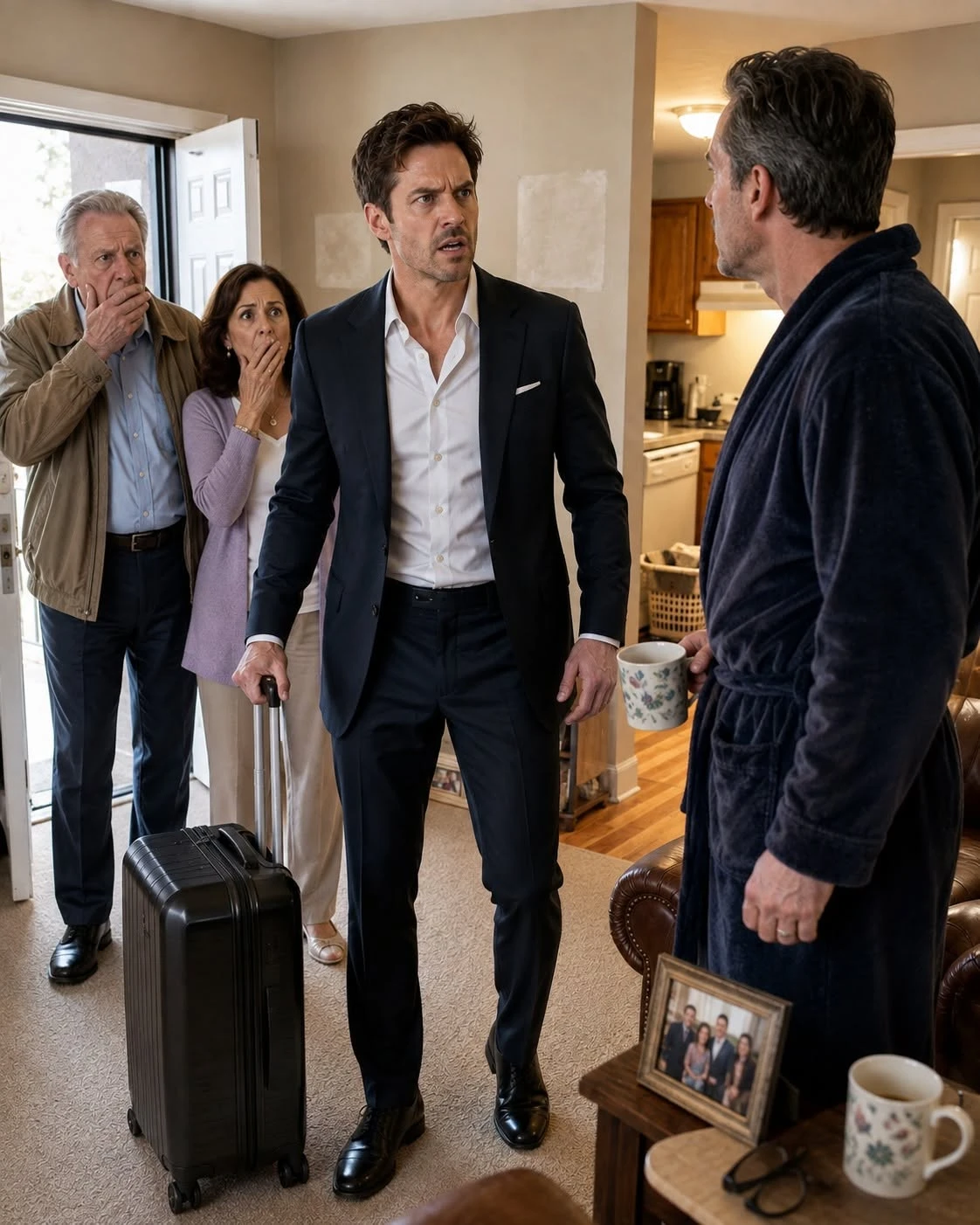
Table of Contents 6
Project Marigold sounded harmless enough to belong to a garden club, a senior housing initiative, or some city grant nobody would notice.
It was none of those things.
By the time we found the old maintenance corridor behind the service closet, the building had gone quiet in the way a place does when everyone realizes something ugly is happening just out of sight. The police were still involved, but paperwork moves slowly when the people responsible for the crime also control the records of the crime.
So we did what desperate people always do when institutions lag behind the truth.
We looked ourselves.
Harold came with a flashlight. Mrs. Lopez brought a screwdriver because she “didn’t trust doors that shouldn’t exist.” Rachel insisted on going too, though I could tell every step felt like it was dragging her back through old mistakes. Owen was the last to agree, and only because he was tired of being told he was a trespasser in a place he had paid for.
The maintenance door behind the service closet had been painted over so many times it blended into the wall. Harold found the latch. Mrs. Lopez found the screws. I found the courage, which turned out to be the least useful tool of the three.
The corridor beyond was narrow, dusty, and packed with old utility boxes, abandoned cable lines, and storage cabinets that looked untouched for years. The first cabinet we opened contained tenant files—real ones, not the cleaned-up versions in the office.
Inside were copies of leases, photo IDs, utility forms, and handwritten notes about “vacancy windows,” “occupant rotation,” and “temporary sublet” periods. One drawer had a stack of envelope-sized manila folders, each labeled with an apartment number and a name that had been erased and rewritten twice.
My unit was there.
So were six others.
And every single folder had a note attached: “Monitor original tenant re-entry potential.”
I stared at that line long enough to feel sick.
“Monitor?” Rachel murmured.
“We weren’t tenants,” Owen said, his voice hollow. “We were inventory.”
There were spreadsheets too. Dozens of them. Monthly rent collected under false names, security deposits shuffled through shell accounts, and payment splits that went directly to the building’s private management vendor and a local notary office that had closed three years ago. The pattern was ugly and organized, which meant someone had been doing this long enough to believe they would never get caught.
Then I found the personal storage box.
My hands shook as I pulled it free. It was labeled with my apartment number, but the contents were mine: my daughter Maya’s graduation portrait, my father’s framed photo, the old vacation snapshots, even the chipped blue mug I thought had been stolen. They had not been thrown away. They had been packed carefully, as if the person handling them wanted to preserve the evidence of my existence for later use.
That was somehow worse.
I sat on the floor with the box in my lap and felt a strange, hot pressure behind my eyes.
Owen knelt beside me and said quietly, “I’m sorry.”
I almost told him it wasn’t his fault. But the truth was more complicated than that. He had been in my life only a few days, but he had already been forced into the center of a lie that was never meant to be his.
Then Rachel found the section labeled MARIGOLD.
Inside were documents that finally explained the screams.
Not supernatural screams.
Not criminal screams.
Data.
Security notes taken by the building’s private contractor, describing complaints from neighbors about “disturbance events” every night around midnight. In one memo, a property officer wrote that the noises were useful because “unexplained nighttime agitation discourages returning claimants from attempting immediate reentry.”
I looked up, horrified. “They used Owen’s nightmares to keep me away?”
Rachel read further, her expression darkening with every line. “They didn’t know it would be his nightmares. They just noted the noise pattern and decided it helped.”
“Helped who?”
She flipped to the final page and went still.
Mrs. Keene.
Her name was there, along with two others from the building office, one of whom was the man who had emailed Rachel. Project Marigold was their internal code name for a tenant-flip scheme built on vacant units, forged emergency contacts, and “unclaimed” personal property. They targeted residents who traveled, worked abroad, or had weak response patterns on their accounts. Then they rented the units out through a shadow management chain, moved the original belongings into storage, and waited to see who would come back.
If the original tenant returned and made trouble, the noise complaints and forged records could be used to paint them as unstable.
If they didn’t return, the building sold the unit as “recovered.”
It was the sort of fraud that thrives in the gap between a busy legal system and a tired neighborhood office.
And Mrs. Keene had been helping.
A hard, clicking sound came from the corridor entrance.
We all froze.
A flashlight beam swept over the doorway and landed on us.
Mrs. Keene stood there, flanked by a man in a dark coat I didn’t recognize and holding a ring of keys like a weapon. Her face was no longer polite. It was exhausted, irritated, and angry in the way guilty people become when they finally realize the world has cornered them.
“I knew you’d go snooping,” she said.
Behind her, the man in the coat smiled like he had been expecting a better performance from us.
“Daniel Mercer,” he said. “Back before the paperwork was finished. That’s inconvenient.”
Rachel stepped forward. “Who are you?”
“Someone who knows how buildings work,” he said. “More importantly, someone who knows how vacancy law works.”
Harold muttered, “I don’t like his face.”
“No one does,” Mrs. Lopez said from behind me.
The man in the coat ignored them. “Mr. Mercer was listed as unreachable. The unit was processed according to policy. If he’s returned early, that doesn’t make our records invalid.”
“You forged my signature,” I said.
“We corrected an administrative gap.”
“You stole my apartment.”
“You abandoned it.”
That word hit like a slap.
I was too angry to think straight. “I was overseas on assignment.”
“And yet your records showed inactivity, your rent transfer lapsed, and your emergency contact verified the transition.”
Rachel turned to me in horror. “The bank. The old account. The email access. They used everything.”
Owen stepped beside me, straightening for the first time since I had met him.
“Then you should be able to explain this,” he said, holding up his lease folder. “Because my paperwork says I signed legally. If you’re so certain your records are airtight, why does every document point to a fake vendor and a dead notary?”
The man in the coat’s smile thinned.
That was when I knew we had them.
Not all the way.
Not yet.
But enough.
He motioned toward the corridor. “Give us the files, and we can still avoid a scene.”
Mrs. Lopez laughed once, sharp as broken glass. “You mean more of a scene?”
And then she did the smartest thing anyone had done all night.
She shouted for Harold to call 911.
Not the building office. Not the private security line. The police.
The man in the coat swore and lunged for the cabinet, but Owen slammed the steel door shut on his hand. The resulting yell echoed down the corridor and up through the walls. Mrs. Keene stumbled back. Rachel grabbed the folder in my hands. Harold, who had spent ninety years being underestimated by men in coats, used his cane like a hook and knocked the key ring to the floor.
Everything happened at once after that.
The corridor door banged open.
Voices shouted.
Someone ran.
And in the confusion, I saw Mrs. Keene not as a villain or a manager, but as a tired, frightened woman who had made one compromise too many and then kept making them until the whole floor turned rotten.
That didn’t excuse anything.
But it explained enough.
By the time the police arrived for real, we had copies of the Project Marigold records, video from the maintenance corridor, and a steel cabinet full of proof that the apartment fraud was not an accident.
It was a business.
And my apartment had just been one of its products.
Other posts