Chapter 5 - The Boardroom Trap
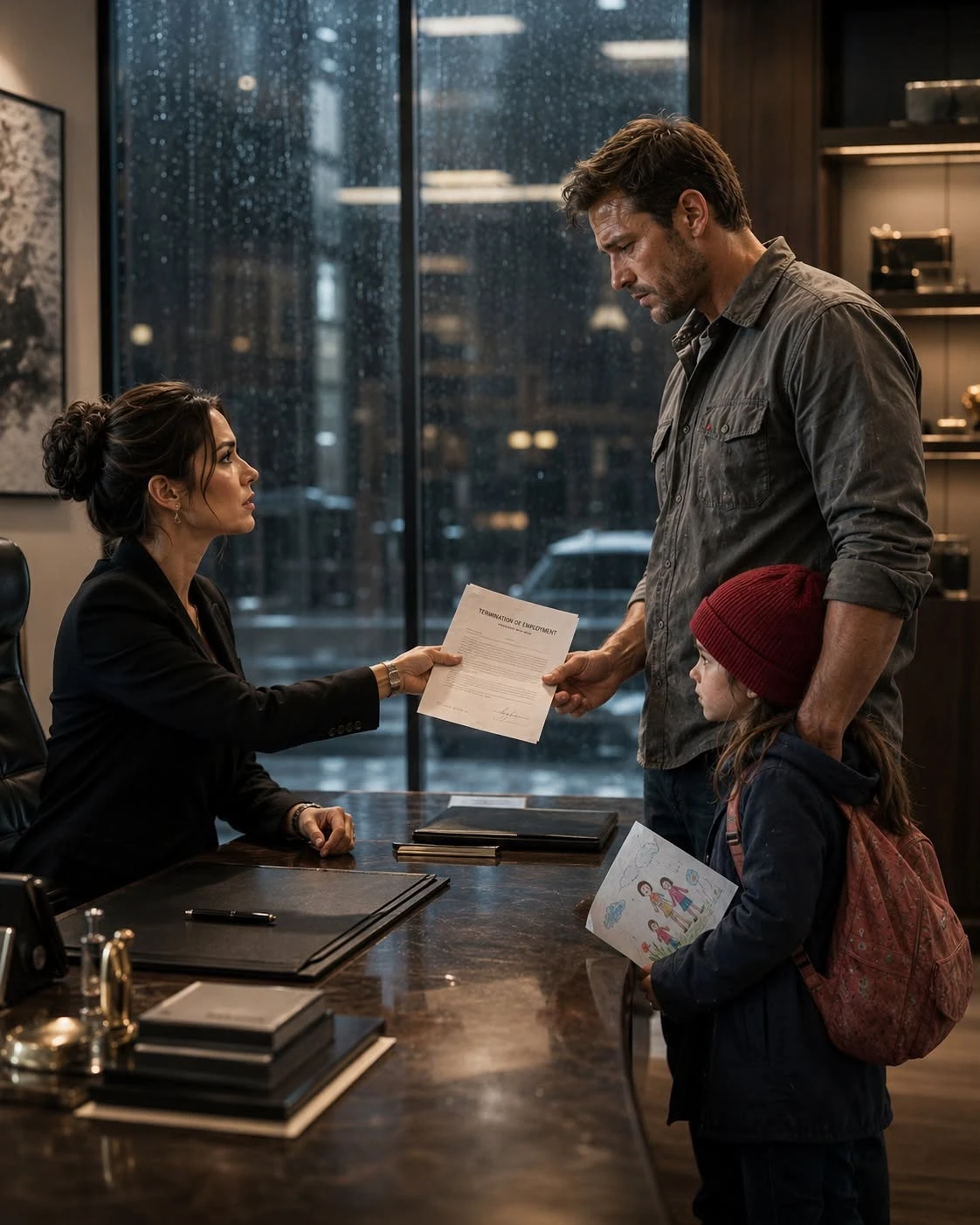
Table of Contents 6
The boardroom on the twelfth floor felt colder than the rain outside.
Every seat was filled. Glass walls. Tension. Legal counsel with clasped hands. Two directors who wouldn’t meet my eyes. Vaughn Pritchard at the far end of the table, immaculate in charcoal wool, wearing the expression of a man who had already decided how this story ended.
He looked at me and smiled as if I were late to my own execution.
“Harper,” he said, smooth as polished stone, “I’m glad you could join us.”
I set Declan’s folder on the table with both hands so no one would miss it. My pulse was loud in my ears, but my voice came out steady.
“This meeting was called to review the Wilmington-to-Charleston transfer failure,” I said. “And to correct a false narrative before it becomes company policy.”
That got their attention.
Vaughn’s smile thinned. “A dramatic entrance. I assume you’ve found a scapegoat.”
“I found evidence.”
I opened the folder and slid the first page toward the board: the audit trail, highlighted in yellow where the system had been altered. The room shifted. Pens stopped moving. Someone at the far end leaned closer.
“Step seven was rerouted twice in thirty seconds,” I said. “Not by accident. The override used senior-level credentials. The command chain was scrubbed, then the scrubber was scheduled for purge.”
Vaughn gave a small laugh. “Technical noise. You’re presenting fragments and calling them a conspiracy.”
“I’m presenting your signature pattern.”
His jaw tightened, just once.
I turned the next page. The shell routing account. The payment trail. The unusual benefit hidden behind a clean freight record and a manufactured delay.
“Someone used our system to move value through a dormant account,” I said. “Someone who knew the legacy platform well enough to hide in its blind spots. Someone who wanted the shipment frozen long enough to shift blame upward.”
A murmur moved around the table.
Vaughn leaned back. “And you arrived at me by consulting the employee you fired yesterday?”
The room turned toward the door as it opened.
Declan stood there soaked from the rain, his gray shirt dark at the shoulders, one hand holding a folded document pouch against his chest. He looked exhausted and unflinching at the same time. Behind him came Ava.
My sister.
She stopped just inside the room, her face pale but determined. For one impossible second, I could only stare at her. Then she met my eyes and gave the smallest nod, as if to say: Let me do this.
Vaughn recovered first. “This is a private board session.”
Ava’s voice was soft, but it carried. “Then it’s a private lie if you leave him out.”
Every head turned.
I saw recognition bloom on the faces around the table when Declan stepped farther in. He was the man I had dismissed. The man the board had probably already filed away as inconvenient.
Ava pointed at him with a trembling hand. “Years ago, he pulled me out of a crash on Mercer Avenue. He stayed with me until the ambulance came. He gave my name to the paramedics because I couldn’t remember it. He saved my life.”
No one spoke.
Not even Vaughn.
Declan didn’t look proud. He looked tired, and strangely resigned, as if being seen had always been the most dangerous thing that could happen to him.
Vaughn’s voice sharpened. “What exactly does that have to do with a shipment failure?”
Declan answered before I could.
“Enough,” he said quietly. “Because while Ms. Whitford was being told I was unreliable, somebody else was using my absence to cover a manipulated handoff. I didn’t cause the freeze. I noticed the tampering too late because I was trying to keep my daughter alive.”
That sentence hit the room like a dropped weight.
He placed the document pouch on the table and opened it. Inside were printed backup logs, timestamped screenshots, and a handwritten note of system behavior he had tracked for years. The board’s counsel picked up one page, then another. His expression changed first. Then one of the directors frowned hard enough to carve lines into his forehead.
Vaughn pushed forward in his chair. “You expect us to trust a fired employee over corporate oversight?”
I looked at him then, really looked.
“You didn’t just want the transfer to fail,” I said. “You wanted confusion. You wanted pressure. You wanted me isolated and desperate enough to accept your version of events.”
His eyes flashed. “That is absurd.”
“No,” I said. “What’s absurd is thinking I wouldn’t notice the shell account when the routing pattern was built to enrich someone with access to the board’s confidence.”
The room went silent.
Vaughn’s mask cracked. Just for a moment, the charm fell away and I saw something harder underneath. Anger. Fear. Exposure.
He tried again, more sharply now. “You’re accusing me because you fired the wrong man and now you need a story that makes you look competent.”
I heard the old Harper in that accusation—the one who would have flinched, defended herself, protected the company image at any cost. But that Harper had left the room the day I watched Declan kneel to zip his daughter’s raincoat and still say thank you after I destroyed his stability.
So I did the only thing that mattered.
“I did fire the wrong man,” I said, my voice ringing against the glass. “And I’m not going to hide behind that mistake to protect a liar.”
For the first time since this began, Vaughn had nothing elegant to say.
The counsel was already checking the logs. The directors were whispering. One of them asked for the original commands. Another asked why a purge had been scheduled. Another asked who approved the override.
Vaughn looked from face to face and realized the board was no longer listening to him.
Then my laptop chimed.
Once.
Twice.
A warning banner flashed across the shared screen: the final audit package was still queued for deletion. The purge window had narrowed to minutes.
Declan looked up sharply. “If that file goes, you lose the clean command path.”
My stomach dropped.
One of the directors turned to him. “Can it be recovered?”
Declan’s face went still, the way it had outside my office the day I fired him.
“Yes,” he said. “But only if I get to the legacy terminal before the purge completes.”
And in that terrible instant, with Vaughn finally exposed and the board staring at us like we were standing on the edge of a cliff, I understood the next problem.
The truth was out.
The shipment was still frozen.
And the company still needed the man I had thrown away to save it.
Other posts