Chapter 5 - Proof of Blood
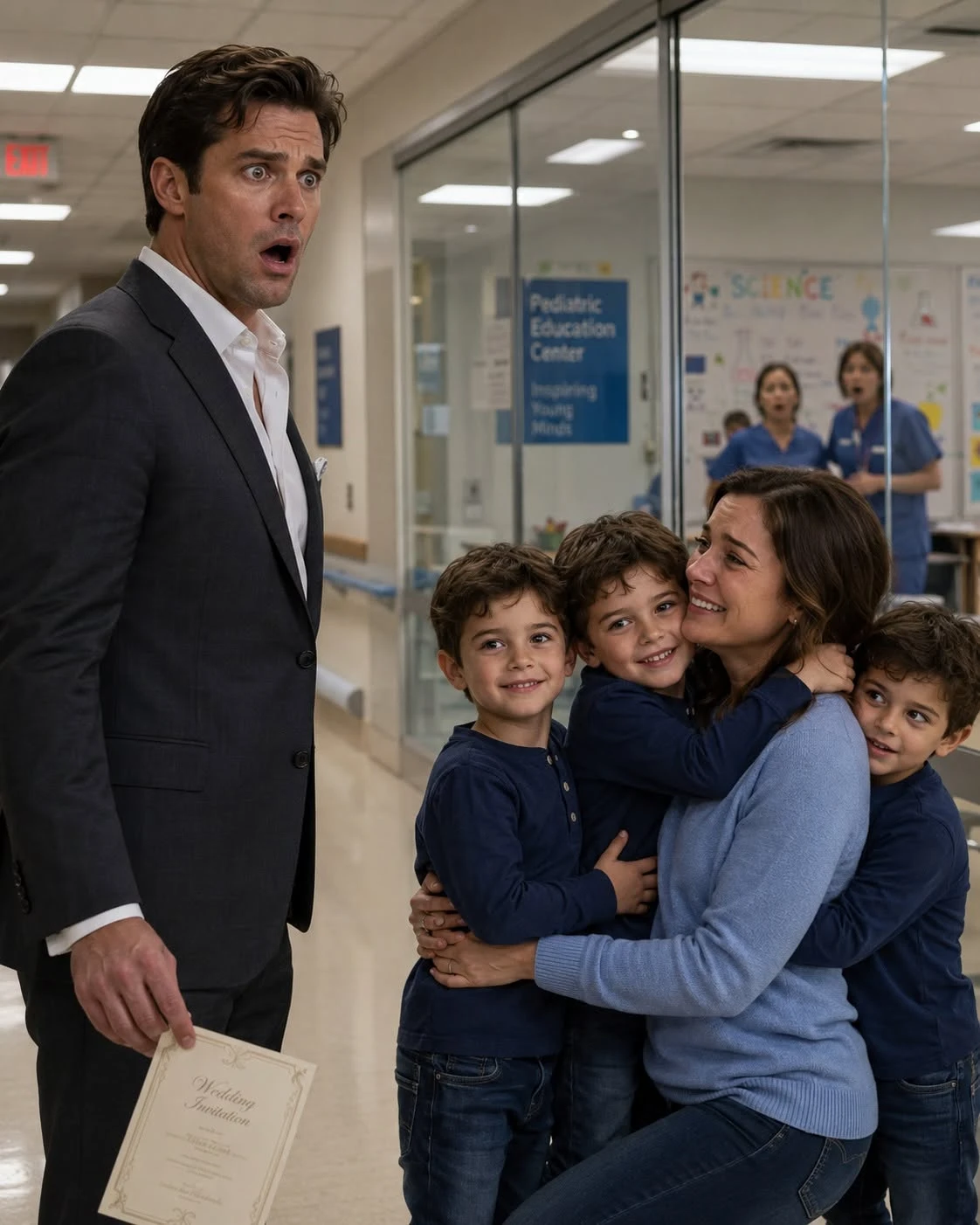
Table of Contents 7
The envelope from the lab sat on Clare’s desk like it was too dangerous to touch.
I had stared at it for ten straight minutes before I finally broke the seal with fingers that felt numb. The room around me was quiet except for the low hum of the vents and the distant sound of children laughing somewhere down the hall. That sound should have steadied me. Instead, it made my pulse climb harder.
Clare stood near the window with her arms folded, giving me space without offering comfort. She had learned that lesson about me years ago: I hated comfort when I was afraid. I wanted facts. Clean lines. Proof. Anything that could be measured.
So I opened the page.
My name. The boys’ names. The result in black print.
99.9999 percent probability.
Three times over.
I looked at it once, then again, because my mind rejected the words the first time it understood them.
“They’re mine,” I said.
Clare did not move. “Yes.”
The single syllable landed harder than any argument could have.
I sat down without meaning to. My hand went to my mouth, and for a moment I felt something I had not allowed myself in years: not control, not anger, but raw, humiliating grief. I had stood in that hallway with those boys and felt the world split open. Now the split had a name, and it was mine.
Clare crossed the room and set another file in front of me. “Dr. Foster said she’d come by after her shift. She remembers enough of the timeline to back it up.”
I forced myself to look up. “You arranged all this?”
“I arranged the test,” she said. “The truth didn’t need arranging.”
That stung because it was deserved.
Dr. Helen Foster arrived twenty minutes later, still in her white coat, tired but precise. She did not waste time on sympathy. She reviewed dates, gestational estimates, stress indicators, the rushed prenatal care Clare had managed while hiding everything behind a smile for the hospital staff. She remembered Clare coming in late, hands pressed to her stomach, asking careful questions about blood pressure and nausea and whether stress could hurt the babies.
“She was frightened,” Dr. Foster said, closing the file. “Not of motherhood. Of what would happen to those boys if the wrong man had access to them.”
I felt Clare’s eyes on me when she said it.
I deserved that too.
Dr. Foster left us alone, and Clare reached into the locked drawer. This time she did not pull out the photo or the ultrasound. She handed me a folded page covered in her handwriting, dated two weeks before the boys were born.
It wasn’t a letter to me.
It was to herself.
If they ask one day, don’t lie. Tell them he was once good to you. Tell them you loved him before the damage. But do not let them grow up learning to confuse attention with safety. Do not let them believe a man’s money can replace his presence. Do not let contempt be the first language they learn from their father.
I read it twice before I could breathe.
“Clare…”
“No,” she said quietly. “You don’t get to stop at my pain now. Read the whole thing.”
I did.
By the end, my throat had closed so tight I could barely swallow. She had written about fear, about being alone, about choosing silence because every attempt to reach me had ended in humiliation or nothing at all. She had written that she would rather raise them without me than give them a father who might one day look at them the way I had looked at the life I lost: as an inconvenience.
I set the page down carefully, like it might tear if I touched it wrong.
“I would have been a terrible father then,” I said.
Clare’s face did not soften. It sharpened. “Yes.”
The honesty was brutal, and I respected her for it.
I dragged a hand across my mouth. “I didn’t know.”
“No,” she said. “You didn’t want to know. There’s a difference.”
That hit the deepest because it was the kind of sentence that could only come from someone who had loved me enough to notice the shape of my failure before I did.
I stood and looked toward the door, toward the hall where my sons were somewhere out of sight and still unaware of how much of their life had just changed. “What do they know?”
Clare answered without hesitation. “That their father was a man I once loved. That I hoped he had good in him. That he is not someone they get to meet until I know he can stand in their lives without turning them into a stage.”
I let out a slow breath that felt like it scraped something clean inside me.
“And you think I can’t do that,” I said.
“I think,” she replied, “that the man who came here with a wedding invitation to hurt me already proved he can’t be trusted with what matters.”
I had no defense for that, either.
My phone buzzed before I could answer. Sabrina’s name flashed across the screen. Then again. Then a message.
Are you serious about postponing the wedding?
I looked at Clare once, then at the DNA report in my hand.
I typed back with a thumb that shook despite everything I had learned.
The wedding is postponed.
Her reply came almost instantly.
Do not do this publicly, Damen.
A second message followed, colder.
If you humiliate me in front of everyone, I will make sure the people at Clare’s hospital know exactly who she is. I’ll release what I have, and your sons will not be protected from the fallout.
My stomach turned.
Clare saw my face change. “What is it?”
I didn’t lie to her. Not this time.
I held out the phone.
And watched her expression go still.
Other posts