Chapter 4 - The Woman in the Invitation
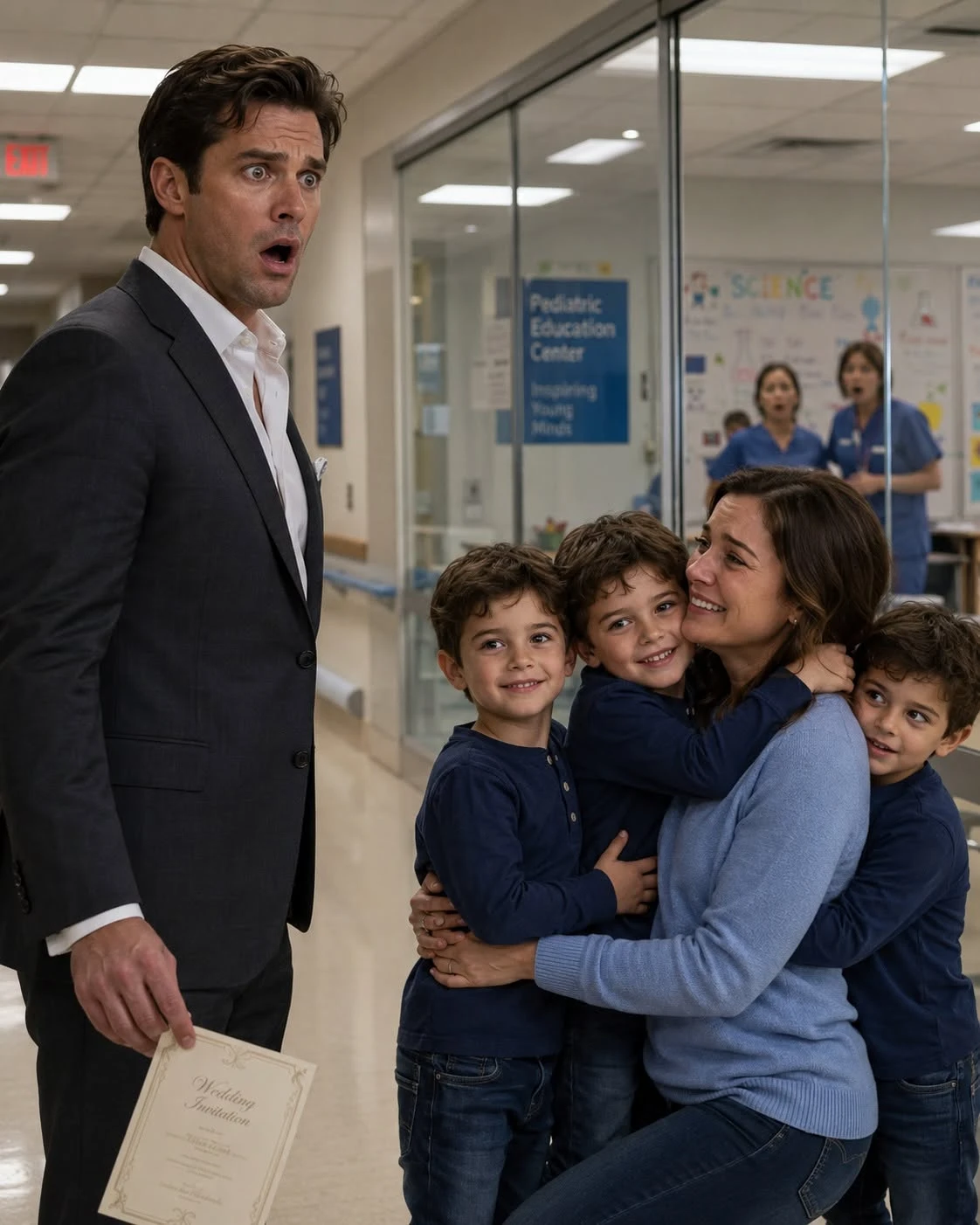
Table of Contents 7
Sabrina Lane lived in a world where every room looked expensive before anyone spoke.
Her penthouse office sat above downtown in a clean sheet of glass and steel, all gray stone, pale leather, and a city view so sharp it felt calculated. She looked up from her tablet when I walked in, and for one second she smiled the way she always did in public.
Then she saw my face.
The smile vanished.
“You look like hell,” she said.
“I found Clare Weston.”
The room went still. Not completely. A city never really stopped. But the air around us tightened.
Sabrina set the tablet down with the careful movement of someone placing a blade on a table. “Damen—”
“And I found three boys who look like me.”
That landed. I watched it land.
Her eyes flickered once, just once, toward the window. Not surprise. Calculation.
I took a step closer and pulled the folded intake note from my pocket. “This name means anything to you?”
She did not reach for it. She did not ask to see it. She already knew enough to be careful.
“I know you’ve been chasing ghosts all day,” she said. “If this is about that woman trying to rewrite your life because you happen to be getting married, you need to breathe.”
“That woman,” I said, and my voice came out colder than I meant it to, “may have given birth to my children.”
Sabrina’s jaw tightened. There it was. Not confession. Not innocence. A crack.
“I knew she tried to contact you,” she said at last.
I stared at her. “You knew.”
“She reached out during the divorce. A letter, a call, maybe more than one. I saw enough to know she was not stable, and I did not think you needed that in the middle of trying to build something real.”
“Real,” I repeated. “You mean my company. My image. My life with you.”
Her chin lifted. “I mean your future.”
I laughed once, without humor. “That’s a beautiful word for control.”
Her expression hardened. “I protected you.”
“No. You decided for me.”
The words hit harder because they were true in a way I hated recognizing. I had built an empire by making decisions before other people finished speaking. I had called it leadership. I had called it clarity. Standing there in Sabrina’s office, I could hear my own voice in hers.
If it was useful, I filtered it.
If it was messy, I buried it.
If it hurt, I told myself it was for the best.
Sabrina took a slow breath. “Clare left once. She had her chance. Now she’s showing up with a story that conveniently places her in the path of your money and your reputation.”
“Her boys are four.”
“That does not make her honest.”
“No,” I said. “But it makes them real.”
For the first time, Sabrina looked angry enough to stop polishing herself. “And what exactly are you planning to do? Tear apart your wedding because a former wife appears with three children and a sentimental drawer of old letters?”
I looked at her and saw, with brutal clarity, how easy my life had become to perform. The meetings. The invitations. The polished partner standing beside me. The future arranged like furniture.
Then I remembered Clare’s face in the hospital hallway. Not pleading. Not scheming. Guarded. Tired. Protective.
“I’m going back to the hospital,” I said.
Sabrina stood. “Damen, don’t be stupid.”
The word was soft, but the threat inside it was not.
I ignored it.
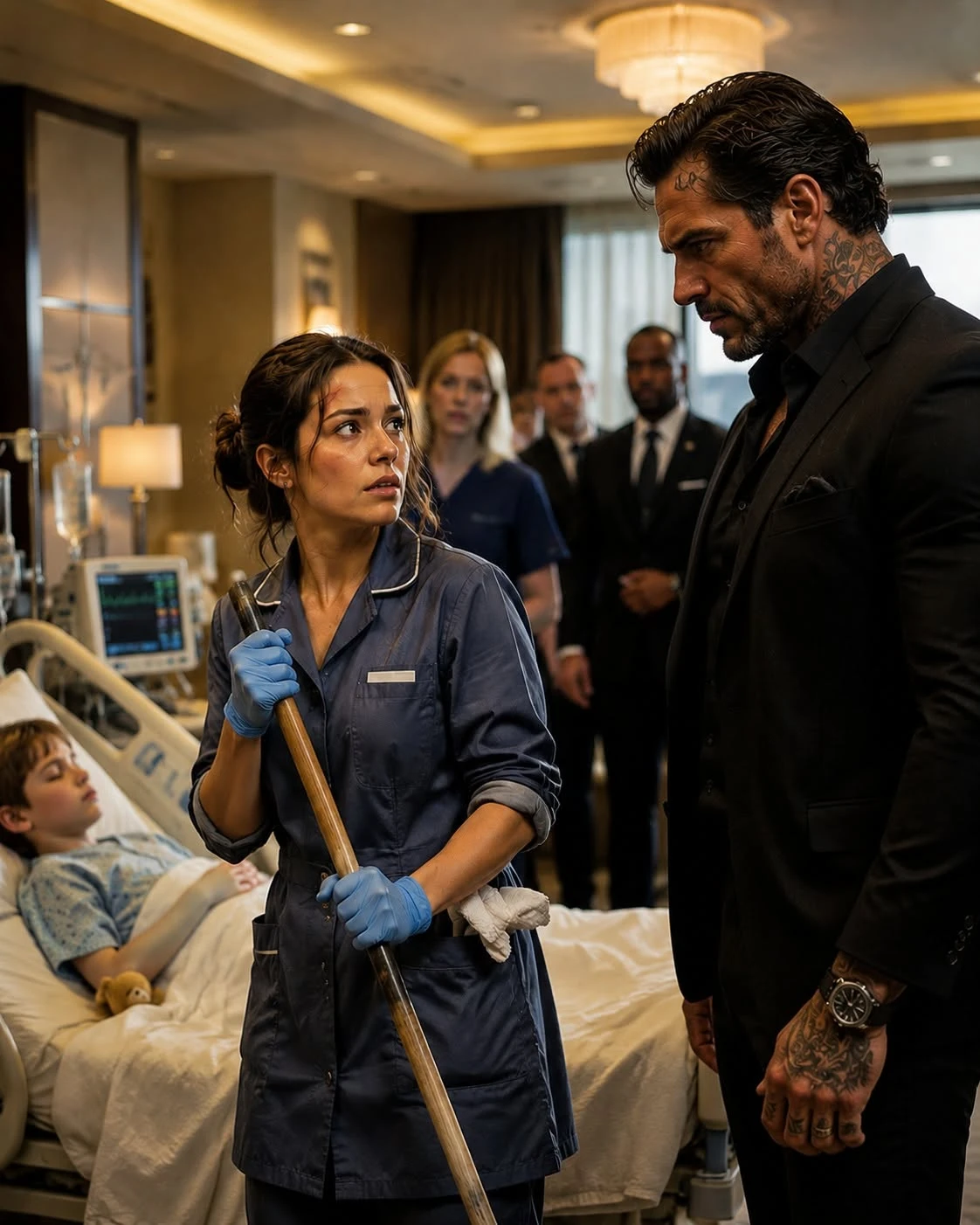
The hospital room where Clare had been teaching children earlier was quieter now, the lesson over, the chairs stacked. I found her in a small family lounge with the boys. One was bent over a paper bridge, another was arguing about tape, and the smallest sat on the floor with his knees tucked up, watching all of them like he was already older than he should have been.
Clare looked up when I entered.
I waited for fear, or anger, or another dismissal. Instead, she just held my gaze and said, “You came back.”
“As promised.”
“You keep using that word like it means something.”
It should have stung more than it did. Instead, I looked at the boys and saw ordinary disorder: a torn worksheet, a spilled juice box, one sock half off. The life I had never known how to imagine. The one I had walked past in a hallway like an idiot carrying a wedding invitation.
“They know?” I asked quietly.
“Nothing they can’t handle.”
“Clare—”
She cut me off with a single look. “Not in front of them.”
I nodded once. That was enough of my old self for one day to know I had earned the warning.
When the boys were distracted with crayons and a hospital-issued puzzle, she led me into the corridor and shut the door behind us.
“I’ll do the test,” she said. “But on my terms.”
I waited.
“No sudden declarations. No promises you can’t keep. No showing up and confusing them because you are upset and want to feel better about yourself.”
“I’m not here to feel better.”
“No,” she said. “You’re here because you finally felt something inconvenient.”
It was a knife, and I let it stay in me.
“Fine,” I said. “Your terms.”
Her shoulders eased by a fraction. “If it comes back positive, you do not walk in and call yourself their father like it’s some title you can take from a shelf. You earn the right to that word.”
I heard the warning, and I accepted it.
Back home, I stood in my apartment with Sabrina’s ring on the table and the invitation still unopened in my hand. For the first time since I had ordered the flowers and the venue and the guest list, I could not picture the wedding clearly. It had started to look like a stage set built around a man who did not exist anymore.
My phone buzzed once.
A message from Clare.
One of the boys asked why the angry man came back twice.
I stared at the screen until the words blurred, then sharpened again.
The second line followed a moment later.
Are you prepared to answer him as a father if the test comes back positive?
Other posts