Chapter 2 - The Locked Drawer

Table of Contents 7
I should have left St. Catherine’s.
That was the sane thing to do. The clean thing. Go home, throw the invitation in a drawer, and let the shock burn itself out in private.
Instead, I stood in my penthouse with the envelope still in my hand and Clare Weston still in my head, shielding three boys from me like I was something dangerous.
Maybe I was.
By midnight, I was back at the hospital.
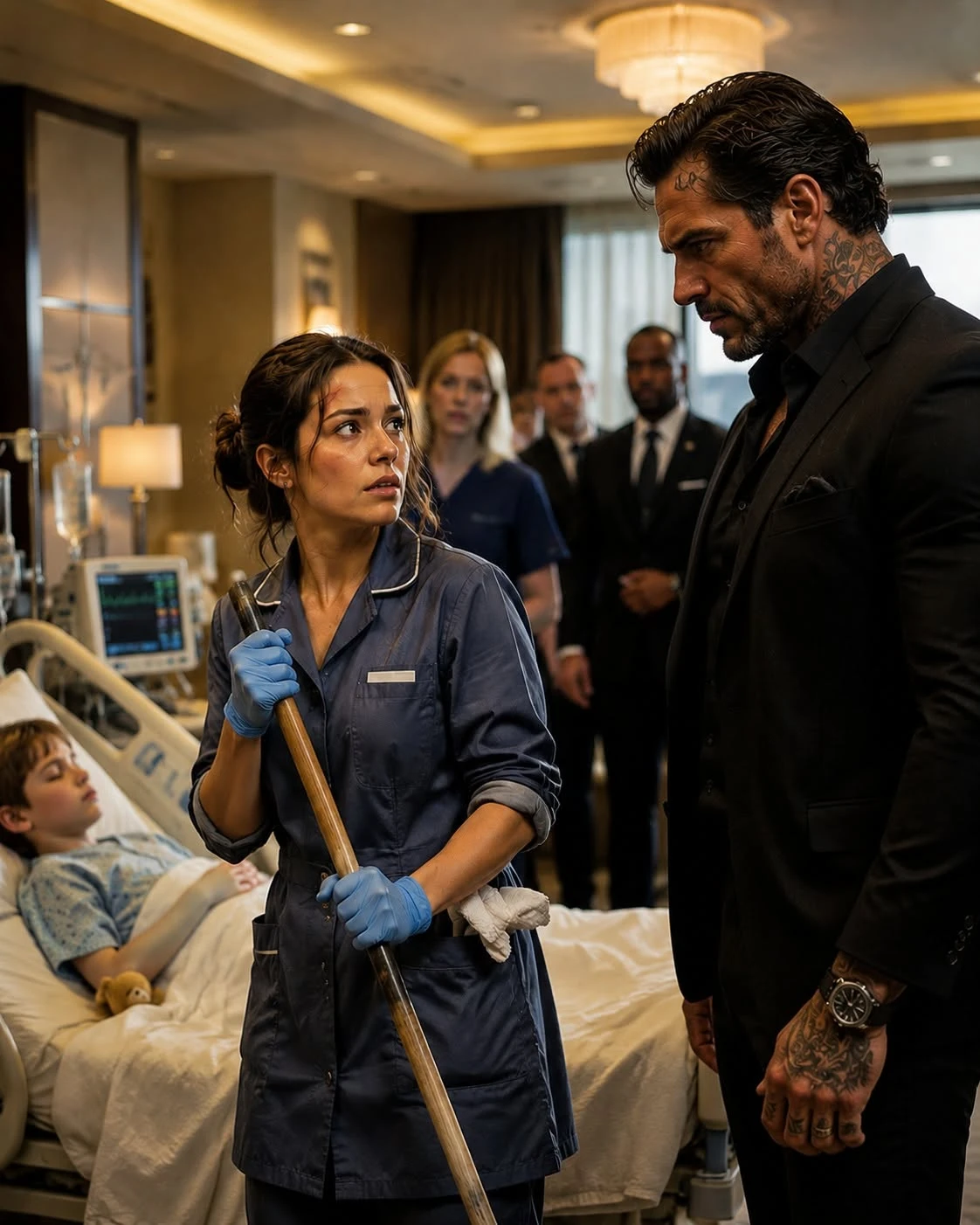
The building was quieter after hours, all polished floors and dimmed lights and the low hum of machines I couldn’t see. I found Clare in the small staff room near the children’s wing, one hand on a stack of worksheets, her face tired in a way I had never seen on her when we were married. She looked up when I stepped in, and for a second her expression sharpened into pure warning.
“I told you to leave,” she said.
“You told me that in a hallway,” I said. “I’m not taking the rest of my life from a hallway.”
Her jaw tightened. “No scene. No accusations. No touching the boys. If you want answers, you follow my rules.”
I almost laughed at that. Clare had always been gentle until she wasn’t. Then she became the kind of woman who could cut the air with one sentence.
“Fine,” I said. “Give me the truth.”
She looked at me for a long moment, then nodded toward the chair across from her desk. “Sit down.”
The room smelled faintly of antiseptic and paper. Clare crossed to a narrow filing cabinet beside the sink, unlocked the bottom drawer, and pulled it open. The sound of that lock turning felt louder than it should have.
She took out a slim envelope, a folded ultrasound printout, and a photograph protected inside a clear sleeve.
My photograph.
Not a recent one. Me at twenty-nine, leaner, harder around the mouth, standing beside a construction site trailer with sleeves rolled up and dust on my shoes. I remembered that day. I had been too busy, too proud, too convinced I was building something larger than anyone else’s needs.
Clare set the picture down between us.
I stared at it. “You kept this?”
Her mouth thinned. “Yes.”
I reached for the ultrasound printout before I could stop myself. The image was grainy and small, but I knew what it was. I knew the date in the corner, too. Months after the divorce papers. Months after I had told myself she’d walked away because she couldn’t keep up.
My throat went dry.
“Four years,” I said, barely audible.
She gave a small, humorless nod. “I found out after we separated. I was already late when I finally went to the clinic.”
My eyes moved to the envelope in her hand. “And those?”
“Letters.” She held them out, then paused. “Some I wrote and never sent. Some I sent and got back.”
I took the top one before I could think better of it. My name was written on the front in Clare’s careful handwriting. The paper had softened at the edges, handled too many times, then put away again.
“You told me nothing,” I said, and my voice came out rougher than I intended. “Not a call. Not a message. Nothing.”
Clare’s eyes flashed. “I wrote to you.”
“Then why didn’t I get them?”
“I don’t know.” Her answer was immediate, but there was pain under it. Real pain. “I assumed you didn’t want to.”
That hit harder than I wanted it to.
I set the letter down and looked at her, really looked. “You made that choice without checking.”
“And you made yours first,” she said. “You were disappearing long before I left. Your phone was always off. Your assistant said you were unavailable. Your life was meetings, flights, investors, and that company you kept calling your future like it was holy.”
“That doesn’t mean I would have ignored my own children.”
“No?” she snapped. “You barely noticed me when I was still your wife.”
The words landed cleanly. Too cleanly.
I remembered the end of our marriage as something she had done to me. Her silence. Her bags. Her cold face at the door. But standing there with her letters in my hand, I could feel the shape of another story pressing through the cracks.
I had been proud of how unreachable I’d become.
I had worn it like status.
Clare folded her arms, though I could see the effort it took to stay composed. “I had no right to ask you for a life you didn’t want. So I stopped asking.”
“You could have tried harder.”
Her laugh was short and bitter. “Harder than carrying three babies by myself while wondering whether their father had already replaced me?”
That shut me up.
She leaned back against the desk, eyes bright now, not with tears yet, but with the threat of them. “You want to blame me because it hurts less than admitting you were gone before you were officially gone. Fine. Blame me. But don’t stand in my staff room and act like I stole your sons from you when I spent years trying to decide whether they deserved even the memory of you.”
I looked down at the photograph again. The man in the picture seemed arrogant now, almost cruel in his confidence. I hated him a little.
And I hated myself more for recognizing him.
Then I saw it.
On the back flap of one returned envelope, in faint pen, there was a handwritten notation. Not Clare’s handwriting. A stamped office routing mark beneath it. And beside it, a second note, scribbled in a hand I knew from old files and expense approvals:
Returned to Mercer Suite 14B. Forwarded review.
My pulse thudded once, hard.
That was my old office suite.
Not a clinic. Not Clare’s address. My office.
I stared at the notation until the letters sharpened into something ugly and exact. Someone had handled this. Someone had seen her message and moved it.
Clare noticed my face change. “What?”
I held the envelope up between us. “This went through my office.”
Her expression shifted, just slightly. Not surprise. Not relief. Something closer to fear.
I looked at her, then back at the notation, and the air in the room turned thin.
Someone had been close enough to touch the truth.
Other posts