Chapter 5 - The Record He Could Not Rewrite
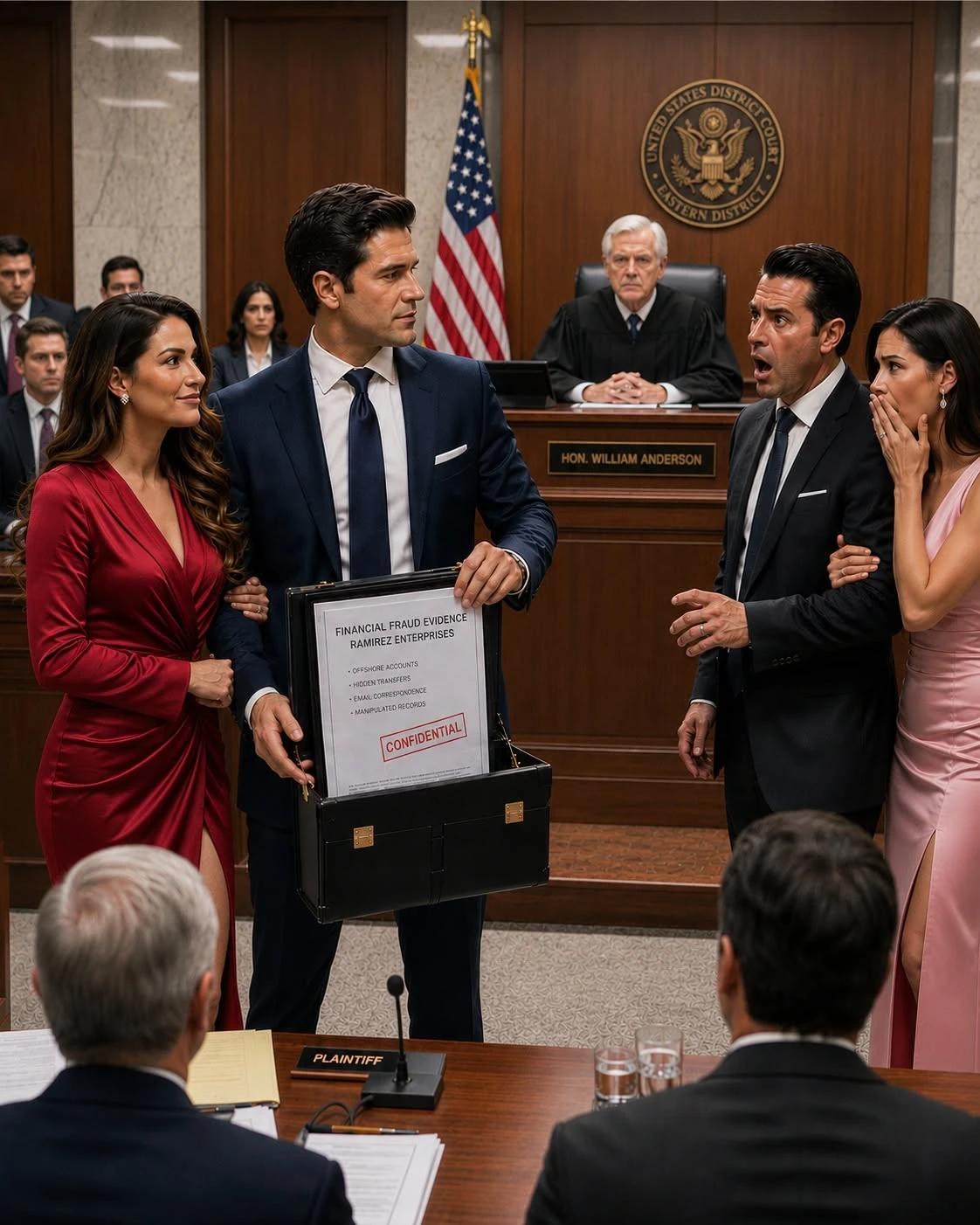
Table of Contents 6
By the time I got back to Adrian’s office, the sky had gone the color of old steel.
The room was stacked with paper in a way that made me think of a battlefield after the smoke cleared. My binder lay open on the conference table, its spine cracked, its tabs bent from being opened and reopened too many times. Adrian had spread my old materials beside it with surgical care: printed email chains, scanned drafts, a set of investor protections I had written in the margins of a contract no one was supposed to keep.
I sat down slowly, as if my body needed permission to believe what my eyes were seeing.
He pointed to a chain of metadata on his laptop. “This is the part they can’t talk their way around.”
The timestamps lined up too neatly to be accidental. Draft history. Header data. Revision paths. My name appeared where Eduardo had always put his. Not on a signature line, not in some flattering footnote. In the backbone. In the clauses that controlled who could move money, who could approve expansions, who could bind the company to anything that mattered.
I stared at the screen until the letters blurred.
“I remember writing that,” I said. My voice sounded thinner than I wanted. “He told me he needed it simplified for investors.”
Adrian’s expression didn’t change, but his eyes sharpened. “He needed it simplified for court. There’s a difference.”
That line hit harder than it should have. Because there had been a time when I would have accepted simplification as efficiency, when I would have swallowed the soft lie and called it partnership.
Now I saw it for what it was: theft with polished language.
Thomas arrived an hour later looking like a man who had not slept in days. He didn’t come in cocky this time. He came in with his jaw tight and his hands empty, like he had finally understood that a man can spend years thinking he is protecting his sister and still end up helping bury the truth.
Eduardo had tried to use him.
Adrian laid out the backdated approvals, the shell transfers, the compressed server logs. Then he showed Thomas the note from the forensic accountant, the one warning that if regulators dug deeper, the paper trail would reach beyond finance and into intentional concealment.
Thomas swallowed hard. “He told me Marina knew about the transfers.”
I let out a short laugh with no humor in it. “Of course he did.”
Thomas looked at me then, really looked at me, and something in his face shifted. Maybe shame. Maybe fear. Maybe the first honest thing he had felt in years.
“I didn’t know he was planning to pin it on you,” he said. “I thought he was just scrambling to cover a bad quarter.”
“That’s how fraud survives,” Adrian said. “It always introduces itself as a temporary inconvenience.”
Thomas shut his eyes once, then opened them. “I’ll testify.”
The room went still.
Not because it solved everything. It didn’t. But because it changed the shape of the fight. Eduardo could still posture. His lawyer could still sneer. Pamela could still pretend she had only stood nearby. But now there was a living witness, one who knew the approvals were false and the transfers were designed to look legitimate long enough to bury me under them.
Then Pamela was subpoenaed.
She arrived two days later in a pale suit that looked too severe for her face. The confidence she had worn outside the courthouse was gone. She held herself like someone walking into a room where all the mirrors had been removed.
When Adrian confronted her with the records showing meetings where my role had been intentionally minimized for investor optics, her mouth parted slightly. She had seen the memos. The internal pitch decks. The carefully edited version of our company story that made Eduardo the architect and me the invisible assistant.
“You knew,” I said.
Pamela’s eyes flicked away from mine. “I knew what Eduardo said.”
“That’s not the same thing.”
“No,” she whispered. “It isn’t.”
For a second, I thought she might finally tell the whole truth. Instead, she folded in on herself and admitted only enough to make the room colder. She had seen the erasure. She had watched my name disappear from strategic decks. She had sat in meetings where people discussed me like a liability that needed to be managed. And she had stayed.
That was the part that hurt in a different way.
Not because it surprised me. Because it confirmed what I had already feared: she had not just loved the man who broke my marriage. She had also watched him rewrite my life and called it business.
By evening, Eduardo’s attorneys tried to recast everything as marital assistance. A supportive wife. An informal helper. A woman who had handled “administrative tasks” while the real business had been built elsewhere.
Adrian didn’t even blink.
He slid my drafts across the table and tapped the revision history. “This is authorship,” he said. “This is control language. This is the original framework that governed authority in the company. If Mr. Valez later used that framework to move funds through a shell entity, then the question is not whether Mrs. Valez helped. The question is whether he understood exactly what he was borrowing when he decided to erase her.”
No one spoke for a moment.
That was when it landed for me. Not the whole answer, not yet. But the center of it. Eduardo had not merely stolen my work. He had depended on it. He had used the legal structure I helped create, then hidden behind the fact that I trusted him enough not to guard every page like a weapon.
And because I had trusted him, he thought he could rewrite history by deleting files.
He couldn’t.
My binder was heavier in my hands when I took it home that night. I should have felt crushed by everything it contained. Instead I felt something harder, cleaner.
Proof.
Not the final proof. Not the one Eduardo still believed could never be found.
But enough to know his edits had failed.
The next morning, before the hearing, I opened the back pocket of the binder and froze.
Inside was a sealed envelope in my mother’s handwriting.
My fingers shook as I lifted it out. For a second I couldn’t breathe. Then I broke the seal and drew out a folded memo I had written years ago, before my mother died, before the marriage curdled, before Eduardo learned how to smile while taking everything.
At the top, in my own handwriting, were the words I had almost forgotten:
Shared control protections.
I stared at the page, and the room tilted around me.
Because I knew, before I even finished reading, that this was the missing original. The one Eduardo had never been able to rewrite.
Other posts