Chapter 2 - The Signature Beneath the Signature
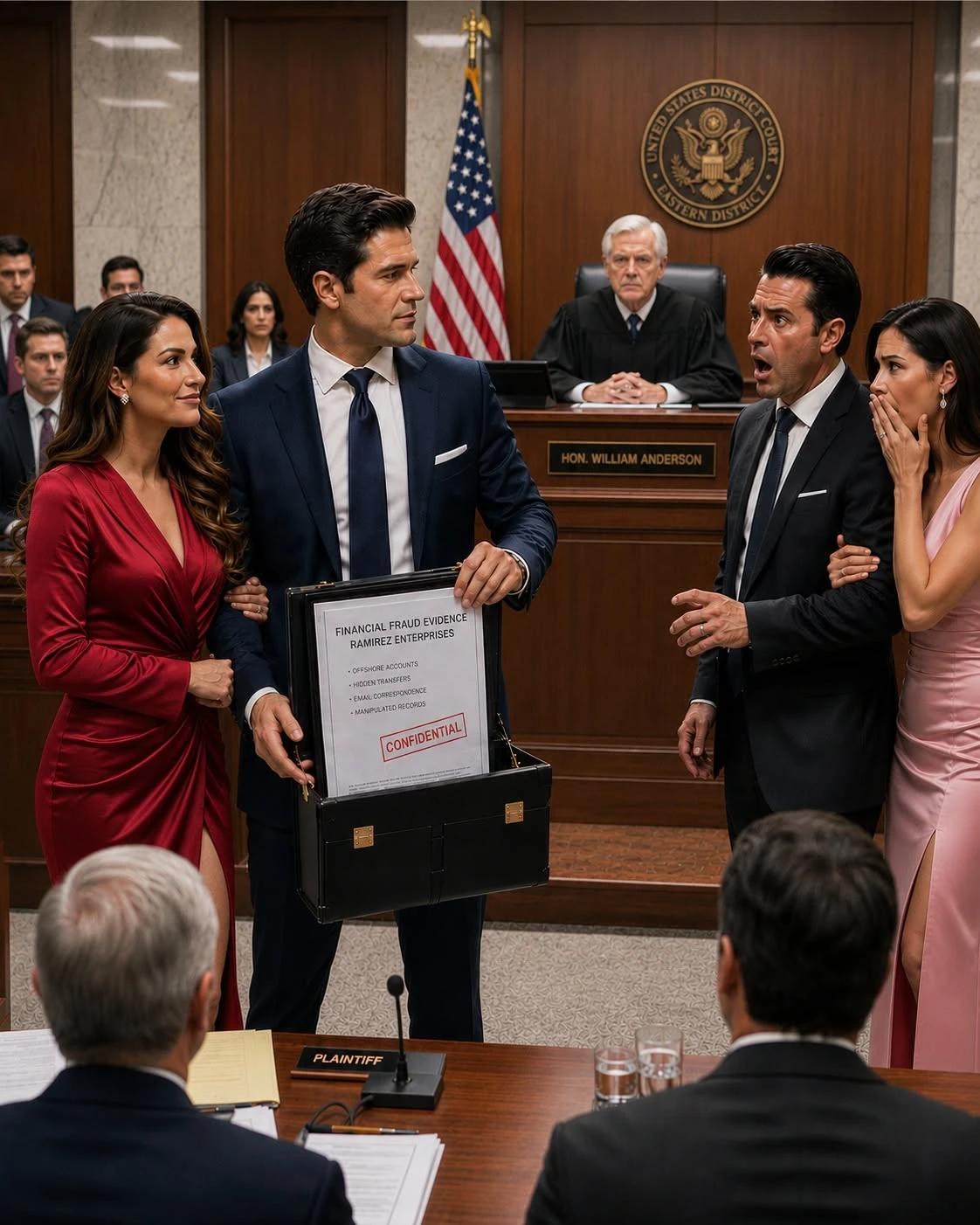
Table of Contents 6
By the time Judge Mercer called a brief recess, the courthouse hallway had changed shape around me.
It was still cold. Still bright. Still full of people pretending not to stare. But the balance had shifted. Eduardo no longer looked amused. He looked angry in the dangerous, private way of a man who had expected a clean theft and instead found a lock on the door.
Adrian closed the folder in his hand and lowered his voice as we stepped aside near a row of wooden benches.
“That account wasn’t created in isolation,” he said. “The language in the shell transfer documents is too specific. It mirrors provisions from the company’s original formation package.”
I stared at him.
He did not say it like a guess. He said it like a man laying a photograph on a table.
“You’re saying he copied something,” I said.
“I’m saying he likely copied your work.”
The sentence hit harder than I expected. Not because I wanted the credit. Because I had spent years refusing to call it mine out loud. I had let Eduardo stand in the light while I stayed in the shadow, telling myself that if the company survived, that was enough.
Adrian watched my face carefully, then pulled out a second packet of papers. “Look.”
I took the pages with hands that had signed contracts, revised clauses, and comforted myself with the lie that I had only been helping. These were old drafts. Mine. The margins were full of my notes in blue ink, arrows, revisions, warnings, alternatives. I recognized my own handwriting before I even understood the weight of what I was holding.
A clause on page three made my stomach tighten.
It was the same structure used in the hidden transfer documents. Not identical word for word, but close enough to be unmistakable if you knew what to look for. A narrow power window. A permissive authority trigger. Language that could be made to look ordinary unless someone had built it by hand and understood exactly how it could be abused.
I looked up at Adrian. “I wrote that.”
“No,” he said softly. “You designed it.”
That distinction mattered.
My throat tightened as I flipped through the pages. There it was again. My sequencing. My risk notes. My insistence on dual-signoff language for major asset movement. My own private habit of writing in the margin when a clause was too broad: tighten this, or they’ll use it to take more than they were meant to have.
Eduardo had always called me cautious. He had made it sound like a weakness. Now I could see the truth. I had built guardrails. He had learned how to drive through them.
When the hearing resumed, Judge Mercer did not waste time. She reviewed the nondisclosure findings with a expression that made Eduardo sit straighter in his chair and fail completely.
“Mr. Valez,” she said, “you were required to disclose all company-linked assets and recent transfers. Your filing was incomplete.”
His attorney tried to object. She cut him off with one look.
Within minutes, Judge Mercer ordered temporary living funds for me and limited discovery into the business accounts connected to the transfer. The words landed with a strange, clean force. Not victory. Not yet. But air. Enough air to breathe without wondering whether I would have to sell my watch or beg a friend for rent.
Eduardo turned in his chair toward me, his face rigid with disbelief.
“This is ridiculous,” he muttered loud enough for me to hear. “She handled errands. She was my wife, not my partner.”
I did not answer. I looked at the papers in front of me instead. It was safer than looking at him before I had decided exactly what to say.
But the words had already burned themselves into me.
Not my partner. Not my equal. Not the person who negotiated the first vendor agreement when his voice shook and mine did not. Not the one who stayed awake until three in the morning when the company was one missed payment away from collapsing. Not the one who read every line before anyone else signed it.
When court adjourned again, I returned to the bench in the corridor and opened my weathered binder with deliberate care. Adrian stood over my shoulder while I searched through an old section I had almost forgotten.
Inside was a notebook. Thin. Black. Broken at the spine.
My old law-school notebook, repurposed after I left school and started tracking business issues in the same cramped handwriting. I had nearly thrown it away years ago. Instead, I had kept it, telling myself I was keeping clutter because I was bad at letting go.
My fingers stopped on one page.
There, in dated notes, was the record of the company’s first life-saving contract. The one that had kept us alive when investors were pulling back and Eduardo was too proud to admit we were desperate. I had negotiated that deal myself while he was at a trade dinner shaking hands and making promises he did not understand.
At the bottom of the page, in my own handwriting, was the name of the supplier, the terms, the concessions, and the exact fallback language I had used to close it.
Adrian read over my shoulder. “This is enough to challenge his story.”
“It’s not enough to end it,” I said.
“No. But it’s enough to prove you weren’t a decorative spouse.”
The phrase would have offended me once. Now it only made me tired.
I closed the binder and looked up.
Pamela was standing at the far end of the hallway, no longer laughing, no longer surrounded by Eduardo’s confidence. She wore the same cream dress, but the polish had gone out of it. She walked toward me with measured steps and stopped just close enough to lower her voice.
“You still think this is about what he took from you,” she said.
I said nothing.
Her mouth curved faintly, not quite a smile. “You don’t know everything that happened inside that company.”
Then she turned and walked away before I could answer.
Adrian followed my gaze, then frowned. “Do you know what she meant?”
“I know she wanted me off balance.”
But my hand had already gone to the storage box at my feet, the one I had carried out of my apartment because I had been unable to leave any part of my old life behind. I lifted the lid and found a copy of the first contract I ever saved for the company, folded carefully under a stack of receipts and tabbed notes.
Taped to it was a small slip of paper.
A handwritten note.
I recognized the ink before I recognized the name.
Pamela Reed.
My pulse kicked hard once, then again.
The note was dated years earlier than I believed she had ever entered our lives.
Other posts