Chapter 5 - The First Steps Home
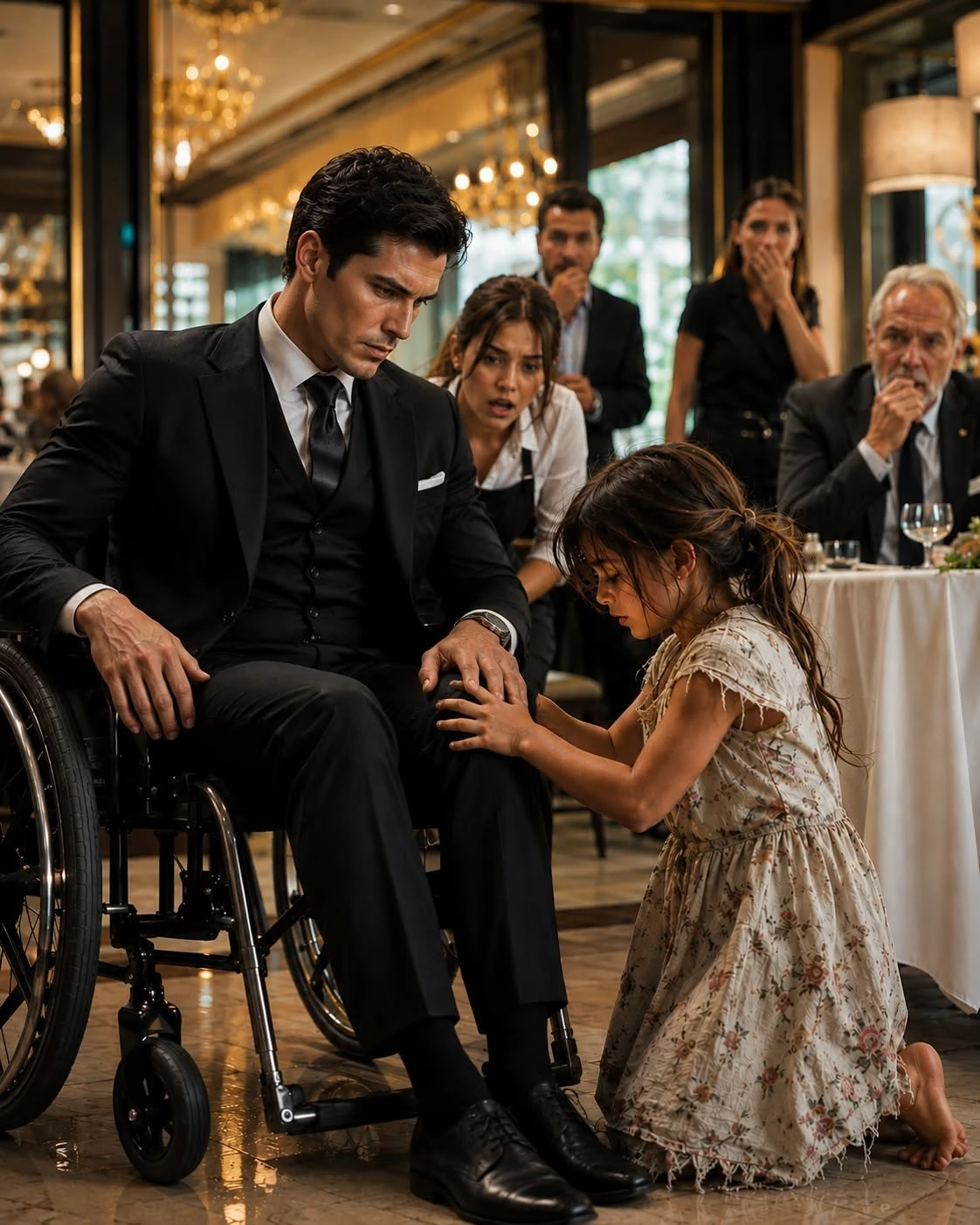
Table of Contents 5
The boardroom of Romero Hospitality had never felt colder.
Cameras lined the back wall. Lawyers stood stiffly along the edges. Two police officers waited near the doors, trying not to look as if they already expected a scene. I sat at the head of the long glass table in my wheelchair, with Lucía on one side of me and María on the other. Lucía wore a clean blue dress María had found for her, though she still gripped my sleeve as if the room itself might swallow her.
Javier arrived late, as always, wearing the same polished smile he had used to hide behind for years.
He stopped when he saw the press.
Then he saw Lucía.
His expression flickered.
I did not let him speak first.
“For five years,” I said, my voice carrying farther than I expected, “I believed my life ended on a dark road outside Barcelona. I believed the accident took my legs and my future. I was wrong.”
The room went silent.
I placed Inés’s letter on the table and slid the altered maintenance logs beside it. María set down the key to the archive drawer. Then I held up the final piece: a damaged vehicle report recovered after my attorney demanded the original service records from the garage listed in the paperwork.
Javier’s jaw tightened. “Alejandro, this is a circus.”
“No,” I said. “This is the part where you stop lying.”
I looked at the cameras, then at the board members who had spent years nodding while my name became a signature on papers I never truly saw.
“Inés wrote this letter because she knew the brakes had been tampered with before my crash. She saw the service order. She saw the false replacement stamp. She saw your initials on the approval form, Javier.”
A murmur moved through the room like wind through dry leaves.
He laughed, but it sounded brittle. “A dead woman’s note and some old paperwork? You built all this on a cleaner’s gossip and a child’s fantasy?”
Lucía flinched at the word child, but she did not let go of my sleeve.
“No,” I said. “I built it on the truth you buried.”
I turned to the officers and nodded. “My attorney has already sent the full file to the prosecutor.”
That was when Javier’s face changed. Not outrage. Not fear. Recognition.
He knew.
He had counted on my silence, on my shame, on the fact that a crippled man, hidden in a chair, would not bother to claw through five years of lies. He had mistaken my grief for surrender.
One of the officers stepped forward. Javier started to protest, but the words tangled as the cuffs came out.
“You can’t do this,” he snapped at me, his voice cracking at last. “I protected the company.”
“No,” I said. “You protected yourself.”
They led him out while the room watched in stunned, ugly silence. For the first time in years, I did not feel smaller as he disappeared through the door. I felt lighter.
After the meeting, I used my own voice to make the calls I should have made years ago. I placed Lucía and the two boys in a clean apartment overlooking a quiet courtyard. I paid for food, school enrollment, clothes, and a social worker who would stay with them until the transition was stable. María cried when she saw the rooms. Lucía stood in the middle of the smallest bedroom and whispered, “Is this really ours?”
“It is,” I told her. “All of it is safe now.”
The rehabilitation that followed was brutal.
It was also the first honest thing I had done in years.
Dr. Ibarra did not promise miracles. He promised work. Pain. Patience. Small victories that would matter only if I respected them. I stopped looking at therapy as humiliation and started treating it as a return. Every lift, every stretch, every trembling attempt to stand became an argument against the man I had been while hiding in my chair.
Lucía came whenever she could. She drew pictures of my apartment, of the boys at school, of me standing beside the sea with a ridiculous grin. She taped them to the wall of the rehab room like prayers.
Three months later, the restaurant reopened with a charity dinner for children’s shelters across Barcelona.
The room was full, but it felt different this time. Softer. Kinder. No one laughed when I rose from the chair with my therapist beside me. My legs shook. My hands were damp. I could feel my heartbeat in my throat.
Lucía stood at the front of the room with the boys, all three of them in clean clothes, María just behind them with tears already shining in her eyes.
“Come on,” Lucía whispered.
I took one step.
Then another.
The room blurred around me, not because I was falling, but because I was finally rising. My right knee nearly gave out. I steadied myself. The pain was real. So was the joy. So was the miracle of choosing to keep moving.
I crossed the space between us on my own feet.
When I reached Lucía, she threw her arms around me and laughed into my shirt. The boys joined in, and María pressed a hand over her mouth, smiling through tears.
I looked down at the little girl who had once asked me for leftovers and promised to believe for me when I could not believe for myself.
“I walked,” I said, my voice breaking.
“Yes,” she whispered. “You came home.”
And for the first time in five years, I believed her.
Other posts