Chapter 2 - Seven Days of Prayer
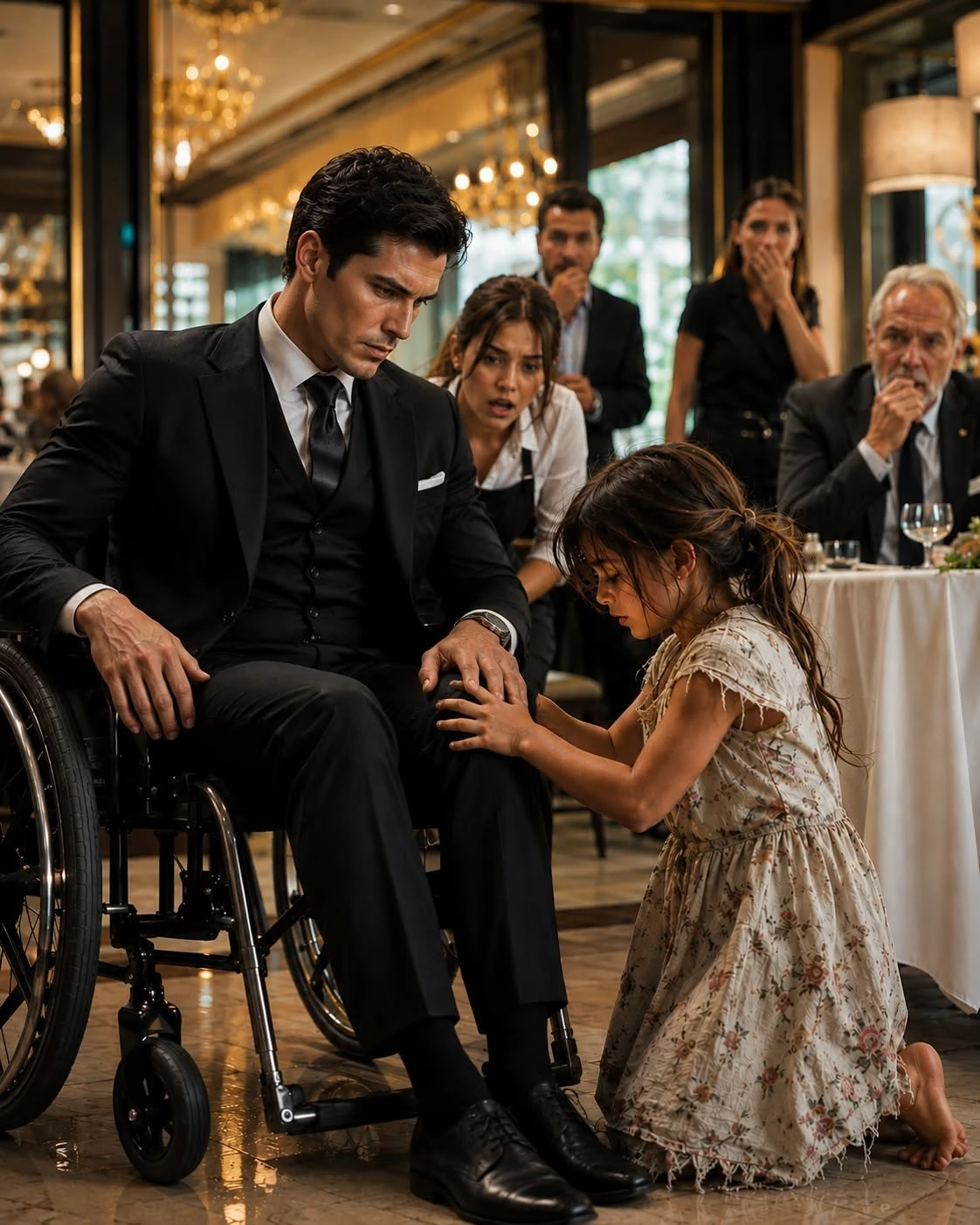
Table of Contents 5
I did not sleep that night.
Every time I closed my eyes, I saw the tiny movement again—my right toes lifting, as if my body had remembered something my mind had already buried. I sat in the dark with my hands gripping the arms of my wheelchair, afraid to breathe too hard in case the moment disappeared.
By dawn, I had turned into a man I barely recognized.
I pressed my fingers against my foot. Nothing. I willed it to move. Nothing. I stared so long at my own leg that pain began to creep into my neck. Yet I had not imagined it. That much I knew. A man could imagine hope, but not the sharp, electric jolt that had raced through my nerves like a live wire.
When María came in with coffee, she found me still awake.
“You look like hell,” she said.
“I need you to do something.”
She set the cup down carefully. “That sounds serious.”
“Find out where Lucía goes when she leaves.”
Her face changed at once—not surprised, just alert. María had the kind of intelligence that did not need explanations. “You think she’s lying?”
“No.” The word came out too fast. “I think she’s living in a way none of us have bothered to notice.”
María studied me for a long second, then nodded. “I can follow her.”
That afternoon, Lucía arrived exactly on time, carrying all the stubbornness of someone twice her age. She was barefoot again, her little feet still red from the cold. She smiled at me as if she had never been laughed at in her life.
“Did you believe me?” she asked.
“I don’t know yet.”
“That’s enough for today.”
She ate slowly, then saved the rest inside a napkin with careful hands. But instead of placing it in her pocket, she tucked it beneath her arm like something precious. I watched her leave through the restaurant doors, and my chest tightened in a way I did not understand.
María returned much later, rain on her coat and something heavy in her eyes.
“She slept near the train station,” she said. “Behind an old kiosk with two boys. One of them was coughing so badly I almost went to a pharmacy. The other kept watch while she ate.” She paused, then looked at me sharply. “She gave them her food first.”
I leaned back, stunned.
“She’s not begging for herself,” María continued. “She’s feeding them. She’s been doing it every day.”
I did not answer. I could not. I had spent five years drowning in my own loss while a five-year-old girl was choosing who would eat before she did.
The next morning, María arranged for Dr. Ibarra to come quietly to the restaurant. He was a neurologist with silver at his temples and the tired eyes of a man who had stopped believing in easy miracles. He greeted me without pity, which I respected immediately.
He tested reflexes. Sensation. Muscle response. He tapped my knees, ran a thin instrument along my ankle, and frowned when my foot twitched.
“Again,” he said.
He repeated the test, then looked up.
“This is not in your head.”
My breath caught.
He adjusted his glasses and continued, “There is nerve activity. Weak, but real. Some pathways may have remained dormant. With rehabilitation, stimulation, and time, this is not impossible.”
Not impossible.
The words hit me harder than any diagnosis had in five years. I had spent so long being told to accept what was left of my life that I had forgotten what possibility sounded like.
Lucía arrived while Dr. Ibarra was still speaking. She stood near the door, small and quiet, until the manager noticed her and stiffened.
“You again?” he snapped. “I told security to keep street children out.”
Lucía did not flinch. She only tightened her grip on her napkin parcel.
“Enough,” the manager said. “Get her outside.”
I heard myself speak before I could stop it. “No.”
The manager blinked. “Señor Romero—”
“I said no.”
The room fell silent. Even Dr. Ibarra went still. I had not defended anyone in public for years. Not since the accident. Not since every glance had turned me into someone to be handled carefully, as if I were already half gone.
Lucía looked at me with wide, startled eyes.
“She is not a disturbance,” I said, my voice low but steady. “She is a child.”
The manager’s mouth tightened. “Sir, she’s causing a scene.”
“The scene,” I said, “is a grown man ordering a starving girl into the street while the rest of you stand there pretending not to see it.”
No one spoke after that.
Lucía stepped closer to my chair, her expression serious now in a way that made her look ancient.
“My mother said people like you always have many rooms,” she whispered. “Big houses. Quiet halls. Hidden papers.”
I frowned. “What are you talking about?”
She held my gaze, unblinking. “She said when I found the right person, I would know because he would look broken on the outside but hurt in a deeper place.”
My throat tightened.
“She knew you,” I said.
Lucía nodded once.
“What did she mean by hidden papers?”
Lucía clutched her napkin bundle to her chest, then shook her head. “Not yet.”
I stared at her. “Why not?”
Her voice dropped so low I almost missed it. “Because someone has already been asking about me.”
A cold line traced itself down my spine.
She looked toward the window, then back at me.
“My mother left something for you,” she said. “But I’m not giving it to you here.”
Other posts