Chapter 4 - The Family That Buried My Accident
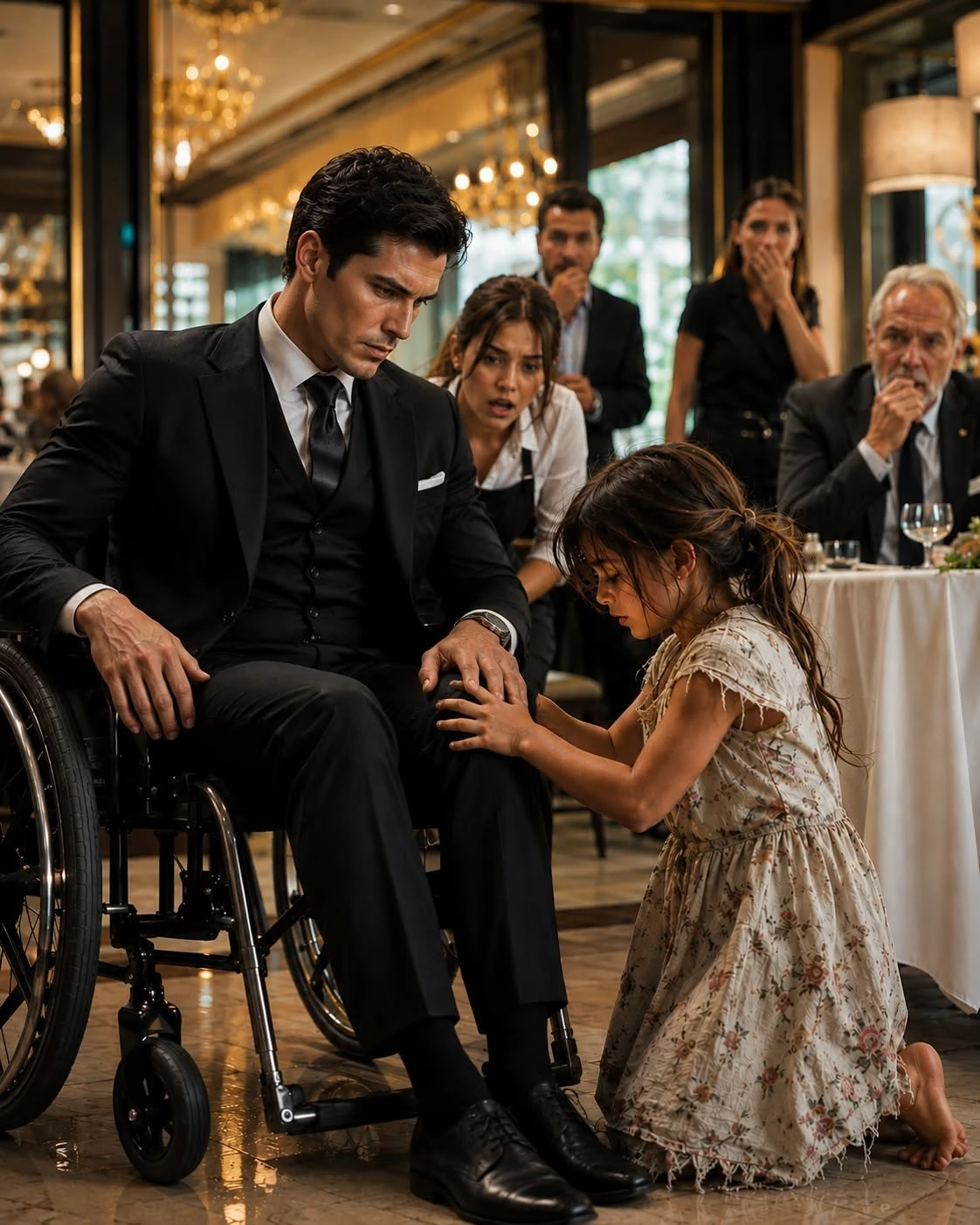
Table of Contents 5
The first time I rolled into Javier Salvatierra’s office after finding Inés’s letter, I thought I was prepared for anything.
I was wrong.
He looked up from his desk as if I had arrived to discuss quarterly margins, not the wreckage of my life. The afternoon light cut across the polished wood, catching the silver cufflinks at his wrists, the calm set of his mouth, the practiced concern in his eyes.
“Cousin,” he said softly. “You look troubled.”
María stood behind me, one hand resting lightly on my shoulder. Lucía was not inside the room, thank God. She waited in the hallway with a paper cup of water and a nervousness she tried hard to hide. She had wanted to come in. She had even puffed up her small chest and said, “I’m not afraid of bad men.”
I had told her that bravery was not the same thing as walking straight into a storm.
Now I wished I had said it for myself.
I held up the letter first, then the folder of altered records. “Read these,” I said.
Javier’s expression barely shifted. He gave a small laugh and leaned back in his chair. “Alejandro, if this is about old paperwork, you know how messy those years were. You’ve been through enough. Why reopen wounds?”
“Because these wounds were made.”
His gaze flicked to the folder. Just for a second. Just long enough.
María saw it too. I felt her body go still behind me.
I slid the maintenance report across his desk. “The brake replacement stamp is fake. The signature on the vehicle approval was copied onto a retyped sheet. The original log disappeared from my archive after the accident. And somehow, while I was learning to survive in a wheelchair, you were signing control papers that gave you voting power over half my company.”
His smile thinned. “You’re emotional.”
“No,” I said. “I’m awake.”
The words hit the room like a gunshot.
He stood then, the easy charm gone from his face. “What exactly are you accusing me of?”
“The accident was sabotage,” I said, my voice shaking now with something colder than fear. “Someone tampered with my car before that night. Someone with access. Someone who benefited when I could no longer sign decisions, no longer attend meetings, no longer stand in the way.”
That finally reached him.
For the first time, Javier looked not offended, but cornered.
He took a slow breath and said, “You really think a child’s story and some dusty papers are enough to destroy me?”
At that moment, Lucía appeared in the doorway, barefoot and small against the marble floor. She had clearly been listening. Her eyes found mine first, then slid to Javier with open dislike.
“I am not dusty,” she said in a tiny voice.
Despite everything, the room almost cracked under the absurdity of it. Then Javier’s face hardened.
“And this,” he said sharply, “is exactly what I mean. A street child, a cleaning woman, and a broken man trying to rewrite the past because it makes them feel important.”
Lucía flinched. Not much. Just enough.
It was enough to turn my blood to fire.
“Say one more word about her,” I said, “and I will have security escort you out of my company.”
His eyes narrowed. “Your company?”
I realized then how carefully he had been waiting for me to remain weak. How much he had counted on my silence. My wheelchair. My shame. My habit of swallowing pain until it became part of me. For five years, he had profited from my absence while telling everyone he was protecting me.
He stepped closer and lowered his voice. “You don’t understand what you’re doing. If this becomes public, your name will be dragged through every paper in Barcelona. People will say you were unstable. Grieving. Delusional. They’ll say the accident broke your mind before it broke your body.”
María moved forward, furious. “And what would they say about the person who hid the truth?”
He ignored her.
I looked at the folder in my lap, at the evidence that had survived five years buried beneath silence. Then I looked at Lucía in the doorway, too thin, too brave, clutching a folded napkin like it was treasure.
The cost of staying quiet suddenly felt larger than my pride. It felt like a second death.
I turned to the corner of the office where Dr. Ibarra stood on a video call through the tablet María had set up earlier. His face was grave, his voice calm.
“The nerve response is real,” he said. “Recovery is possible, but it requires commitment. Therapy. Patience. Pain. Mr. Romero, you cannot keep treating hope like a humiliation.”
Javier gave a bitter sound. “You brought a doctor into this circus?”
“I brought truth,” I said.
And for the first time in five years, I heard myself speak like the man I had been before the accident. Not because I was cured. Not because I was fearless. Because I was done being managed by a lie.
I reached for my phone.
Javier’s eyes flashed. “Alejandro—”
“I’m reopening the case,” I said. “For the accident. For the records. For every signature you touched while pretending to protect me.”
His mouth opened, then closed again.
I dialed my attorney’s number with fingers that did not tremble this time.
If I was wrong, I would lose everything that remained of my name.
If I was right, I was about to tear my family apart in public.
I looked at Lucía once more. She did not smile. She only nodded, as if she had known this moment would come and had been waiting with all the patience in the world.
“Yes,” I said into the phone when the lawyer answered. “Prepare the board. Prepare the press. And prepare yourself, because I am bringing the truth with me.”
Other posts