Chapter 1 - THE ADDRESS ARTHUR SHOULD NOT HAVE KNOWN
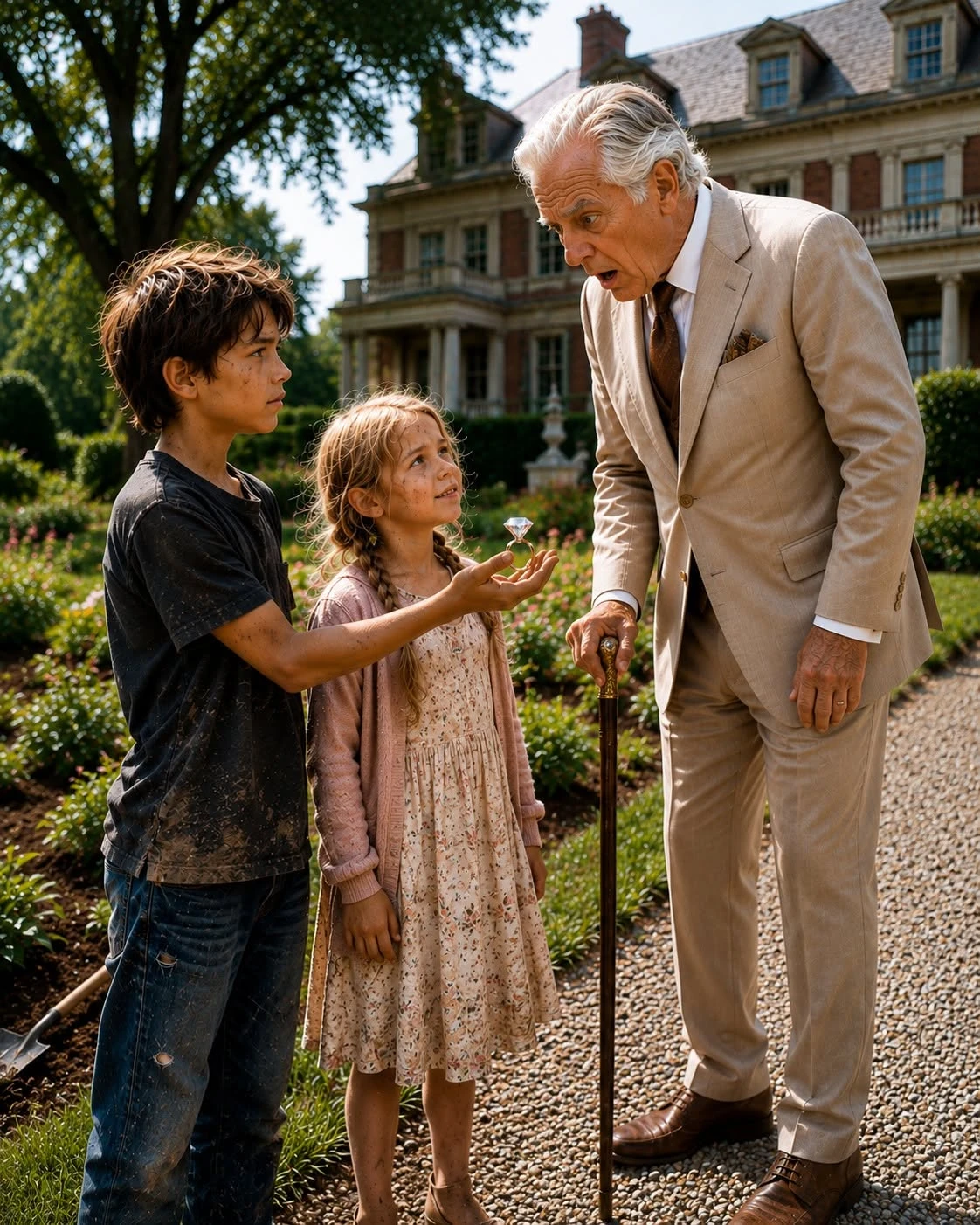
Table of Contents 6
For several seconds, the only sound in Arthur Whitmore’s study was the old grandfather clock ticking beside the fireplace.
He still held the phone in one hand.
I stared at him.
Annie stood beside me clutching the hem of my jacket, confused but already frightened because she could tell from my face that something was wrong.
“How do you know where we live?” I asked again.
Arthur looked older suddenly.
Not weaker.
Just tired in a way I had not noticed while he watched us pulling weeds in his garden.
He placed the phone on the desk.
“Because I’ve been keeping track of Grace.”
My stomach tightened.
“Why?”
He hesitated.
That hesitation made me step in front of Annie.
Arthur noticed.
“I’m not going to hurt either of you.”
“Then answer me.”
His eyes moved toward the ring resting on the desk.
“My wife’s name was Margaret.”
I didn’t understand what that had to do with us.
Arthur continued.
“Seventeen years ago, Margaret lost that ring in the garden. We had searched everywhere. Landscapers dug up half the rose beds. I offered a reward. Nothing.”
He gently touched the diamond.
“She died two years later.”
Annie’s expression softened.
I did not.
“What does that have to do with Grace?”
Arthur looked toward the window.
“Your mother worked here.”
Everything inside me stopped.
Our mother had died when I was six.
I remembered her laugh, the smell of soap on her sweaters, the way she sang badly while making breakfast.
What I did not remember was Arthur Whitmore.
“No.”
“She did.”
“My mom cleaned offices.”
“Before that, she worked here.”
I stared at him.
Arthur opened a drawer and removed an old photograph.
Three women stood near the same rose garden Annie and I had cleaned that morning.
One of them was younger, but I recognized her immediately.
Mom.
She was smiling beside a woman I assumed was Margaret Whitmore.
I took the photograph with shaking hands.
Annie leaned closer.
“That’s Mommy.”
Arthur nodded.
“Her name was Rebecca Carter.”
I looked up sharply.
Of course he knew her name.
But hearing him say it made everything more real.
“How long did she work here?”
“Almost four years.”
“Why did she leave?”
Arthur became quiet.
Then he answered carefully.
“Because something happened between our families.”
I hated that word.
Families.
Arthur Whitmore lived in a mansion with gates higher than our apartment building’s first floor. We had spent three days eating bread because our sister was too sick to work.
Nothing about us belonged in the same sentence as his family.
Before I could ask more, tires crunched outside.
A black car stopped near the front entrance.
Annie grabbed my hand.
“Who’s that?”
Arthur looked toward the window.
“The doctor.”
My anger returned.
“You called a doctor to our apartment?”
“Yes.”
“You had no right.”
“Your sister may need help.”
“You don’t even know how sick she is.”
Arthur’s expression sharpened.
“You told me she can barely walk.”
I had.
That part was true.
Still, I hated how quickly he had taken control.
“We can take care of Grace.”
Arthur looked at my dirt-covered clothes, then toward Annie’s thin face.
He did not say anything cruel.
That somehow hurt more.
“You shouldn’t have to.”
I tightened my jaw.
“We do.”
He nodded slowly.
“I know.”
That answer surprised me.
Then Arthur said something I would remember for years.
“Children become very good at surviving responsibilities that should never have belonged to them.”
My chest tightened.
He wasn’t looking at me when he said it.
He was looking at the photograph of my mother.
There was grief in his face.
Not ordinary sadness.
Something personal.
“What happened?” I asked.
Arthur took a slow breath.
“Your mother found something in this house seventeen years ago. Something she believed could destroy my family.”
I stared at him.
“She tried to tell me.”
“Did you believe her?”
His silence answered first.
“No.”
The word came quietly.
“I believed someone else.”
That sounded familiar.
Adults always believed other adults.
Never the person who needed them to listen.
“What did she find?”
Arthur looked toward the front door as the doctor entered the hallway.
“We need to make sure Grace is safe first.”
“No.”
He looked back at me.
“You don’t get to use her to avoid answering.”
For a moment, something almost like respect appeared in his expression.
“All right.”
Arthur told the doctor to wait.
Then he opened another drawer.
Inside was a small leather folder.
He placed it on the desk.
On the front, written in faded ink, were two words.
REBECCA CARTER.
My mother’s name.
Arthur opened it.
Inside were payroll records, photographs, letters, and one old police report.
Then came something worse.
A handwritten note from Mom.
Mr. Whitmore,
I know what happened to the pension accounts. I know who moved the money. If you don’t stop him, people are going to lose everything.
I read it twice.
“What pension accounts?”
Arthur’s jaw tightened.
“Thousands of my company’s workers had retirement funds stolen.”
My eyes widened.
“How much?”
“More than forty million dollars.”
I could barely understand that number.
“Who did it?”
Arthur looked at me.
“My son.”
The room went completely quiet.
Arthur had one son.
Even I knew that.
Edward Whitmore.
CEO of Whitmore Transportation.
The man whose face appeared in newspapers almost as often as Arthur’s.
Arthur continued.
“Your mother found evidence Edward was using shell companies to divert employee pension money. She brought it to Margaret first.”
I looked toward the ring.
“Your wife?”
“Yes.”
“What happened?”
“Margaret believed her.”
Arthur’s voice became rough.
“I didn’t.”
He had believed Edward when his son claimed Rebecca was trying to extort the family.
He fired my mother.
Margaret fought with Arthur over it.
Two weeks later, Margaret died from what doctors called a sudden aneurysm.
I stared at him.
“You think your son killed her?”
Arthur looked toward the ring.
“I didn’t then.”
“And now?”
He answered quietly.
“I don’t know.”
My stomach turned.
Arthur explained that after Margaret died, Rebecca disappeared from Cleveland for several months. When she returned, she had changed jobs and refused all contact with the Whitmore family.
Years later, Arthur learned she had three daughters.
Grace.
Me.
Annie.
Then our parents died.
“How?”
Arthur frowned.
“I was told there was a car accident.”
I shook my head.
“Dad died in the crash.”
Arthur stared at me.
“And your mother?”
“She died in the hospital two weeks later.”
Something in his face changed.
“What hospital?”
I told him.
Arthur immediately stood.
The color drained from his face.
“That hospital was owned by a Whitmore charitable trust.”
I didn’t understand why that mattered.
He did.
Arthur grabbed the phone.
I stepped toward him.
“Who are you calling now?”
“My attorney.”
“Why?”
His answer came slowly.
“Because I spent seventeen years believing your mother simply walked away from what she discovered.”
He looked at the old police report again.
“But if she died inside a hospital controlled by my family, I need to know whether Edward knew she was there.”
Before he could dial, his phone rang.
Arthur looked at the screen.
His expression hardened.
“Edward.”
He answered.
“What?”
A man’s voice came through loudly enough that I could hear pieces of it.
Dad, where are you?
Arthur’s eyes shifted toward us.
Then Edward said something that made every part of me go cold.
I heard you have Rebecca Carter’s children at the house.
Arthur slowly straightened.
He had told no one we were there.
Not even the doctor.
“How do you know that?”
Silence.
Then Edward laughed softly.
“Send them home.”
Arthur’s face changed.
“Why?”
Another pause.
“Because some old gardens should stay buried.”
Arthur ended the call.
He looked at me.
Then at Annie.
For the first time since we entered his mansion, the billionaire did not look powerful.
He looked afraid.
“Caleb,” he said quietly, “you and Annie are not going back to your apartment alone.”
My stomach dropped.
“Why?”
Arthur looked toward the photograph of Mom.
“Because I think my son already knows Grace is sick.”
And suddenly, the doctor waiting in the hallway no longer felt like the most urgent thing in the house.
Other posts