Chapter 6 - THE GARDEN WHERE EVERYTHING CAME BACK
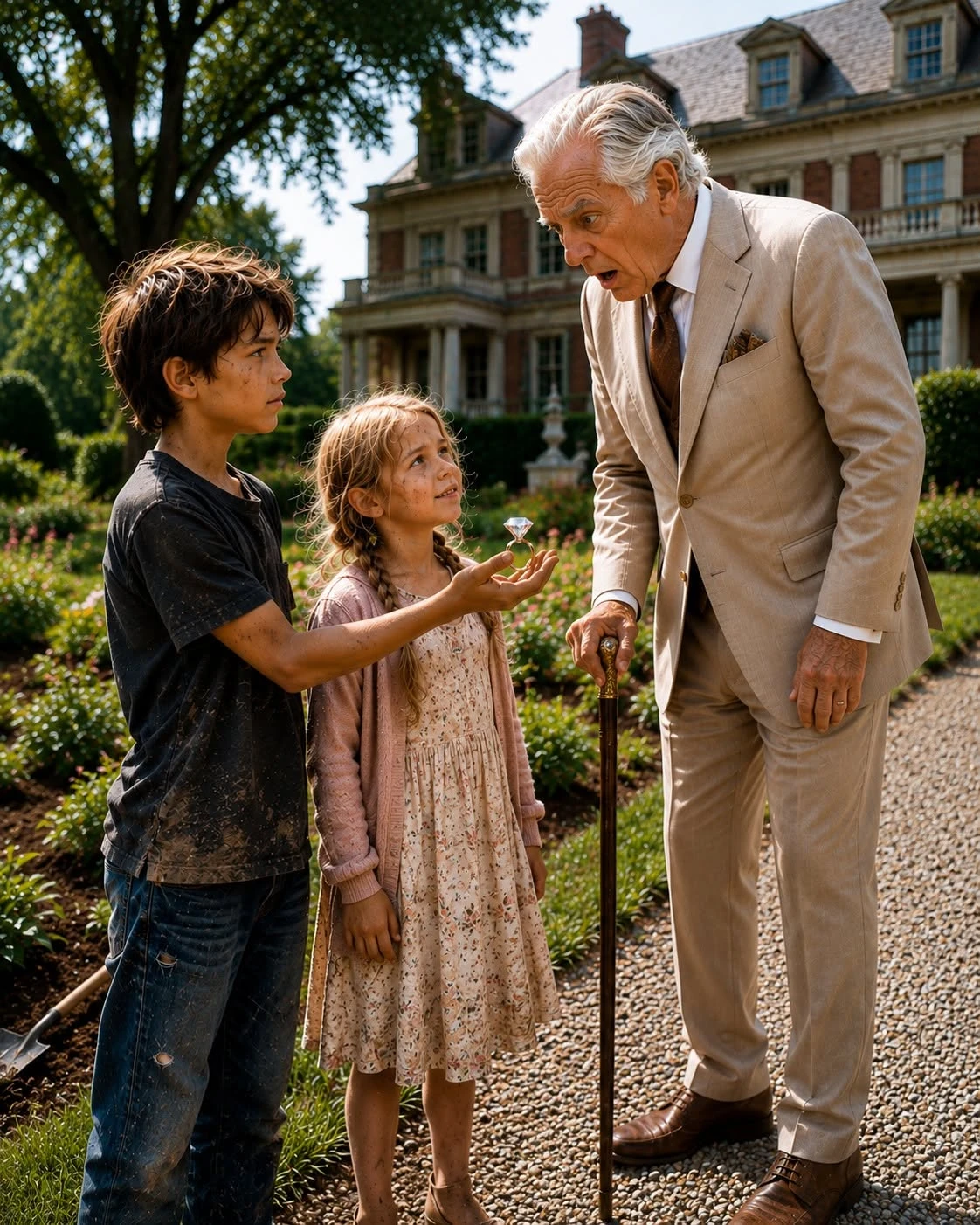
Table of Contents 6
Nine years after Annie found Margaret’s diamond ring, we returned to Arthur’s garden on a warm October morning.
I was twenty.
Annie was seventeen.
Grace was twenty-eight and had been a registered nurse for five years.
Arthur was eighty-five.
He walked more slowly now.
The cane had become a walker on bad days.
His fortune had also changed.
Not disappeared.
Arthur Whitmore was still extremely wealthy.
But he had given away enormous portions of his personal holdings.
Pension restitution.
Worker education programs.
Medical assistance funds.
Housing support for families whose retirement accounts had been emptied.
Reporters sometimes called it philanthropy.
Arthur hated the word.
“Philanthropy is giving away what belongs to you,” he once said. “A lot of this should’ve belonged to them in the first place.”
Grace liked that answer.
The old mansion was quieter too.
Arthur had converted part of it into a residential program for young adults leaving foster care.
He kept one private wing.
Annie painted murals in the common rooms.
Grace volunteered in the medical clinic twice a month.
I handled financial oversight for the foundation after finishing college.
Nobody had planned any of that.
Life simply grew around the place where everything began.
We walked toward the old rosebush.
The stone angel remained.
Arthur had offered to remove it years earlier.
Annie refused.
“It’s ugly, but it’s historically important.”
Arthur said Margaret would have considered that the worst possible memorial.
Then Annie stopped beside the spot where she found the ring.
“I still think I should’ve sold it.”
Grace stared at her.
“You were eight.”
“I had business instincts.”
“You suggested selling stolen jewelry.”
“Details.”
Arthur laughed.
The diamond ring was no longer hidden.
He had given it to us after Edward’s trial.
Not to keep personally.
It belonged in the small museum created inside Whitmore Transportation’s headquarters alongside Mom and Margaret’s documents.
The display explained what happened.
Not perfectly.
Nothing could.
But it told people that two women without corporate titles uncovered a crime powerful executives ignored.
One was the billionaire owner’s wife.
The other was a cleaning worker.
Both were dismissed.
Both were right.
That mattered.
After walking through the garden, Arthur asked us to sit on the porch.
He had something to tell us.
His health was failing.
We knew.
Grace knew before anyone because nurses notice things families pretend not to see.
Arthur had revised his estate.
Most remaining wealth would go to charities and worker trusts.
A smaller family foundation would continue the programs we already managed.
Then he handed me an envelope.
“What’s this?”
“Open it later.”
“No.”
Arthur sighed.
“You’ve become very difficult.”
“Learned from Grace.”
She looked proud.
I opened it.
Inside was a copy of the original photograph showing Mom beside Margaret in the garden.
On the back, Arthur had written something.
Rebecca was right before I was ready to hear her.
You children taught me that listening late is still better than never listening at all.
My throat tightened.
Annie leaned against his shoulder.
Arthur looked at Grace.
“I owe your mother an apology I can’t give her.”
Grace answered quietly.
“You spent nine years giving it to people she was trying to protect.”
Arthur’s eyes filled.
“That isn’t the same.”
“No.”
Grace took his hand.
“But it matters.”
We sat there for a long time.
No dramatic speeches.
No billionaires making promises.
No hidden enemies.
Just four people on a porch while autumn leaves moved across an old garden.
Arthur died the following spring.
Peacefully.
Grace was beside him.
So were Annie and I.
His final words were not profound.
He asked whether someone had watered the roses.
Annie laughed while crying.
“We did.”
“Good.”
Then he closed his eyes.
The funeral was enormous.
Corporate executives.
Politicians.
Former employees.
People who had driven Whitmore trucks thirty years earlier.
Families who received restored pension money.
Students who attended college through the education fund.
Grace spoke.
I couldn’t.
Not because I didn’t have words.
Because there were too many.
Annie placed one rose on his coffin.
Afterward, we returned to the mansion.
The residential program continued.
The garden remained.
Years later, children still asked about the stone angel.
Annie told them an eight-year-old once found a diamond ring there.
I usually corrected her.
“You found more than a ring.”
She rolled her eyes.
But it was true.
That morning, when Annie’s dirt-covered fingers lifted Margaret Whitmore’s diamond from beneath a rosebush, I thought we had found something valuable.
I was eleven.
To me, valuable meant something we could sell.
Food.
Medicine.
Rent.
I did not understand that the ring was only the first piece of something much larger.
It brought back Mom’s story.
It exposed Edward.
It returned stolen money to thousands of families.
It gave Grace the chance to become the nurse she always wanted to be instead of spending her whole life sacrificing herself for us.
It gave Annie a home where she could become an artist.
It gave me a reason to understand money well enough to protect people from the kind of theft Mom discovered.
And somehow, it gave Arthur Whitmore enough time to become a better man than the one who failed our mother.
Not a perfect man.
Not a hero.
Just better.
Sometimes that is the most honest happy ending available.
We never became billionaires.
Grace never wanted to.
Annie said she might reconsider if painting became unexpectedly profitable.
I earned enough.
We all did.
Enough to eat without counting slices of bread.
Enough to see a doctor before sickness became an emergency.
Enough to sleep without listening for an eviction notice under the door.
Those ordinary things remained miraculous to us.
Every October, we still return to the garden.
Grace brings her husband and daughter now.
Annie brings paint supplies because apparently nobody is allowed to experience nature without documenting it.
I bring food.
Too much food.
Maybe because part of me will always remember three days of bread.
We sit beneath the old porch where Arthur first watched two hungry children pulling weeds.
One afternoon, my niece asked why he let us work when we were so young.
Grace answered before I could.
“Because adults sometimes don’t understand what children are really asking for.”
My niece frowned.
“What were you asking for?”
I looked toward the rosebush.
“We thought we were asking for leftovers.”
Grace smiled.
“But?”
I thought about Mom.
Margaret.
Arthur.
Even Edward, whose cruelty forced truths into daylight he had spent decades trying to bury.
Then I looked toward the house that now gave young people a place to live when they had nowhere else to go.
“We were asking for somebody to notice.”
My niece seemed satisfied.
She ran toward Annie.
Grace rested her head against my shoulder.
“You know Mom would be proud of you.”
I smiled.
“She’d be proud of you first.”
“She’d yell at both of us for arguing.”
Probably.
The afternoon sun moved across the garden.
Children laughed near the fountain.
The roses were blooming.
And beside the old stone angel, nothing remained buried anymore.
Not the ring.
Not the money.
Not our mother’s name.
Not the truth.
For years, Arthur Whitmore believed the greatest thing he could give people was money.
By the end of his life, he understood what our mother had tried to teach him seventeen years earlier.
Money can replace what was stolen.
It cannot replace being believed when you tell the truth.
Annie found Margaret’s ring because she was willing to dig through dirt everybody else had stopped looking at.
Mom found Edward’s theft because she was willing to look at numbers powerful men assumed a cleaning woman would never understand.
Grace survived because somebody finally listened before it was too late.
And Arthur changed because, at seventy-six years old, two hungry children came to his gate and forced him to look at the consequences of every truth he had once refused to hear.
That was the real inheritance he left us.
Not the house.
Not the foundation.
Not money.
A simple rule.
When someone without power tells you something is wrong, don’t wait until the evidence is buried under seventeen years of dirt.
Listen.
Other posts