Chapter 5 - THE LAST THING ESTHER ASKED ME TO DO
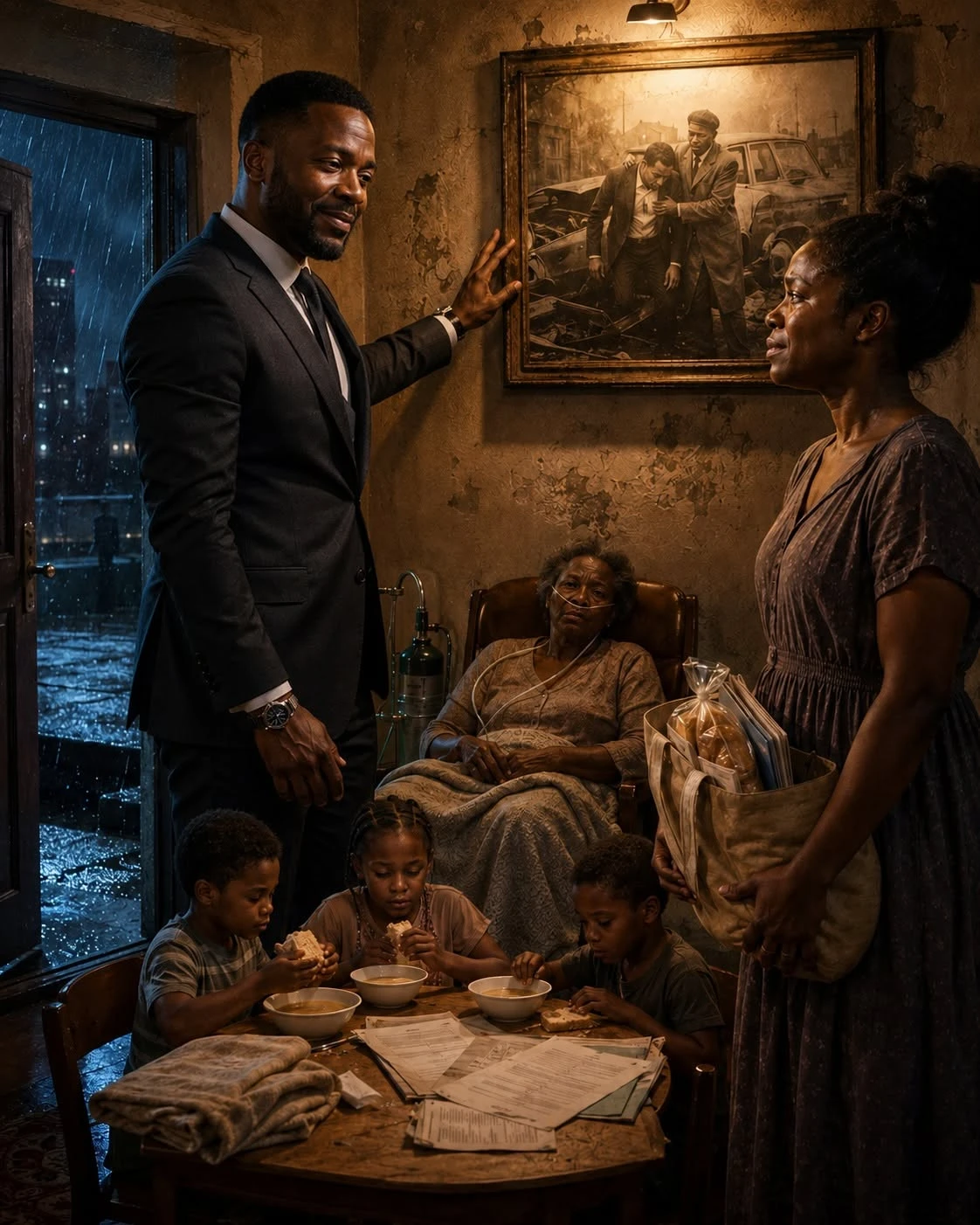
Table of Contents 6
01Chapter 1 - THE MAN WHO PULLED ME FROM THE FIRE
02Chapter 2 - THE LETTER MY FATHER NEVER GAVE ME
03Chapter 3 - THE MAN WHO HAD BEEN AFRAID FOR TWENTY-NINE YEARS
04Chapter 4 - GRACE REFUSED THE MILLION-DOLLAR CHECK
05Chapter 5 - THE LAST THING ESTHER ASKED ME TO DO
06Chapter 6 - THE LIFE SAMUEL SAVED
Esther died peacefully eleven months after Grace graduated.
Grace called me at 4:12 in the morning.
She did not ask me to come.
I went anyway.
The apartment had changed by then.
New paint.
Better furniture.
Photographs of Grace’s graduation.
School drawings from the children.
Samuel’s picture still hung in the same place.
Esther lay quietly in bed.
Grace sat beside her holding one hand.
Michael stood near the window trying not to cry.
Naomi had fallen asleep against Grace’s shoulder.
Tobi simply stared at the floor.
I remained by the doorway.
There was nothing useful money could do.
No doctor to call.
No treatment to purchase.
No problem to solve.
That helplessness once would have made me leave.
Instead, I stayed.
Grace eventually looked toward me.
“She asked for you yesterday.”
My throat tightened.
“Why didn’t you call?”
“She told me not to.”
That sounded like Esther.
Grace reached toward the bedside table.
An envelope.
My name.
Inside was one page.
Henry,
Samuel believed people should be judged by what they do after they discover they were wrong.
You were wrong about Grace.
Your father was wrong about Samuel.
I was wrong for spending years believing anger was the only way to honor my husband.
We all get things wrong.
What matters is what comes next.
Please do not spend the rest of your life trying to repay us.
Become someone Samuel would have been glad to save.
— Esther
I read it twice.
Then sat down because my legs suddenly felt weak.
Grace watched me.
“She liked you.”
“I thought she mostly tolerated me.”
“That was her version of liking rich people.”
I laughed quietly.
It hurt.
The funeral was small.
Samuel’s photograph stood beside Esther’s.
For the first time, husband and wife were publicly honored together.
Marcus attended.
Jonathan Pierce came too.
That surprised Grace.
After cooperating with prosecutors, Jonathan lost his position, paid significant financial penalties, and avoided prison on some charges because investigators confirmed decades of coercion.
He looked much older.
He approached Grace after the service.
“I’m sorry.”
She studied him.
“You knew my father was in danger.”
“Yes.”
“And stayed silent.”
“Yes.”
“My mother spent years afraid.”
Jonathan’s eyes filled.
“I know.”
Grace did not forgive him.
She also did not attack him.
“I hope you spend whatever time you have left doing something better.”
Jonathan nodded.
“That’s what I’m trying to do.”
He left.
I looked at Grace.
“You’re kinder than I would have been.”
“No.”
She looked toward Samuel’s photograph.
“I just don’t want to carry him too.”
That was something I had never understood about revenge.
Sometimes refusing it is less about mercy for the other person than refusing to let them remain inside your life.
Charles did not receive the same opportunity.
His trial exposed decades of crimes.
Fraud.
Extortion.
Witness intimidation.
Financial conspiracy.
And participation in Samuel’s murder.
One former contractor finally testified that Charles ordered Samuel “removed” after he refused to change his statement.
The jury convicted him.
He received a sentence that ensured he would likely die in prison.
Reporters asked me whether I felt justice had been served.
I said yes.
Then corrected myself.
“Legal justice.”
Because no sentence returned Samuel.
No conviction gave Esther back the years she spent raising children alone.
No recovered money erased Grace’s hunger.
Justice had limits.
That didn’t make it useless.
It made it honest.
Oseni Hospitality survived.
Smaller.
Less glamorous.
Better.
I stepped down as CEO two years later.
The business world treated it like a dramatic surprise.
It wasn’t.
I was tired.
For decades, every relationship in my life had been filtered through power.
Employees.
Advisers.
Competitors.
Even friends.
I wanted to find out who Henry Oseni was when nobody needed his signature.
I remained chairman temporarily, then reduced that role too.
Grace became director of employee and community support across our properties.
She was terrifying in budget meetings.
I enjoyed watching executives discover that.
Michael eventually went to college to study engineering.
Naomi wanted to become a teacher.
Tobi changed career plans every six months.
Normal.
Wonderful.
Grace moved them into a modest house outside Atlanta after Esther died.
She bought it herself.
The first time I visited, she made sure I knew that.
“You didn’t pay for this.”
“I noticed.”
“How?”
“It’s much smaller than anything I would have chosen.”
She threw a napkin at me.
I deserved it.
Over time, something else changed between us.
Not romance.
That would have felt wrong for the story we shared.
Family.
Strange, unplanned family.
Grace called me when Michael got his first scholarship.
I called her when I sold my father’s old office building.
The children started calling me Uncle Henry after Tobi accidentally did it once and everyone laughed.
I pretended to object.
Nobody believed me.
Then, five years after Esther died, Grace invited me to the opening of a new community center.
The building stood only a few blocks from the apartment where I first followed her.
A renovated warehouse.
Classrooms.
Childcare.
Medical-navigation services.
Job training.
A large commercial kitchen that redistributed prepared food from hotels and restaurants.
Above the entrance were the words:
THE SAMUEL & ESTHER OKORO COMMUNITY CENTER
I stopped beneath the sign.
Grace stood beside me.
“You approve?”
My eyes filled.
“No.”
She frowned.
“It’s perfect.”
People began arriving.
Families.
Hotel workers.
Students.
Recipients of the Samuel Okoro scholarship.
One woman told me she finished nursing school at forty-two because the scholarship covered childcare.
A man said the center helped him find stable housing after losing his job.
A grandmother collected prepared meals for two grandchildren she was raising.
Each story reminded me of the night I stood outside Grace’s apartment and watched her divide leftovers into equal portions.
Then Tobi, now twelve, ran toward us.
“Uncle Henry!”
He hugged me.
No hesitation.
No fear.
I remembered the child celebrating enough cereal for tomorrow.
Now he complained that the community-center pizza was terrible.
Progress.
During the opening ceremony, Grace spoke first.
She told the crowd about Samuel.
Not me.
She did not turn his life into a story about saving a billionaire.
She told them he was a husband.
A father.
A security worker.
A man who believed seeing something wrong created a responsibility to speak.
Then she spoke about Esther.
How she raised children while grieving.
How she never allowed poverty to become shame.
Finally, Grace looked toward me.
“My father once saved Henry Oseni’s life.”
Everyone turned.
I wished she hadn’t.
“Years later,” she continued, “Henry learned that being saved is not the same thing as understanding why your life matters.”
That was fair.
She smiled.
“He eventually figured some of it out.”
The crowd laughed.
So did I.
Then Grace said something that stayed with me.
“This center exists because kindness is most useful when it stops being a dramatic moment and becomes a system people can rely on.”
That was exactly right.
Samuel’s rescue lasted seconds.
What we built afterward needed to last decades.
Other posts