Chapter 3 - THE MAN WHO HAD BEEN AFRAID FOR TWENTY-NINE YEARS
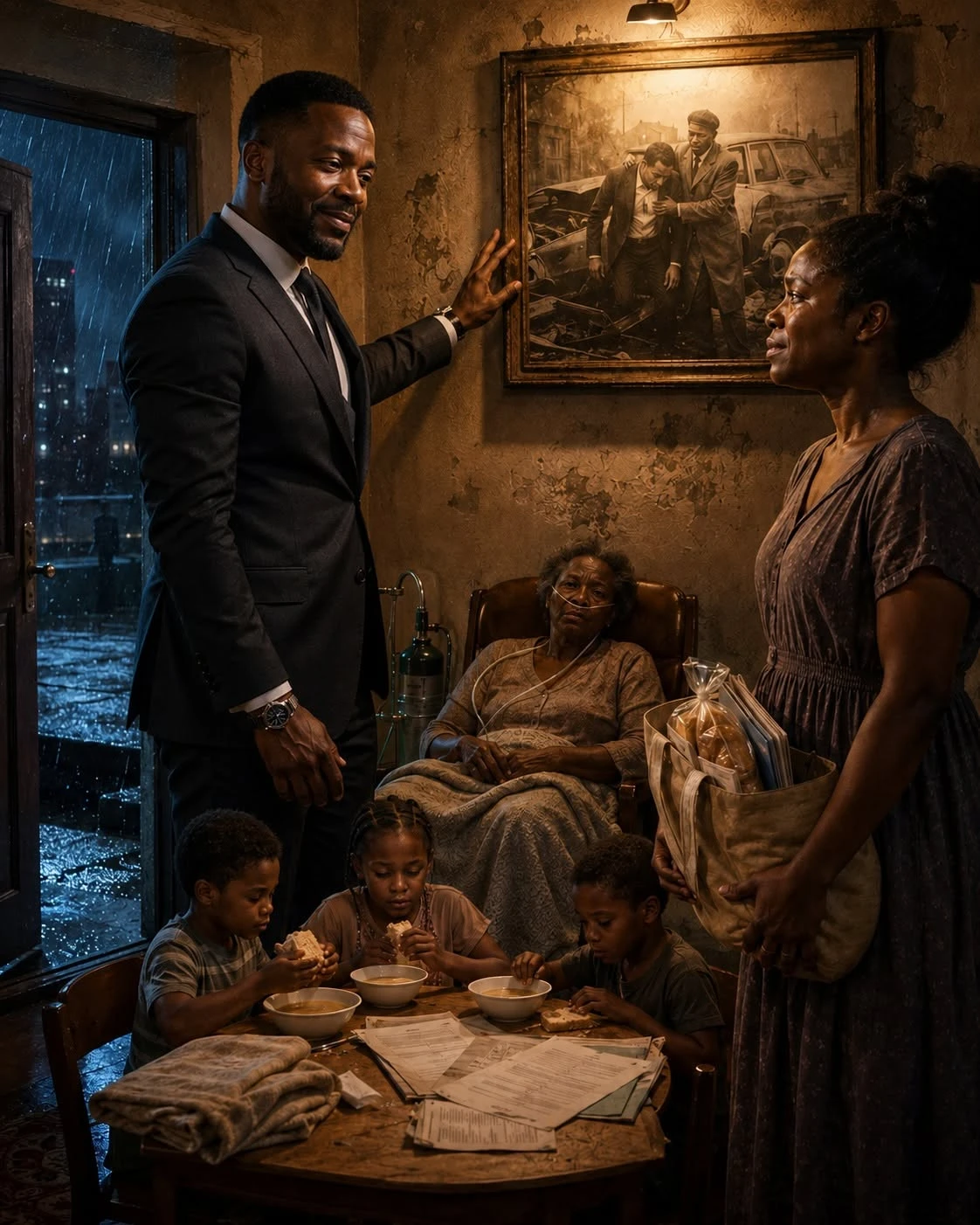
Table of Contents 6
01Chapter 1 - THE MAN WHO PULLED ME FROM THE FIRE
02Chapter 2 - THE LETTER MY FATHER NEVER GAVE ME
03Chapter 3 - THE MAN WHO HAD BEEN AFRAID FOR TWENTY-NINE YEARS
04Chapter 4 - GRACE REFUSED THE MILLION-DOLLAR CHECK
05Chapter 5 - THE LAST THING ESTHER ASKED ME TO DO
06Chapter 6 - THE LIFE SAMUEL SAVED
Marcus refused to let me go alone.
I expected that.
What surprised me was that I agreed.
The old Henry Oseni would have turned Charles’s demand into a test of courage. I would have walked into my own office with armed private security and transformed everything into a confrontation.
Marcus reminded me that Charles had built my private security system.
So we used federal agents instead.
The plan was simple.
I would enter Oseni Hospitality headquarters carrying a copy of Samuel’s cassette.
The original remained with investigators.
A small transmitter was placed inside my jacket.
Marcus hated how easily I accepted it.
“You’re enjoying this.”
“No.”
“You look like you are.”
“I own the building.”
“You might want to stop saying that as though ownership prevents bullets.”
Fair.
At 11:18 p.m., I entered the forty-second floor alone.
Most lights were off.
Charles waited inside my office.
Jonathan sat near the window with one wrist tied to the chair. His forehead was bleeding but he was conscious.
Charles held no visible weapon.
That almost made things worse.
He looked exactly as he always had.
Silver hair.
Perfect suit.
Calm eyes.
The man who taught me how to negotiate hotel deals.
The man who once stood beside me at my father’s grave and said, “Your family is my family.”
“You found Samuel’s daughter,” he said.
“Yes.”
“How disappointing.”
That word made me angry.
Not frightening.
Disappointing.
As though Grace were an administrative inconvenience.
“You killed her father.”
Charles smiled faintly.
“You came here wearing a microphone.”
My heart stopped.
He tapped his ear.
My transmitter was dead.
A signal jammer.
Of course.
Charles knew every security trick available because he helped install most of them.
He walked toward the bar and poured himself water.
“Federal agents downstairs?”
I said nothing.
“That would be Marcus Reed’s idea.”
“You seem calm.”
“I’ve been surviving investigations since before you could legally drink.”
Jonathan looked toward me.
“Henry, don’t give him the tape.”
Charles laughed.
“He already did that once.”
I frowned.
Charles turned toward Jonathan.
“Tell him.”
Jonathan closed his eyes.
Twenty-nine years earlier, after Samuel recorded him, Jonathan panicked.
Charles found out.
He threatened Jonathan’s pregnant wife.
Jonathan surrendered copies of the financial records.
He thought that would save everyone.
It didn’t save Samuel.
“You knew Charles killed him?”
Jonathan started crying.
“I knew after.”
“And you stayed?”
“He had everything on me.”
“Twenty-nine years?”
Jonathan’s face collapsed.
“My wife. My children. Then my grandchildren. Every time I thought about leaving, he reminded me how much I had signed.”
Charles looked almost amused.
“You see, Henry? Everyone has a price.”
“No.”
He looked at me.
“Jonathan did.”
“He had fear.”
“Same thing.”
I thought about Grace refusing to show me her bags.
Samuel refusing money to change his statement.
Esther keeping the lunchbox for decades.
People Charles could not understand because they valued something he couldn’t buy.
“Why did you target me?”
Charles took a drink.
“You were reckless. That night you saw numbers you didn’t understand and started asking your father questions. I needed you frightened enough to stop interfering.”
“You nearly killed me.”
“Unexpected road conditions.”
The casualness of the answer sickened me.
“And Samuel?”
“He made himself a problem.”
“You murdered him.”
Charles’s eyes hardened slightly.
“He was offered a generous solution.”
Jonathan looked away.
The sentence gave investigators exactly what we needed if the transmitter somehow recovered any signal outside the jammer.
But Charles wasn’t finished.
“Your father was the real problem.”
My chest tightened.
“What does that mean?”
“He became sentimental.”
Charles explained that my father had initially tolerated some aggressive accounting practices because the money helped finance rapid expansion.
Not murder.
Not the full theft.
But enough.
When Samuel’s death forced him to look closer, he realized Charles had created an entire hidden financial structure.
My father tried to remove him.
Charles threatened exposure.
The scandal would have destroyed Oseni Hospitality.
My father chose silence while investigating privately.
That silence lasted years.
“Did you kill him too?”
For the first time, Charles looked offended.
“No.”
My father died of pancreatic cancer.
At least that truth remained.
“But I watched him waste his final years trying to prove something nobody cared about.”
“I care.”
Charles smiled.
“Twenty-nine years late.”
That hurt because it was true.
Then I asked about the $240 million transfer.
His expression changed.
Jonathan had been right.
Charles was moving money.
But not simply stealing it.
He had been preparing to purchase controlling interests in several Oseni properties through offshore entities if the company’s stock dropped after a financial scandal.
He intended to expose enough of the historic theft to create panic.
Then buy what remained.
“You were going to destroy the company.”
“I was going to own it.”
“You already had more money than you could spend.”
Charles gave me the same look he used when explaining business to me as a young man.
“This was never about money.”
“Then what?”
“Winning.”
There it was.
My father had warned me.
Ambition becomes dangerous depending on what you value more than winning.
Charles valued nothing more.
A light blinked outside the window.
Reflection.
Marcus’s signal.
Federal agents had reached the floor.
Charles noticed my eyes shift.
He moved fast.
A pistol appeared from beneath his jacket.
He grabbed Jonathan by the shoulder and placed the weapon against his neck.
“Tell them to leave.”
I raised my hands.
“Charles.”
“Now.”
Jonathan closed his eyes.
Then he did something none of us expected.
He slammed his head backward into Charles’s face.
The gun fired.
Glass shattered.
Jonathan fell sideways.
Charles stumbled.
Agents burst through the doors.
Within seconds, Charles was on the floor.
Alive.
Cuffed.
Bleeding from his nose and screaming about attorneys.
I rushed toward Jonathan.
The bullet had missed him.
Mostly.
A piece of glass had cut his cheek badly.
He stared at me.
“I’m sorry.”
I thought about twenty-nine years of silence.
Part of me wanted to hate him.
Then I remembered fear.
“I know.”
That was all I could give him then.
Outside, agents searched Charles.
They found passports.
Offshore account access devices.
And one small notebook.
Inside were names.
Payments.
Dates.
Samuel Okoro appeared on one page.
Beside his name:
Resolved — $25,000.
I stared at that word.
Resolved.
Samuel’s entire life reduced to one accounting note.
Marcus saw my face.
“Henry.”
I closed the notebook.
“No.”
He waited.
“I’m fine.”
“You’re clearly not.”
“I know.”
For once, I didn’t pretend otherwise.
Charles was taken away before sunrise.
Jonathan went to the hospital under guard.
Federal investigators began freezing offshore accounts.
The story spread quickly.
By breakfast, financial news networks were reporting that senior Oseni Hospitality adviser Charles Vane had been arrested in connection with historic fraud.
By lunch, reporters were outside my mansion.
I ignored them.
There was somewhere else I needed to go.
Grace’s family had been moved temporarily to a secure apartment.
When I arrived, Grace opened the door and looked immediately behind me.
“Charles?”
“Arrested.”
Her shoulders dropped.
“And Jonathan?”
“Alive.”
“What about my father?”
I held up Charles’s notebook.
“We have evidence connecting him.”
Grace stared at it.
Then at me.
She did not cheer.
Neither did Esther.
Justice after twenty-nine years did not feel triumphant.
It felt heavy.
Esther asked one question.
“Will people know Samuel told the truth?”
I nodded.
“Yes.”
She closed her eyes.
“Good.”
That was all she wanted.
Not millions.
Not revenge.
His name.
The truth.
Then one of the children came running from the kitchen holding a bowl.
“Grace, there’s enough cereal for tomorrow too!”
The excitement in his voice crushed me.
Enough cereal.
I owned fourteen hotels.
Six apartment towers.
Restaurants where a single dinner cost more than Grace earned in a day.
And this child celebrated tomorrow’s cereal like a miracle.
I looked toward Grace.
“What does your mother’s treatment cost?”
Her face changed immediately.
“No.”
“I’m asking.”
“And I’m answering.”
“No.”
For the first time, I almost smiled.
She had become very consistent.
“I owe your family.”
“You owe my father the truth.”
“I can do more.”
“Money will not make you Samuel.”
“I know.”
The answer surprised both of us.
I continued.
“But money can pay for treatment. It can put food in this kitchen. It can give those children beds that aren’t mattresses on the floor.”
Grace stared at me.
“And then what? We belong to you?”
“No.”
“Then don’t rescue us because you feel guilty.”
She was right.
Again.
So I asked a different question.
“What would help without making you dependent on me?”
Grace looked toward her mother.
Then the children.
“Time.”
“What?”
“I need time to work fewer hours while Mom gets treatment. I need childcare. I need a job that pays enough without fifteen-hour days.”
Those were problems money could help solve.
But not through a dramatic check.
I nodded.
“Then we figure that out.”
Grace narrowed her eyes.
“We?”
“If you’ll let me.”
She didn’t answer immediately.
Then she opened the door wider.
It was not forgiveness.
It was enough.
Other posts