Chapter 6 - THE SOUND I REMEMBERED MOST WAS NOT THE FLATLINE
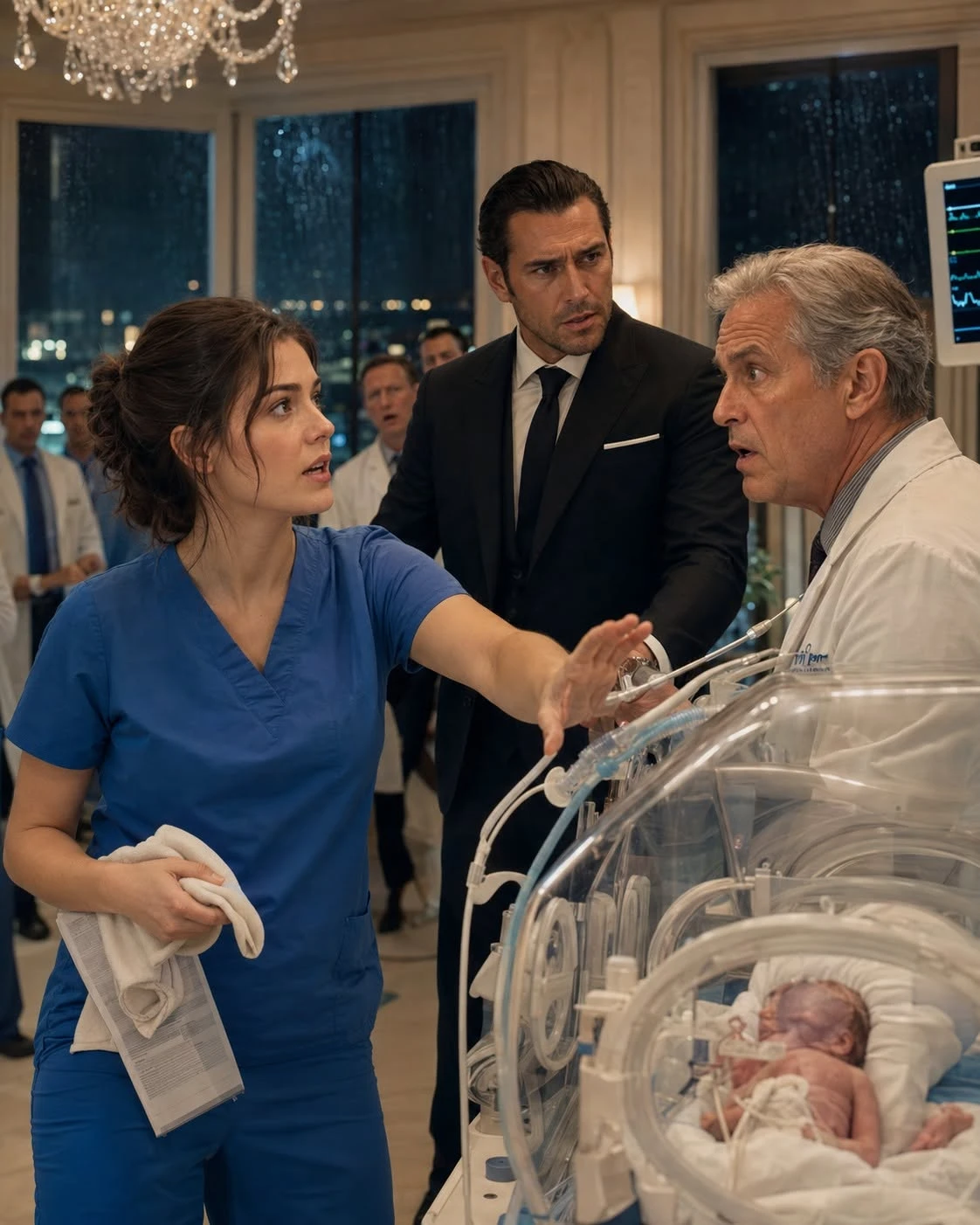
Table of Contents 6
01Chapter 1 - THE TUBE THAT SHOULD NEVER HAVE BEEN THERE
02Chapter 2 - MY FATHER’S NAME WAS ALREADY IN THEIR FILES
03Chapter 3 - THE BABIES WHO WERE NEVER SUPPOSED TO BE COUNTED
04Chapter 4 - THE DOCTOR WHO THOUGHT A POOR NURSE WOULD STAY QUIET
05Chapter 5 - THE BABY WHO GREW UP KNOWING WHY HIS LIFE MATTERED
06Chapter 6 - THE SOUND I REMEMBERED MOST WAS NOT THE FLATLINE
When I was sixty-two, a young nurse approached me after a patient-safety conference in Chicago.
She looked nervous.
“Ms. Bennett-Moretti?”
“Claire.”
She smiled.
“Claire.”
She had been working only eight months.
A pediatric patient on her floor had begun developing strange respiratory symptoms every time a certain infusion pump was used.
The attending dismissed her concern.
Maintenance said the pump passed diagnostics.
She had started wondering whether she was imagining the pattern.
“What should I do?”
I almost answered too quickly.
Report it.
Escalate.
Document.
Standard safety language.
Then I remembered being twenty-five.
Poor.
Tired.
Terrified of losing a job.
Advice sounds different when the person giving it can afford consequences.
So I asked, “What are you afraid will happen if you speak?”
Her eyes filled.
“I’m on probation.”
There.
Real problem.
“I support my mother.”
Another.
“If they fire me…”
She stopped.
I understood.
“Then don’t be reckless.”
She looked surprised.
“People love saying courage means not being afraid.”
I shook my head.
“Courage can also mean building enough protection around yourself that the truth survives even if someone tries to punish you.”
We talked.
Incident report.
Independent biomedical engineering review.
Union representative.
Charge nurse.
Photographs.
Times.
Device serial numbers.
Other cases.
Do not accuse.
Document.
Ask.
Escalate.
Three weeks later, she emailed.
The pump had an intermittent valve defect.
Recall issued.
No child seriously harmed.
That email meant as much to me as any award I ever received.
Maybe more.
Dominic was seventy by then.
Retired.
Terrible at retirement.
He wandered through the house giving opinions nobody requested.
Sophia told him to volunteer.
He joined a youth boxing program and immediately became too emotionally invested in twelve-year-olds’ footwork.
Leonardo was thirty-seven.
Married.
Two children.
Neither interested in medicine.
One wanted to become a musician.
Dominic blamed me.
Apparently every unexpected family outcome remained my responsibility.
We hosted Sunday dinner.
Still.
Sophia came.
Leonardo.
His wife.
Children.
Dr. Shah occasionally.
Samuel’s daughter when she was in town.
A family built around one catastrophic night but no longer defined by it.
After dinner, Dominic and I sat outside.
He moved more slowly.
So did I.
“Do you remember the gun?”
I asked.
He looked offended.
“Why is that what everyone remembers?”
“Because you pointed it at a doctor.”
“He was incompetent.”
“He was criminal.”
“Even worse.”
“You didn’t know that.”
“Instinct.”
I laughed.
“No. Rage.”
“Fine.”
Then he became quiet.
“I thought fear could make him save Leonardo.”
“I know.”
“I was wrong.”
“Yes.”
He had said that many times.
It never hurt to hear.
“What made you speak?”
he asked.
I thought.
Not courage.
Not exactly.
The purple marks.
The sweet smell.
The syringe.
Sterling’s certainty.
Maybe Dad too, somehow.
Years of watching wealthy systems turn his suffering into paperwork taught me what silence cost.
“I was more afraid he’d die than I was afraid of all of you.”
Dominic nodded.
“That’s insulting.”
“You were terrifying.”
“Past tense?”
“Mostly.”
He accepted that.
Then he asked, “Would you do it again?”
“Yes.”
Immediate.
“Even knowing everything?”
Dad’s murder exposed.
My life changed.
Trials.
Threats.
Marriage.
Years of work.
“Yes.”
Because the alternative was a baby dying while I held towels.
That answer had never changed.
People later exaggerated the story.
Fifteen famous doctors watched a mafia baby die until a poor nurse saved him.
Not exactly.
Dr. Shah helped.
Respiratory therapy helped.
The laboratory helped.
Federal investigators helped.
Samuel helped.
Dad started it years before.
Leonardo’s body did the hardest part.
He survived.
Hero stories become dangerous when they erase systems.
So when people asked, I corrected them.
I did not bring Leonardo back alone.
I noticed something.
Then I spoke.
That was enough.
Sometimes enough is enormous.
After Dominic died peacefully at seventy-eight, I found the old newspaper clipping from the scandal inside his desk.
The headline showed his younger face outside St. Anne’s.
MOB BOSS’S NEPHEW AT CENTER OF HOSPITAL POISONING CASE.
He had written one sentence across the margin.
Claire was louder than all of us.
I laughed.
Then cried.
We had been married thirty-seven years.
He never became harmless.
That was not the goal.
He became accountable.
Different.
He learned that loving people did not give him the right to control every outcome.
I learned that independence did not require refusing every hand extended toward me.
We met in a room where both of us misunderstood power.
He thought power was the ability to force.
I thought having none meant I had to stay quiet.
Leonardo nearly died while teaching us both otherwise.
At Dominic’s funeral, Leonardo stood beside me.
He had gray in his hair now.
Impossible.
He looked toward the crowd.
“My uncle loved telling everyone Claire saved my life.”
I shook my head.
He smiled.
“She still argues.”
People laughed softly.
Then he became serious.
“I don’t remember Suite 404.”
Of course not.
“I don’t remember the monitor, the contaminated tubing, or the people fighting over what was wrong with me.”
He looked toward me.
“But I grew up because someone without status saw something powerful people missed and decided my life mattered more than knowing her place.”
My eyes filled.
He continued.
“Uncle Dom spent the rest of his life learning the same lesson.”
Then he looked toward Dominic’s casket.
“The strongest person in the room is not always the one everyone fears.”
That would have embarrassed Dominic.
Good.
After the service, Leonardo handed me something.
Dad’s old employee badge.
Halcyon.
James Bennett.
I stared.
“Where did you get this?”
“Uncle Dom kept it in his desk.”
My throat tightened.
On the back, Dominic had written:
THE FIRST MAN WHO SAVED LEO NEVER MET HIM.
That was true.
Dad found unsafe tubing years before Leonardo existed.
He spoke.
They silenced him.
But evidence survives strange paths.
Toolboxes.
Flash drives.
Old friends.
Poor nurses who read torn textbooks.
Babies whose skin turns purple under bright hospital lights.
Nothing we do guarantees we will see the outcome.
That used to make me angry.
Now I think there is something beautiful in it too.
You can protect people you will never meet.
You can make a choice today that reaches someone years later.
You can tell the truth without knowing who eventually hears it.
Dad did.
Samuel did.
Sophia did.
Dr. Shah did.
I did.
Then Leonardo did for others.
The chain continued.
Years after Dominic was gone, I returned once more to St. Anne’s.
Not as a nurse.
Not as a witness.
Just an old woman visiting the pediatric safety center.
A newborn cried somewhere down the hallway.
Strong cry.
Angry cry.
Hungry.
Healthy.
I stopped.
For one second, I remembered the flatline from Suite 404.
People always assumed that was the sound I carried longest.
It wasn’t.
I remembered the first beep afterward.
Weak.
Almost easy to miss.
Then another.
Then another.
A life returning one small sound at a time.
That became the sound I associated with everything that followed.
Dad’s truth returning.
Samuel’s identity returning.
Families receiving answers.
My career returning.
Dominic becoming someone capable of love without fear ruling him.
Leonardo growing from a gray, motionless newborn into a man with children of his own.
One beep.
Then another.
Lives rarely change all at once, even when stories make them sound that way.
Usually they change through small decisions repeated long enough to become a future.
Speak.
Listen.
Question.
Document.
Choose restraint.
Tell the truth.
Stay.
I stood outside the nursery listening to that healthy baby cry.
A young nurse hurried past me carrying supplies.
She looked exhausted.
Twenty-five, maybe.
For a moment, I saw myself.
Then she stopped beside the doorway.
She frowned.
Looked toward a monitor.
Asked another nurse a question.
The older nurse started to wave her off.
The younger one asked again.
Louder.
I smiled.
Then kept walking.
She did not need me.
That was the best ending I could have asked for.
THE END
Other posts