Chapter 1 - THE TUBE THAT SHOULD NEVER HAVE BEEN THERE
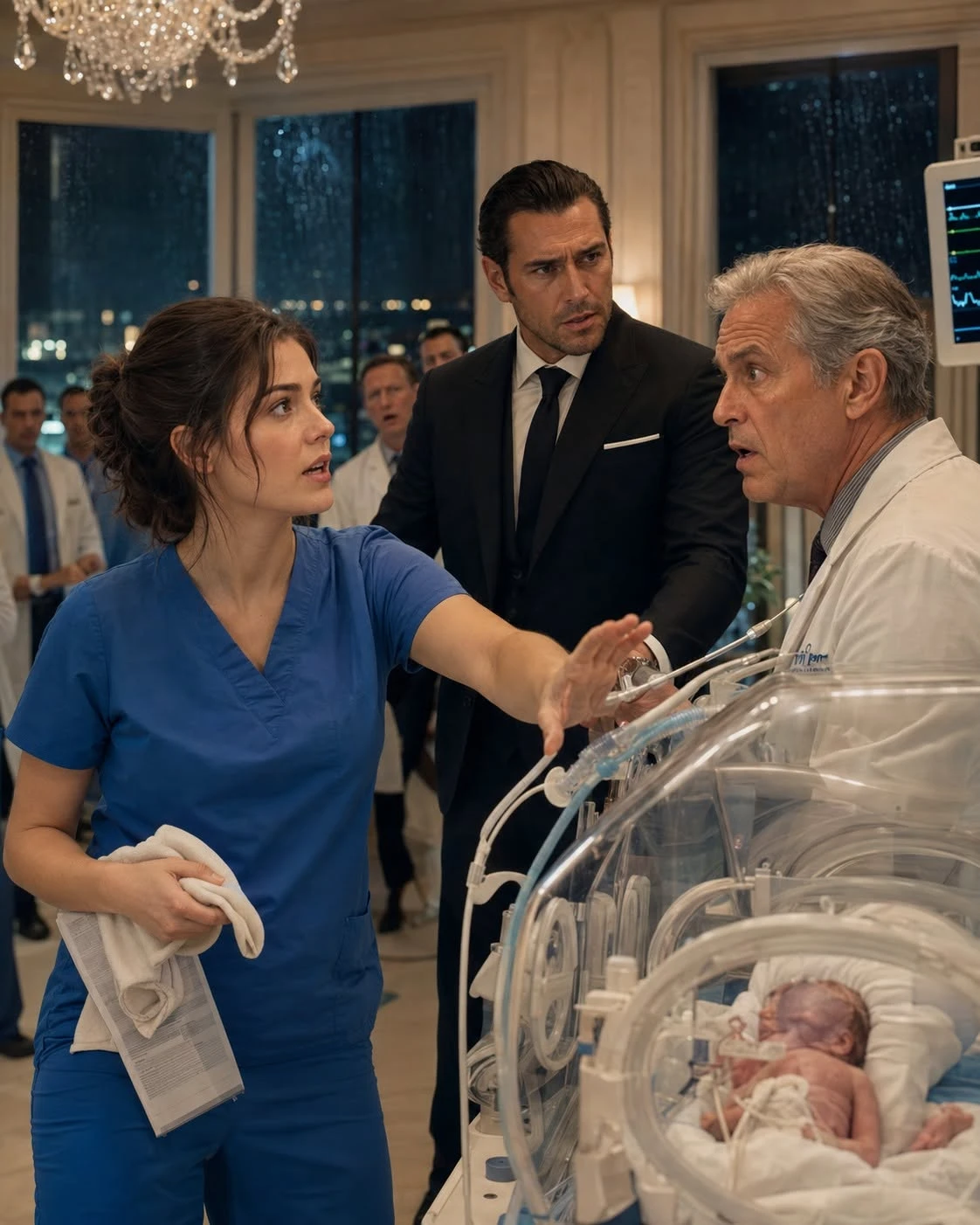
Table of Contents 6
01Chapter 1 - THE TUBE THAT SHOULD NEVER HAVE BEEN THERE
02Chapter 2 - MY FATHER’S NAME WAS ALREADY IN THEIR FILES
03Chapter 3 - THE BABIES WHO WERE NEVER SUPPOSED TO BE COUNTED
04Chapter 4 - THE DOCTOR WHO THOUGHT A POOR NURSE WOULD STAY QUIET
05Chapter 5 - THE BABY WHO GREW UP KNOWING WHY HIS LIFE MATTERED
06Chapter 6 - THE SOUND I REMEMBERED MOST WAS NOT THE FLATLINE
For one long second, nobody moved.
Then Dominic Moretti turned toward Dr. Sterling.
“You heard her.”
Sterling’s face hardened.
“Mr. Moretti, with all due respect, we cannot let an unassigned floor nurse dictate neonatal resuscitation.”
Dominic’s eyes did not leave him.
“You can either change the equipment or explain to me why you refused while my nephew died in front of you.”
That was enough.
The room exploded into motion.
A respiratory therapist disconnected the ventilator tubing. Another nurse pulled the warming pad. A resident began flushing the IV line while one of the neonatologists called for a fresh circuit from the pediatric intensive care cart.
I stepped closer.
My knees felt weak, but my mind had become strangely clear.
“Don’t use anything from this room,” I said. “Bring sealed equipment from another floor.”
Sterling glared at me.
“You have already overstepped enough.”
I looked directly at him.
“And the baby is still dying.”
That silenced him.
The new tubing arrived.
When the respiratory therapist opened the package, the plastic smelled different.
Clean.
Neutral.
No sweetness.
My stomach tightened.
The original tubing was wrong.
Leonardo’s oxygen saturation had fallen so low the monitor struggled to register it. His heart rhythm flickered weakly across the screen. I could hear every breath in the room except his.
The new circuit was connected.
Fresh line.
Fresh mask.
No contaminated warming pad.
Then we waited.
One second.
Two.
Three.
The monitor beeped.
A weak pulse.
Then another.
Someone whispered, “Come on.”
The oxygen number changed.
Forty-eight.
Fifty-three.
Fifty-nine.
I stared.
“Keep ventilating.”
The neonatologist adjusted pressure.
Leonardo’s fingers twitched.
His color remained terrible, but the gray began fading from his lips.
Dr. Sterling stepped forward.
“Push the epi now.”
I shook my head.
“Not yet.”
His face turned red.
“You are not directing this case.”
The senior neonatologist, Dr. Priya Shah, suddenly spoke.
“Wait.”
Everyone looked at her.
She studied the monitor.
“Heart rate is climbing without it.”
Sterling stared.
“That’s impossible.”
“No.”
Dr. Shah looked toward the discarded tubing.
“It means she may be right.”
The room changed.
Not because I had suddenly become important.
Because the evidence had.
Leonardo’s heart rate rose.
Seventy.
Eighty-six.
One hundred and four.
His oxygen saturation climbed more slowly, but it climbed.
The faint purple pattern along his neck began to soften.
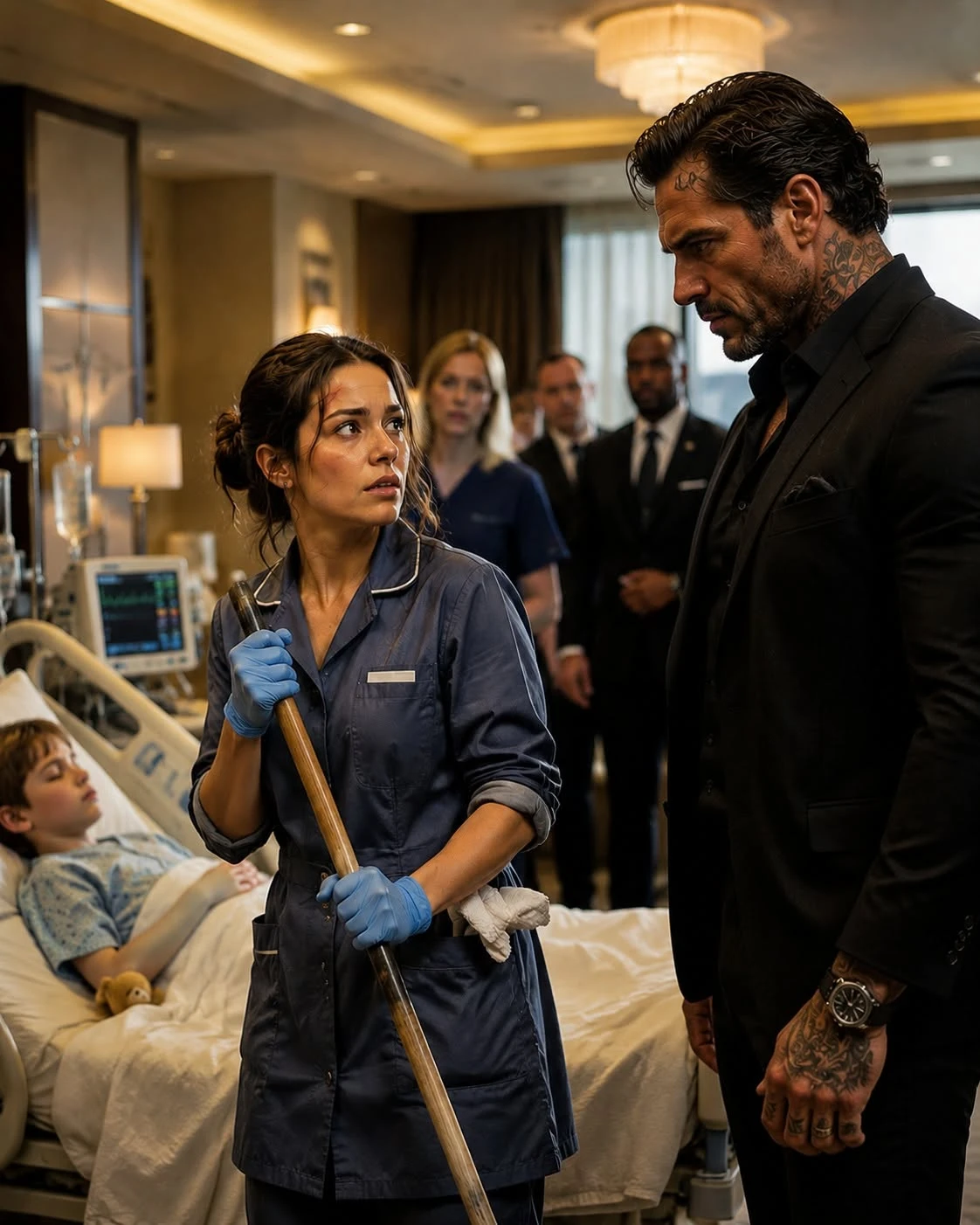
Dominic lowered his weapon fully.
For the first time, I saw his hand shake.
“Is he alive?”
Dr. Shah looked toward him.
“Yes.”
That single word nearly collapsed the entire room.
Dominic turned away.
He pressed one hand against his mouth.
No one looked directly at him.
Men like Dominic Moretti apparently received privacy even when breaking.
I did not.
Sterling turned toward me.
“You guessed.”
I stared.
“No.”
His jaw tightened.
“You remembered a rare case from an outdated textbook and guessed.”
“Then why is he improving?”
“That proves nothing yet.”
“It proves we should test the equipment.”
He stepped toward me.
“Do you understand what kind of accusation you are making?”
There it was.
Not concern for Leonardo.
Concern for what the implication might do.
I looked at the original circuit.
“If there is chemical contamination, then someone either stored the equipment improperly, supplied defective material, or put something there deliberately.”
The last word changed the room.
Deliberately.
Dominic turned slowly.
“Who had access?”
Sterling shook his head.
“Let’s not become hysterical.”
I almost laughed.
“Hysterical?”
Dr. Shah looked at him sharply.
“She just helped bring the baby back.”
Sterling ignored her.
Dominic did not.
He walked toward the supply cart.
“Seal everything.”
Hospital security hesitated.
Not because they disagreed.
Because Dominic was giving orders inside their hospital.
Then a woman entered.
Hospital administrator Eleanor Vale.
She was elegant, silver-haired, and composed enough to make even Sterling look junior.
“What is happening?”
Sterling answered first.
“We had a neonatal collapse. The child is stabilizing.”
Eleanor looked toward Dominic.
Then toward me.
Then toward the discarded ventilator circuit.
“Why is that being bagged?”
I spoke.
“Possible chemical contamination.”
Her face changed very slightly.
Very slightly.
But I noticed.
“No.”
The answer came too quickly.
I frowned.
“You haven’t tested it.”
“There has been no contamination event.”
“How do you know?”
She looked at me as if remembering I was an employee and therefore someone she could control.
“What is your name?”
“Claire Bennett.”
“And your assigned department?”
“General medicine.”
“Then you are not authorized to make claims about neonatal equipment.”
I stared.
“Neither was I authorized to let the baby die.”
Dominic almost smiled.
Eleanor did not.
“Ms. Bennett, step outside.”
Dominic spoke without raising his voice.
“She stays.”
Eleanor turned toward him.
“Mr. Moretti, this is still a hospital.”
“And that is still my nephew.”
“You cannot threaten staff into practicing medicine.”
He looked toward the gun.
Then handed it to one of his men.
“Better?”
No one answered.
Dr. Shah stepped between them.
“We need testing.”
Eleanor’s face tightened.
“Internal quality control can handle it.”
“No,” I said.
Every eye turned toward me again.
If I still wanted my job, this was probably the moment to stop talking.
Instead, I said, “Independent testing.”
Eleanor’s stare became cold.
“Why?”
“Because if this came through hospital supply, internal quality control has a conflict.”
Sterling actually laughed.
“You’ve worked here how long?”
“Eleven months.”
“And suddenly you understand hospital governance?”
“No.”
I pointed toward the baby.
“I understand that a child nearly died.”
Dominic looked at Eleanor.
“Independent.”
She knew she had lost.
“Fine.”
Then she turned toward me.
“You are off duty pending review.”
Of course.
There it was.
The rule poor nurses learn quickly.
When something goes wrong, the person with the least power becomes easiest to remove.
I should have felt terrified.
Rent.
Loans.
Dad’s medical debt.
All of it waited outside Suite 404.
But Leonardo was breathing.
That mattered more.
I removed my badge.
Placed it on the counter.
Eleanor looked surprised.
“I said pending review.”
“I heard you.”
Then I walked toward the door.
Dominic’s voice stopped me.
“Claire.”
I turned.
He stood beside his sister’s bed.
Sophia remained unconscious.
Leonardo lay inside the incubator, alive because someone had finally changed what everyone assumed could not be the problem.
Dominic looked at me for a long moment.
“You saved him.”
“No.”
I shook my head.
“We changed the equipment.”
“You saw it.”
“Anyone could have.”
“But nobody did.”
That sentence followed me into the hallway.
By dawn, I was sitting alone in the employee locker room packing my things into a grocery bag.
I expected security to escort me out.
Instead, Dr. Shah appeared.
She closed the door.
“You were right.”
My hands stopped.
“About what?”
“The tubing.”
She held a preliminary laboratory report.
“Trace chemical residue.”
My heart pounded.
“What chemical?”
She hesitated.
“Diethylene glycol.”
I stared at her.
Industrial solvent.
Toxic.
Sweet-smelling.
Capable of causing metabolic collapse, kidney injury, neurologic symptoms.
In a newborn?
Potentially fatal in tiny amounts.
“That shouldn’t be anywhere near ventilator tubing.”
“No.”
“Manufacturing contamination?”
“That’s what they’re saying.”
“They?”
She looked toward the door.
“Sterling. Administration.”
“And you?”
Dr. Shah lowered her voice.
“I think they are lying.”
My stomach tightened.
“Why?”
She handed me a second page.
Three pediatric incidents had occurred during the previous four months.
Two infants.
One toddler.
Unexplained metabolic collapse.
All treated in private suites.
All recovered after emergency equipment changes.
None were reported as contamination events.
I stared.
“They knew.”
“I don’t know.”
“You think they did.”
“Yes.”
Then she whispered something worse.
“One of those babies died two days later.”
I looked at her.
“Why wasn’t it investigated?”
“That’s what I want to know.”
Footsteps sounded outside.
Dr. Shah quickly took the papers back.
“I was never here.”
She left.
I sat alone for another minute.
Then my phone vibrated.
Unknown number.
A photograph appeared.
Me.
Standing in Suite 404.
Taken from behind the glass partition less than an hour earlier.
Underneath were six words.
YOU SHOULD HAVE KEPT YOUR MOUTH SHUT.
A second message arrived.
YOUR FATHER COULDN’T. LOOK WHAT HAPPENED.
My blood went cold.
My father had died two years earlier after spending months in and out of hospitals because of complications from a workplace exposure nobody ever fully explained.
I had spent every dollar I owned trying to keep him alive.
And suddenly, for the first time, I wondered whether the debt he left me was not the only thing his death had connected to St. Anne’s.
Other posts