Chapter 5 - THE BABY WHO GREW UP KNOWING WHY HIS LIFE MATTERED
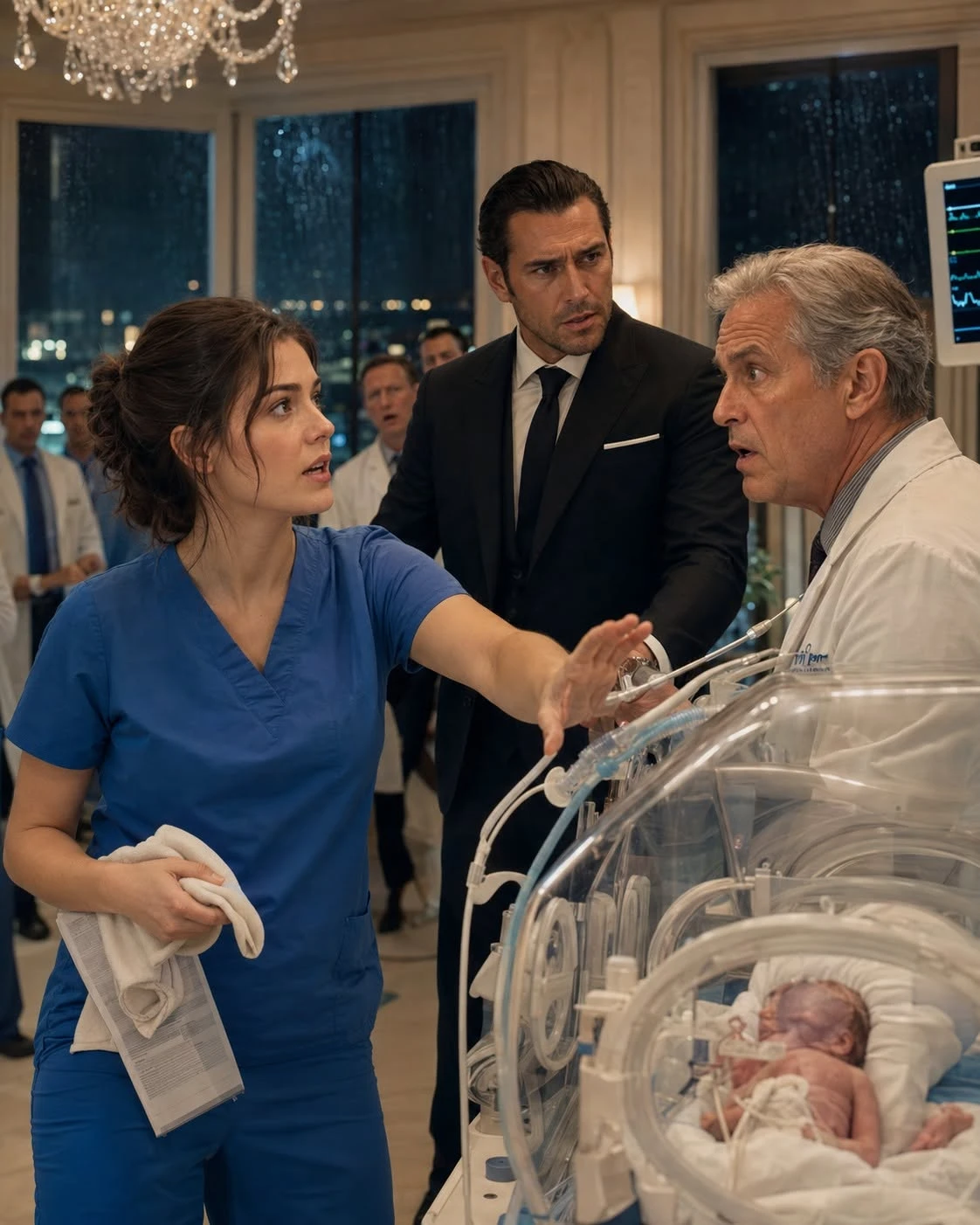
Table of Contents 6
01Chapter 1 - THE TUBE THAT SHOULD NEVER HAVE BEEN THERE
02Chapter 2 - MY FATHER’S NAME WAS ALREADY IN THEIR FILES
03Chapter 3 - THE BABIES WHO WERE NEVER SUPPOSED TO BE COUNTED
04Chapter 4 - THE DOCTOR WHO THOUGHT A POOR NURSE WOULD STAY QUIET
05Chapter 5 - THE BABY WHO GREW UP KNOWING WHY HIS LIFE MATTERED
06Chapter 6 - THE SOUND I REMEMBERED MOST WAS NOT THE FLATLINE
Twelve years later, Leonardo Moretti stood on a stage holding a science-fair trophy taller than his torso.
He was twelve.
Healthy.
Loud.
Terrible at losing board games.
Completely unaware that fifteen famous doctors once stood around his incubator convinced he was dead.
We told him the story carefully when he was older.
Not the gun.
Sophia insisted we omit the gun until college.
Reasonable.
He knew contaminated medical equipment nearly killed him.
He knew his grandmother—because Sophia eventually married and gave him a very complicated family tree—had fought to bring him into the world.
He knew James Bennett helped expose the company responsible before he died.
Most importantly, he knew survival did not make him responsible for becoming extraordinary.
I insisted on that.
Children who survive dramatic things often inherit adult expectations.
You were saved for a reason.
No.
He was saved because he was a baby who deserved to live.
Whatever he chose afterward belonged to him.
Naturally, Leonardo ignored this healthy philosophy and became obsessed with biomedical engineering.
“Not because of the tubing,” he said every time.
“Because robots.”
Fine.
The science-fair project was a low-cost sensor that detected abnormal chemical release from heated polymer tubing.
Definitely robots.
Dominic blamed me.
I blamed genetics.
By then, Dominic and I had been married seven years.
That still surprised people.
Newspapers tried to turn us into a story they could understand.
Poor nurse saves mafia baby, marries crime boss.
Easy.
Wrong.
I did not marry him because he was powerful.
I almost didn’t marry him because of it.
The years between our first date and wedding mattered more than the dramatic night in Suite 404.
Dominic dismantled large parts of his criminal operations.
Not overnight.
Not magically.
Real change involved attorneys, tax settlements, divestitures, cooperation agreements, angry associates, and more accountants than gunmen.
He retained legitimate construction, logistics, and restaurant businesses.
The rest slowly disappeared.
Some through forfeiture.
Some through closure.
Some because Dominic finally admitted family tradition was not a moral argument.
He still had a reputation.
People still lowered their voices sometimes.
Leonardo did not.
“Uncle Dom, you forgot my lunch.”
Dominic would stop meetings.
That amused me.
Sophia became executive director of the James Bennett Medical Safety Foundation.
I fought the name.
She won.
The foundation funded independent hospital equipment testing, whistleblower legal support, and emergency financial assistance for healthcare workers reporting safety violations.
The debt I inherited from Dad was eventually erased through the legal restitution process.
Not Dominic.
The court.
That distinction mattered to me.
Halcyon’s bankruptcy fund compensated victims.
Never enough.
Money cannot balance a dead child against a ledger.
But families received acknowledgment that what happened was not their fault, not rare disease, not mysterious tragedy.
Someone chose profit.
The record said so.
Samuel Kline lived another six years after rescue.
He became stubbornly cheerful.
At seventy-eight, he started teaching a biomedical ethics course.
Students apparently loved him because he called executives “people who need more grandmothers yelling at them.”
When he died, his family buried him properly.
That mattered.
A real funeral after a fake death.
Dad never got to see the consequences of his evidence.
I struggled with that longest.
Once, years after the trial, I told Dominic I hated happy endings that arrived after the person who earned them was gone.
He understood.
“My father used to say dead men don’t care about justice.”
“Comforting.”
“He was not comforting.”
“What do you think?”
Dominic looked toward Leonardo playing outside.
“I think the living care.”
That was enough.
Justice belongs partly to survivors.
Not because it repairs the dead.
Because lies should not become inheritance.
Dr. Sterling died in prison.
Eleanor remained incarcerated.
Several Halcyon executives received long sentences.
Others served less than I thought they deserved.
I learned another unpleasant truth.
Law does not always produce emotional symmetry.
Still, paperwork beat revenge.
Records remained.
Policies changed.
Equipment standards tightened nationally after federal regulators reviewed polymer safety requirements in neonatal respiratory systems.
Dad’s name appeared in one technical advisory.
James Bennett, whistleblower.
I printed it.
Framed it.
Not because technical recognition made him a hero.
Because he would have found it hilarious that after years of being called difficult, a federal document officially admitted he was right.
My own career changed.
I became a neonatal safety specialist.
Then nurse educator.
Eventually, I taught young nurses.
On the first day, I always told them one thing.
“Hierarchy does not change physiology.”
Attendings can be wrong.
Administrators can be wrong.
Senior nurses can be wrong.
You can be wrong too.
Look at the patient.
Look at the evidence.
Speak.
Not recklessly.
Clearly.
Document.
Escalate.
Find allies.
The lesson came from Leonardo.
But I never told students a dramatic story about a mafia boss holding a gun.
Mostly because nursing administration would have concerns.
Also because the important part was not the gun.
It was the purple skin.
The sweet smell.
The pattern everybody saw but nobody put together because the wrong person noticed first.
One evening after Leonardo’s science fair, we returned home.
Dominic loosened his tie.
“You cried.”
“I did not.”
“You absolutely did.”
“Dust.”
“Indoor auditorium.”
“Science dust.”
He laughed.
Then Leonardo ran downstairs.
“Claire!”
He had called me Claire since childhood.
Never Mom.
I never asked him to.
Sophia was his mother in every way that mattered.
I liked my place.
“What?”
“I need Grandpa James’s notebook.”
I froze slightly.
Dad’s notebook.
The original one investigators returned after trial.
“What for?”
“My project.”
“No.”
“Why?”
“Because it is evidence history.”
“The case is over.”
“It has Dad’s handwriting.”
“Exactly.”
He looked offended.
“You said science should be shared.”
“Not with sticky twelve-year-old hands.”
Dominic leaned toward him.
“She has a point.”
Leonardo betrayed him instantly.
“You touch it.”
Dominic stopped.
I smiled.
“Exactly.”
We compromised.
I scanned selected pages.
Leonardo read Dad’s notes.
Measurements.
Temperatures.
Questions.
One line made him quiet.
IF THEY SAY IT’S TOO RARE TO MATTER, ASK THE FAMILY IT HAPPENED TO.
Leonardo looked at me.
“Did he write this before I was born?”
“Yes.”
“He didn’t know me.”
“No.”
“He still saved me.”
My throat tightened.
“Partly.”
“Then he cared about people he didn’t know.”
“Yes.”
Leonardo considered.
“That’s kind of the point, right?”
“What?”
“Medicine.”
I looked at Dominic.
He looked suspiciously emotional.
Science dust again.
“Yes.”
I answered.
“That’s the point.”
Years later, Leonardo became an engineer.
Not doctor.
He designed safer neonatal equipment.
The first device his company released carried no Moretti name.
He called the company JB Medical Systems.
James Bennett.
I argued.
He ignored me.
Dominic said that was what I got for teaching him independence.
Fair.
The first time the device was installed at St. Anne’s, I almost refused to attend.
The hospital had changed leadership completely.
Suite 404 no longer existed as a private neonatal suite.
After the scandal, the board converted the entire floor into a pediatric safety and family-support center.
No gold fixtures.
No carpeted secrecy.
Transparent glass.
Standardized protocols.
Public reporting.
The dedication ceremony included a plaque.
IN MEMORY OF THE CHILDREN HARMED BY PREVENTABLE MEDICAL CONTAMINATION, AND IN HONOR OF THOSE WHO SPOKE WHEN SILENCE WAS EASIER.
Dad’s name appeared among several.
Not alone.
Correct.
He had not been the only brave person.
Dr. Shah spoke.
Samuel’s daughter spoke.
Three parents spoke.
I refused.
Then Leonardo dragged me onto the stage anyway.
Apparently Moretti tendencies survived ethical reform.
He handed me the microphone.
“I hate you.”
“I know.”
I looked toward the audience.
Nurses.
Doctors.
Families.
Dominic.
Sophia.
Leonardo.
For one second, I was twenty-five again.
Towels against my chest.
Behind a supply cart.
Terrified that speaking loudly might cost me the job keeping me housed.
It did cost me something.
That night changed everything.
But not because a mafia boss noticed me.
Not because I eventually married him.
Not because newspapers cared.
It changed because I learned something I carried into every room afterward.
Being the least powerful person in a room does not make what you see less true.
I said that into the microphone.
Then handed it back.
Short speech.
Best kind.
Afterward, Dominic found me near the old Suite 404 corridor.
“You okay?”
“Yes.”
“Really?”
“Yes.”
He looked around.
“Do you miss anything about that night?”
“Absolutely not.”
He smiled.
“Not even meeting me?”
“I met you while you were threatening a surgeon with a gun.”
“I was under stress.”
“You were insane.”
“Temporarily.”
“Debatable.”
He laughed.
Then took my hand.
That was our marriage.
Not pretending the beginning had been romantic.
It wasn’t.
It was terrifying.
What became romantic was everything Dominic did afterward to become someone I could choose without fear.
And everything I learned about accepting love without confusing it with debt.
We walked downstairs.
Leonardo waited near the entrance.
“Dinner?”
Dominic asked.
“Yes.”
“Somewhere expensive?”
“No.”
Leonardo answered.
“Pizza.”
Dominic sighed.
“I own restaurants.”
“Pizza.”
We got pizza.
Ordinary.
That became my favorite kind of ending.
Not the night a baby came back from death.
The years afterward when he simply got to grow up.
Other posts