Chapter 7 - TWENTY YEARS AFTER THE NINETY-SECOND TEST
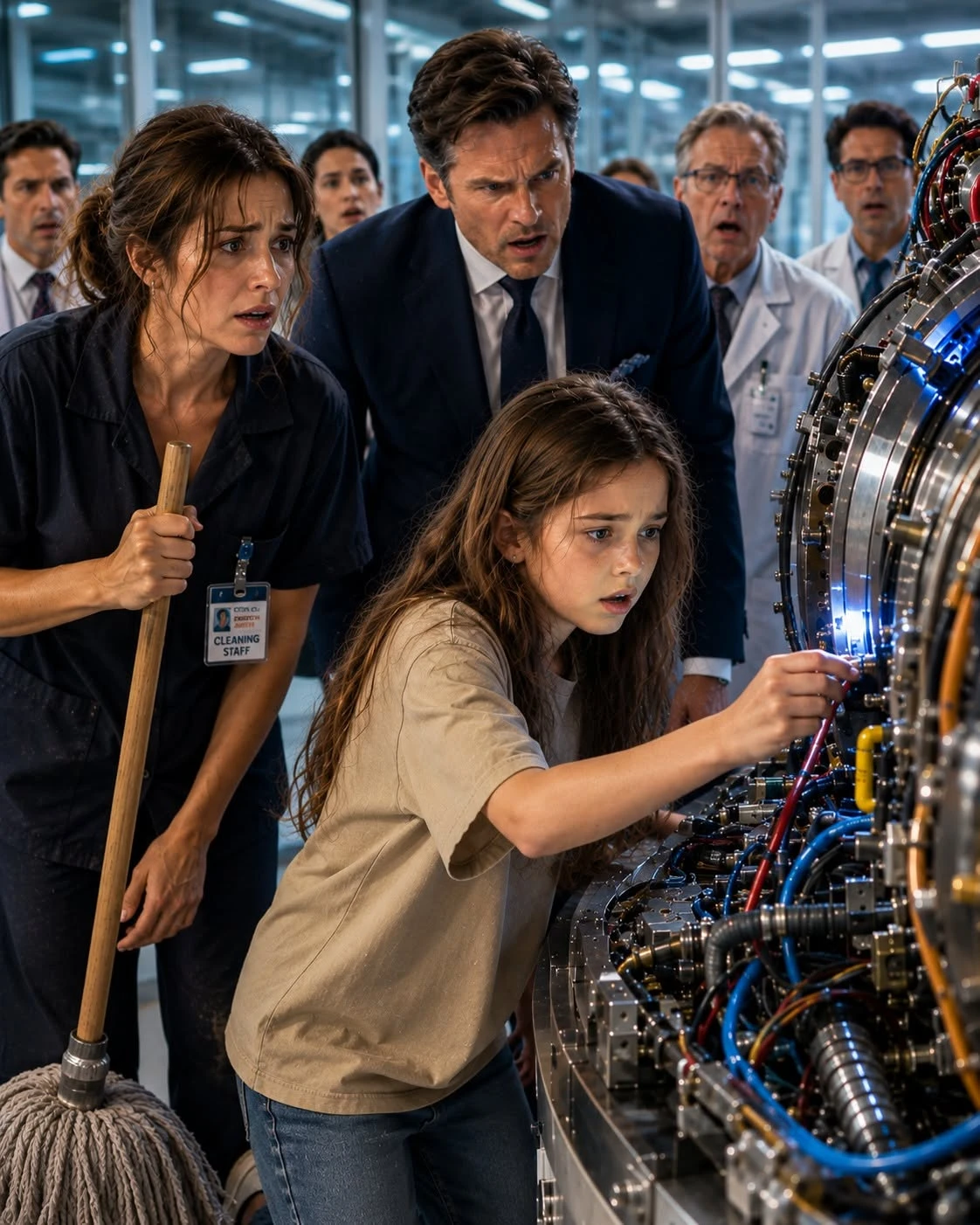
Table of Contents 7
01Chapter 1 - THE COMPONENT THAT SHOULD NOT HAVE BEEN THERE
02Chapter 2 - MY FATHER’S HIDDEN NOTEBOOK
03Chapter 3 - THE SCIENTIST WHO KNEW TOO MUCH
04Chapter 4 - THE MAN WHO WANTED PROMETHEUS TO BURN
05Chapter 5 - WHAT MY FATHER REALLY LEFT BEHIND
06Chapter 6 - THE OFFER MOM FINALLY ACCEPTED
07Chapter 7 - TWENTY YEARS AFTER THE NINETY-SECOND TEST
Twenty years after the night Prometheus failed for the last time, I stood inside a new CrossTech laboratory listening to another machine.
I was thirty.
Mom sat in the front row.
Ethan Cross was older, grayer, and still incapable of sitting quietly through a technical demonstration.
“Are you sure it works?” he asked.
I looked through the observation glass.
“No.”
His expression became alarmed.
I smiled.
“That’s why we test things.”
Mom laughed.
Some habits never disappeared.
The machine in front of us was not Prometheus.
It was a diagnostic system my team had spent five years developing.
Thousands of acoustic sensors could identify mechanical failures through changes too small for human hearing alone. The idea began with the lesson Dad taught me in our garage.
Listen to what happened before something stopped.
We named the system BENNETT.
Ethan complained that engineers had become sentimental.
I reminded him that his company approved the name.
He blamed the board.
Mom blamed him.
The demonstration began.
The system detected a deliberately damaged bearing fourteen minutes before conventional monitors registered abnormal heat.
Applause filled the laboratory.
I looked toward Mom.
She was crying.
I mouthed, “Allergies?”
She glared at me.
Dad would have laughed.
Prometheus still operated too, though newer engines had surpassed it. The original machine eventually moved into the National Museum of Technology.
Its display told the complete story.
Not the viral version about a billionaire, a janitor, and a genius child.
The real one.
David Bennett designed the adaptive stabilization architecture.
His work was stolen.
He tried to expose unsafe development.
Years later, sabotage nearly destroyed the project again.
A ten-year-old noticed the repeating failure pattern because she had heard the engine through a hallway for six weeks.
The story belonged to many people.
Marcus, whose cowardice caused damage but whose later testimony helped reveal the truth.
Ethan, whose arrogance began the night but whose willingness to change helped repair what his family had broken.
Mom, who spent years cleaning the same building where her husband’s work had been buried because she refused to stop searching.
And Dad.
Always Dad.
Ethan eventually stepped down as CEO.
At his retirement dinner, he told the hundred-million-dollar story himself.
“I thought I was humiliating a janitor,” he said. “What I actually did was demonstrate how easy it is to become stupid when everyone around you is afraid to tell you that you’re behaving like an idiot.”
Mom applauded before anyone else.
The room laughed.
Then Ethan announced something none of us expected.
CrossTech had created a permanent employee council with binding representation from hourly workers, contractors, engineers, and support staff.
The first chairperson was Maria Bennett.
Mom whispered something I cannot repeat politely.
I laughed until I cried.
She accepted.
Of course she did.
Years later, after eventually retiring herself, Mom moved into a small house with a garden.
Not a mansion.
She never wanted one.
Her favorite purchase remained a dishwasher because for most of my childhood, our apartment did not have one.
Sometimes happiness is extremely specific.
One Saturday, we visited Dad’s grave together.
I brought the old black notebook.
The pages were fragile now.
Dad’s sentence remained visible inside the back cover.
LILY WILL KNOW WHERE TO LISTEN.
Mom sat beside me.
“Do you think he knew what you’d become?”
“No.”
I smiled.
“He hoped I’d become whatever I wanted.”
That was better.
We left the notebook’s reproduction with the museum.
The original stayed with me.
On difficult days, I still opened it.
Not because it contained secret engineering knowledge anymore.
Because Dad’s handwriting reminded me that lives can be interrupted without becoming meaningless.
His work survived him.
His love survived him.
And one lesson spoken in a garage survived long enough to save the machine people had tried to steal from him.
That evening, I returned to the museum alone.
Prometheus stood behind glass.
Visitors walked around it reading plaques and taking photographs.
A little boy pressed his face near the display and asked his father why the engine was famous.
His father began explaining the two-billion-dollar project.
The sabotage.
The ninety-second failure.
Then he pointed toward the section about me.
“That girl was only ten.”
The boy looked impressed.
I smiled from several feet away.
He didn’t know who I was.
I liked that.
The story had become larger than me.
Before leaving, I stood in front of Prometheus one final time.
I remembered the first night.
Mom beside her mop bucket.
Engineers laughing.
Ethan offering one hundred million dollars because cruelty sounded funny when everyone in the room had power except the person being mocked.
I remembered walking through the door with my stuffed bear.
My mom can’t fix it.
But I can.
At ten, I thought fixing something meant finding the broken piece.
Now I know better.
Finding the hidden component fixed one engine.
Everything afterward required something harder.
Ethan had to fix the arrogance that made him treat people beneath his position as jokes.
Marcus had to face the silence that allowed wrongdoing to survive.
CrossTech had to confront the cost of building brilliance without accountability.
Mom had to stop believing survival required accepting every humiliation quietly.
And I had to learn that being the child who noticed something extraordinary did not mean spending the rest of my life proving I was extraordinary.
Dad understood that before anyone.
Machines should breathe.
So should people.
I placed my palm against the glass.
Prometheus was silent now.
No whistle.
No three pulses.
No metallic click.
Nothing to fix.
I smiled.
For a girl who had spent her childhood listening for the sound of something going wrong, silence had finally become something beautiful.
Other posts