Chapter 6 - THE OFFER MOM FINALLY ACCEPTED
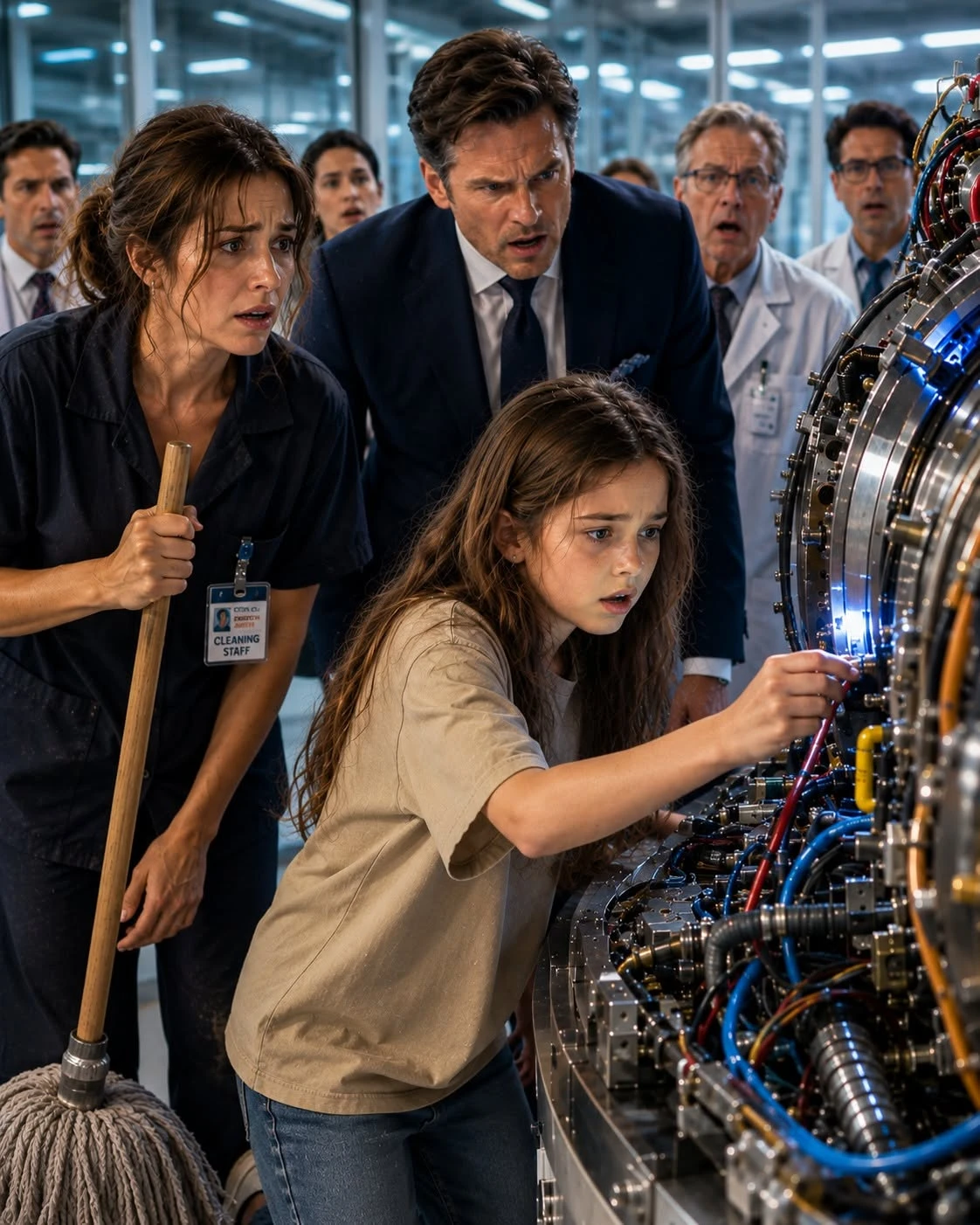
Table of Contents 7
01Chapter 1 - THE COMPONENT THAT SHOULD NOT HAVE BEEN THERE
02Chapter 2 - MY FATHER’S HIDDEN NOTEBOOK
03Chapter 3 - THE SCIENTIST WHO KNEW TOO MUCH
04Chapter 4 - THE MAN WHO WANTED PROMETHEUS TO BURN
05Chapter 5 - WHAT MY FATHER REALLY LEFT BEHIND
06Chapter 6 - THE OFFER MOM FINALLY ACCEPTED
07Chapter 7 - TWENTY YEARS AFTER THE NINETY-SECOND TEST
Mom stopped working nights at CrossTech two weeks after the settlement.
She did not become rich in the way television stories imagine.
She did not buy a mansion.
She did not fill a garage with sports cars.
We moved into a slightly larger apartment with two bedrooms and a kitchen where the refrigerator stopped making a terrifying noise every twenty minutes.
Mom paid every overdue bill.
Then she sat at the kitchen table and cried because no envelopes with red letters remained.
That mattered more than any luxury.
My prescriptions arrived automatically each month.
No pharmacy negotiations.
No asking whether half the medicine could be purchased now and the rest after payday.
I had never understood how much fear Mom carried around those small things until they disappeared.
Ethan visited once.
Without security.
Without assistants.
He brought flowers.
Mom stared at them.
“You know I’m not dying.”
“I was told flowers are normal when visiting someone.”
“Who told you?”
“My assistant.”
“That explains it.”
Their relationship had changed.
Not friendship exactly.
Respect.
Ethan offered Mom another job at CrossTech.
Not cleaning.
Community operations.
He wanted someone representing contract workers and lower-paid staff in company policy meetings because, as Mom put it, “apparently billionaires need adults explaining that babysitters cancel.”
She almost refused.
Then she negotiated.
Better childcare options for overnight employees.
Prescription assistance.
Education benefits.
Emergency transportation.
Ethan agreed.
Mom accepted.
I think she enjoyed making executives uncomfortable more than she admitted.
Marcus Vale kept his position only after cooperating fully with investigators and resigning as project lead. CrossTech installed an independent ethics board and external safety review structure.
Marcus apologized to Mom personally.
She listened.
She did not forgive him immediately.
He accepted that.
Richard’s case took years.
He was eventually convicted on multiple charges, including conspiracy connected to Dad’s death after investigators proved payments had been made to tamper with Dad’s brakes.
When Mom told me, I was thirteen.
I expected to feel happy.
I didn’t.
Justice answered questions.
It did not put Dad back in the garage.
Mom understood.
“We don’t have to celebrate somebody else going to prison.”
That helped.
As for Prometheus, the engine became successful.
Very successful.
Versions of Dad’s stabilization system were adapted for industrial energy storage, emergency power networks, and eventually cleaner high-output generators.
Ethan created the David Bennett Engineering Fellowship for students whose families could not afford expensive technical programs.
He wanted my name on it too.
I refused.
“It’s Dad’s.”
He argued.
I won.
Mostly because Mom joined my side.
People assumed I would grow up and become an engineer.
For a while, I thought so too.
At fourteen, I became obsessed with physics.
At fifteen, I became obsessed with music.
At sixteen, I started building small acoustic sensors because I wanted to understand why certain mechanical failures could be heard before conventional monitors detected them.
That eventually became my direction.
Not engines exactly.
Diagnostic acoustics.
Listening to machines.
Dad would have liked that.
But the happiest part of the story happened before any degree or invention.
It happened one evening when I was twelve.
Mom and I returned to CrossTech for a foundation dinner.
The Prometheus laboratory had been renovated.
A small plaque near the observation window honored Dad.
I was standing there when Ethan approached.
“You know, your mother still reminds me about the hundred million.”
Mom called from across the room, “Because you still owe me.”
Ethan looked horrified.
I laughed.
Then he crouched beside me the way adults sometimes do when they forget children grow.
I was almost as tall as his shoulder by then.
“You changed this company.”
I shook my head.
“No.”
“You found the sabotage.”
“I found a weird sound.”
“You forced all of us to see what we missed.”
“That doesn’t mean I changed everything.”
He considered that.
Then nodded.
“You know what? Fair.”
I liked him more for accepting correction.
I pointed toward Prometheus.
“Dad changed it.”
“Your dad started it.”
“And Mom?”
Ethan looked across the room.
Maria Bennett stood surrounded by executives who once would have walked past a janitor without learning her name.
Now she was arguing with three of them about overnight childcare funding.
Ethan smiled.
“Your mother changed us.”
That sounded right.
I looked at the engine through the glass.
Years earlier, Ethan Cross had offered my mother one hundred million dollars because he expected the joke to make a room full of powerful people laugh.
The humiliating part was never that Mom could not fix the engine.
She had never claimed she could.
The humiliating part was that everyone assumed the woman cleaning their floors had nothing worth hearing.
Then her ten-year-old daughter walked into the room.
I listened to a whistle.
Three pulses.
A click.
And found one hidden piece.
That tiny component uncovered sabotage.
The sabotage uncovered Dad’s work.
Dad’s work uncovered Richard.
And the truth forced CrossTech to confront years of decisions built on arrogance.
One small sound opened everything.
Maybe that was what Dad meant when he said broken machines always told you something.
People do too.
Companies do.
Families do.
You just have to stop being so certain you already know the answer.
Other posts