Chapter 3 - THE SCIENTIST WHO KNEW TOO MUCH
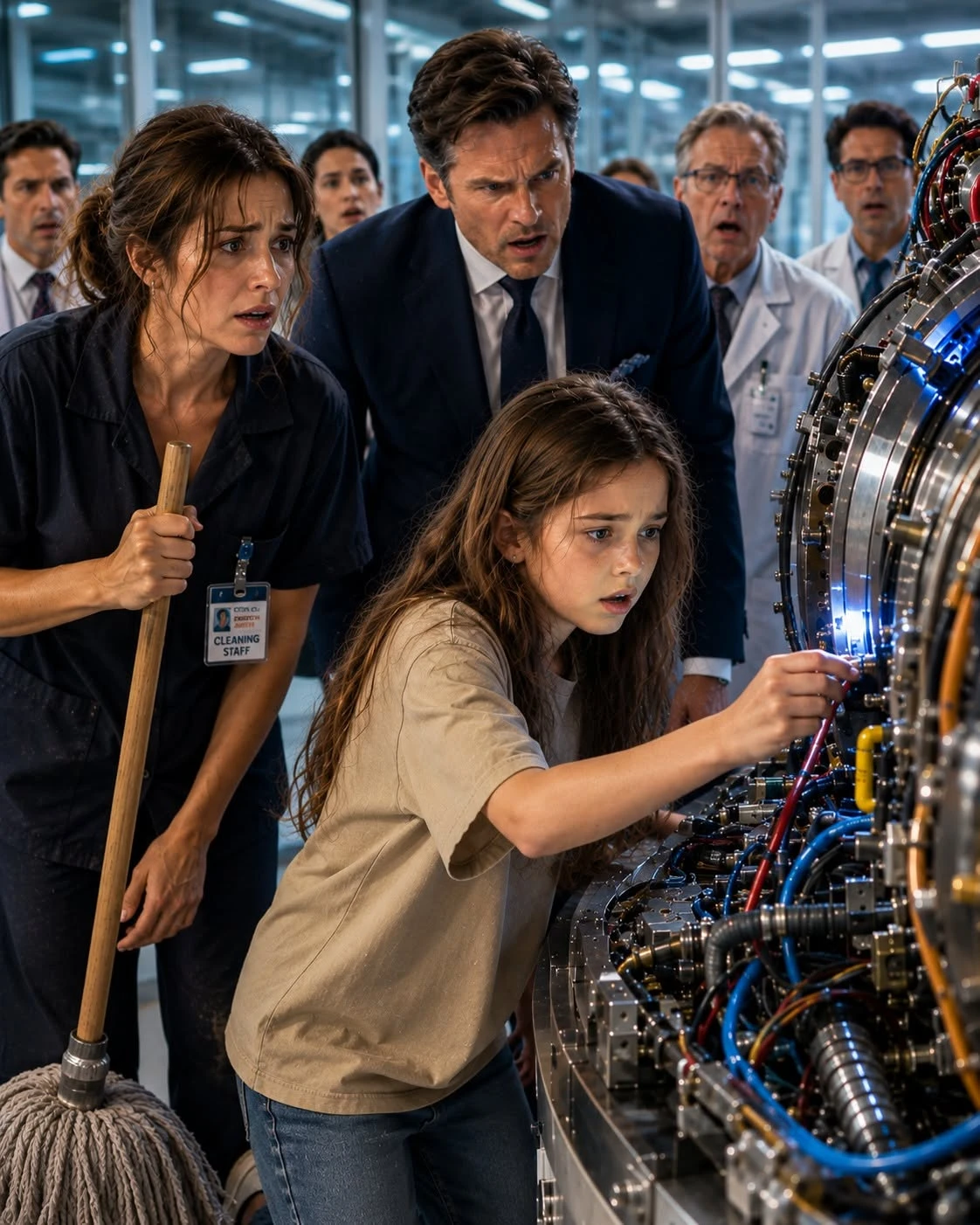
Table of Contents 7
01Chapter 1 - THE COMPONENT THAT SHOULD NOT HAVE BEEN THERE
02Chapter 2 - MY FATHER’S HIDDEN NOTEBOOK
03Chapter 3 - THE SCIENTIST WHO KNEW TOO MUCH
04Chapter 4 - THE MAN WHO WANTED PROMETHEUS TO BURN
05Chapter 5 - WHAT MY FATHER REALLY LEFT BEHIND
06Chapter 6 - THE OFFER MOM FINALLY ACCEPTED
07Chapter 7 - TWENTY YEARS AFTER THE NINETY-SECOND TEST
Marcus Vale tried to recover immediately.
“David mentioned a research notebook years ago.”
Mom stared at him.
“You told Ethan you barely knew my husband.”
“I said I was a junior engineer. That doesn’t mean we never spoke.”
Ethan took the notebook from the table.
“You said you thought it was destroyed.”
Marcus’s expression tightened.
“I heard Kane ordered several proprietary notebooks destroyed after David died.”
“Why would Kane have authority over David’s private notes?”
Marcus had no answer.
Security quietly moved toward the laboratory doors.
Ethan noticed but did not signal them closer.
“Marcus, I’m going to ask once. What do you know about David Bennett’s death?”
Marcus looked at me.
That made Mom angry.
“Look at me, not my daughter.”
He did.
For several seconds, the famous scientist who had spent years giving confident presentations about Prometheus looked completely exhausted.
Then he sat down.
“I didn’t kill David.”
Nobody had accused him of murder yet.
That made the sentence worse.
Marcus explained that twelve years earlier, Harold Kane had recruited several junior engineers into a secret development group. Ethan’s father wanted David’s adaptive stabilization technology pushed toward commercial production quickly.
David refused.
Kane copied it anyway.
Marcus helped.
He claimed he was twenty-six, ambitious, and terrified of losing the biggest opportunity of his career.
They built an unauthorized prototype.
It nearly exploded.
David discovered it.
“He told us someone would die.”
Marcus stared at the floor.
“He was furious. Not because we stole his design. Because we removed the fail-safe logic.”
Dad planned to report everything to federal regulators.
Kane panicked.
Marcus insisted he knew nothing about Dad’s car.
But after the accident, Kane told the team David’s problem had “resolved itself.”
Marcus knew what that probably meant.
He stayed silent.
Mom stood.
“You let me bury my husband while knowing someone might have killed him.”
“I was afraid.”
“So was David.”
Marcus covered his face.
“I know.”
Ethan looked physically sick.
“What about my father?”
Marcus hesitated.
“He knew the prototype existed.”
“Did he order David killed?”
“I don’t know.”
That uncertainty hurt Ethan more than a clean accusation might have.
His father had died five years earlier. Whatever answers remained would have to come from records and people who had spent years protecting themselves.
Then Ethan asked about the current sabotage.
Marcus looked genuinely confused.
“I didn’t install that component.”
“But you recognized it.”
“Yes.”
“Why say nothing?”
“Because admitting I recognized it meant admitting everything else.”
Cowardice.
Years of failure explained by one human weakness.
Then I asked the question nobody else seemed interested in.
“Why ninety seconds?”
Marcus looked at me.
“The old prototype failed at ninety seconds too.”
“Because of the same device?”
“Yes.”
“Then whoever installed it wanted you to recognize the old failure.”
His expression changed.
Maybe sabotage was not only about destroying Prometheus.
Maybe someone wanted Marcus to know the past had returned.
Dad’s numbers remained in my head.
90-3-1-7.
Ethan ordered the engine prepared for one controlled test with the suspicious component removed. Independent engineers inspected every connection while Marcus remained under supervision.
Mom wanted me behind protective glass.
I agreed.
This time, nobody laughed when I put on hearing protection.
Prometheus started.
The engine sounded different immediately.
Cleaner.
Steadier.
Sixty seconds passed.
Then eighty.
Ninety.
No whistle.
No pulses.
No click.
The engine continued.
One hundred seconds.
Two minutes.
Five.
The room began cheering.
I didn’t.
I was listening.
Something still sounded wrong.
A faint tapping appeared every seven seconds.
Not loud.
Almost hidden beneath the cooling pumps.
Tap.
Seven seconds.
Tap.
I looked at Dad’s notebook.
Seven.
“Shut it down.”
Nobody heard me.
I shouted.
“SHUT IT DOWN!”
Ethan immediately ordered the shutdown.
The engineers obeyed.
Marcus rushed toward me.
“What did you hear?”
“A tap.”
“Where?”
I pointed toward the rear cooling manifold.
An engineer removed the access panel.
Inside, one mounting bolt was slightly loose.
Marcus examined it.
“That wouldn’t have caused the old shutdown.”
“No.”
I looked at the bolt.
“It would eventually break.”
They scanned the part.
A tiny fracture ran halfway through the metal.
If Prometheus had operated long enough at full output, the cooling manifold could have separated and caused catastrophic overheating.
The ninety-second sabotage had been preventing the engine from running long enough to reach the second failure.
Someone had planted two problems.
One obvious enough to occupy everyone.
One designed to destroy the machine once the first was removed.
Ethan’s face became pale.
“This wasn’t meant to embarrass us.”
Marcus nodded.
“Someone wanted Prometheus to pass a short test and then fail catastrophically later.”
Public demonstration was scheduled in nine days.
Investors.
Government officials.
Press.
Hundreds of people.
Mom pulled me closer.
Then CrossTech security chief Aaron Wells entered carrying a tablet.
“We found something.”
The fractured bolt had been replaced seventeen days earlier during scheduled maintenance.
Only four people had signed access to the cooling manifold.
Marcus.
Two senior technicians.
And Ethan Cross.
Ethan stared at the screen.
“I never touched that assembly.”
Aaron looked uncomfortable.
“Your biometric authorization says otherwise.”
Ethan’s expression changed.
Someone had copied his access credentials.
Then Aaron displayed the security footage.
At 2:13 a.m. seventeen days earlier, a man wearing Ethan’s coat entered the maintenance bay.
His face was turned away.
But as he reached toward the panel, one feature became visible.
A silver watch.
Mom made a small sound.
I looked at her.
“What?”
She pointed toward the screen.
“I know that watch.”
“Whose?”
Her answer surprised everyone.
“Ethan’s father wore one exactly like it.”
Ethan stared at her.
“My father is dead.”
Mom nodded.
“I know.”
Then she whispered, “But his brother isn’t.”
Other posts