Chapter 3 - The Brother They Buried

Table of Contents 6
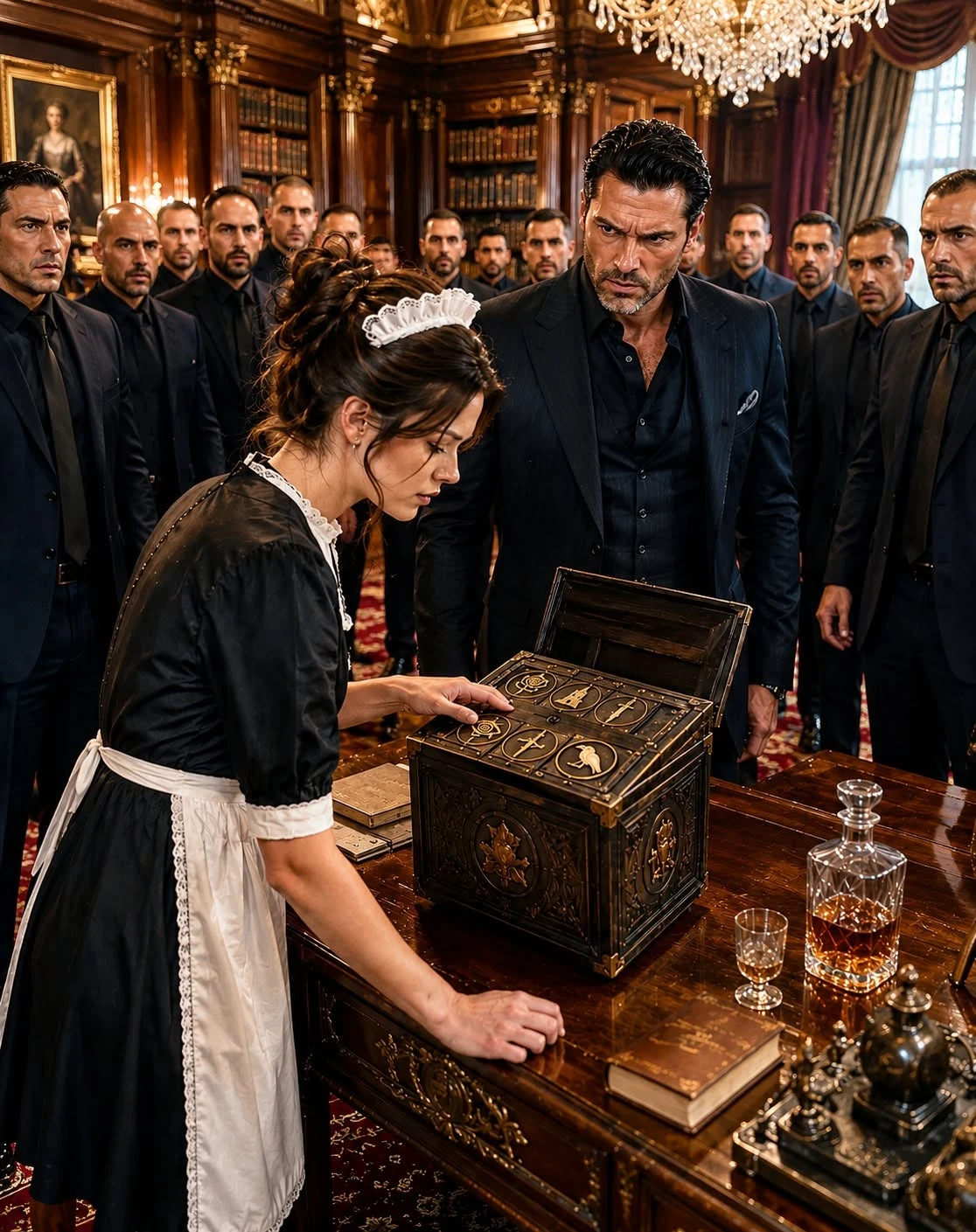
I held the photograph in one hand and the blood-specked cuff button in the other, and for the first time since I had entered Dominic Russo’s house, I saw something in him more dangerous than rage.
Recognition.
His face lost color so quickly it made the room feel colder. He crossed the office in three strides and shut the door behind me, harder than necessary, then looked at the button as if it had been pulled from a grave.
“Where did you get that?” he asked.
“In your bathroom.” I lifted the photograph. “And this was in the locked office you handed me the key to, so don’t start pretending I crossed some line you didn’t already move.”
For a second I thought he might lie again. He had the posture for it. The silence. The careful control. Men like Dominic survived by deciding which truths cost less than the lies.
Instead, he reached for the photograph.
Matteo Russo stood beside him in it, older by maybe five years, dressed in a dark suit with one hand on Dominic’s shoulder. The resemblance was obvious now that I knew to look for it. Same hard jaw. Same watchful eyes. But Matteo’s expression held something Dominic’s never did.
Lightness.
“He was my brother,” Dominic said.
“I guessed that part.”
“He’s dead.”
I stared at the button in my palm. “Then the city was told the wrong story.”
His mouth tightened.
Chicago knew Matteo Russo as a cautionary tale, the heir who had died in a gang war years ago, the death that forced his younger brother to become something harder, crueler, untouchable. Even I knew that version, and I had spent most of my life too busy surviving to care about rich men’s funerals.
But versions were not truth. Poverty had taught me that too.
“The guard downstairs reacted when he saw this,” I said quietly. “You reacted the same way. Somebody put Matteo’s cuff button in your bathroom for a reason.”
Dominic sat at the edge of his desk like his body had finally remembered exhaustion. He rubbed a hand over his face, then reached for his collar and loosened it just enough for the scar to show again. Thick. Pale. Violent.
“This,” he said, touching the mark at his throat, “was supposed to kill me.”
I said nothing. He had finally opened the door. If I rushed him now, he would shut it.
“It happened seven years ago,” he said. “Matteo found discrepancies in a set of charitable accounts connected to one of our foundations. At first he thought someone was skimming. Small theft. Quiet theft. But the numbers led outward. Clinics. Donation networks. Shell funds. Debt portfolios bought through intermediaries. The kind of structure built to move money until no one could trace what was clean and what was blood.”
“Viktor Salazar,” I said.
Dominic looked up sharply. “Grace talks too much.”
“Grace barely talks at all. You only look at one man’s name like it still has hands around your throat.”
That almost earned a smile. Almost.
“He was my father’s ally,” Dominic said. “After my father died, he became something worse. Matteo found ledgers tying Salazar to everything. Not just laundering. Payments to make people disappear. Payments to make records disappear. Payments that reached men in suits, not just men with guns.”
“And you took copies.”
His stare settled on me with a kind of reluctant respect. “Yes.”
I could see it as he spoke: two brothers finally understanding they had uncovered rot too deep to handle quietly, trying to outrun men who had already decided the cost of survival for them both.
“We were leaving the city,” Dominic said. “Just for one night. Long enough to decide who we could trust. Matteo drove. We never made it past Cicero.”
His voice stayed level, which somehow made it worse.
“They boxed us in under a rail bridge. Salazar’s men pulled us out of the car. Matteo kept telling me not to say where the copies were. He thought if one of us lived, we could still use them.”
I swallowed. “Did one of you?”
His jaw flexed.
“They shot Matteo first.”
The room went silent around us. I had seen grief before. In hospitals. In debt collection offices. At my mother’s funeral when my father looked like half his bones had been removed. But Dominic’s grief was stranger because it had calcified. It wasn’t fresh pain. It was pain that had been forced to wear armor until it started looking like power.
“He died there?” I asked.
“Yes,” Dominic said. “But not in some street war. Not in crossfire. He died because he saw books he wasn’t supposed to see.”
My fingers tightened around the cuff button.
“And your scar?”
“One of them cut my throat to make it look personal. The message mattered. Salazar wanted people to believe Matteo’s death belonged to the life we lived, not to what we learned.” His eyes held mine. “I should have died beside him. I didn’t.”
“Why?”
“I don’t know.” The answer came out raw, stripped of pride. “Bad angle. Mercy. Arrogance. They left me there bleeding because they thought fear would finish what the blade didn’t.”
But it hadn’t.
Instead, it had created Dominic Russo, the man people feared enough to stop asking questions.
“I made a deal after that,” he said. “Not written. Not spoken cleanly. I stayed useful. I stopped digging where Salazar told me not to dig. I built the version of myself that frightened everyone else before they could see I was trapped too.”
That was the ugliest truth yet. Not that Dominic had suffered. That he had survived by becoming part of the machine that buried his brother.
A lesser man would have softened the confession. Dominic didn’t. Maybe he was too tired. Maybe he understood I would hear the lie now even before he said it.
I opened my hand and looked again at the blood-specked silver button.
“This didn’t sit in your bathroom for seven years,” I said. “Someone brought it recently.”
“Yes.”
“As a threat?”
“As a message,” he said.
The distinction chilled me more.
Someone inside this war knew Matteo mattered. Someone knew the button would force Dominic to remember exactly how the scar had been made. And someone wanted him to know the hunt had started again.
A knock sounded at the office door.
Dominic stood instantly, every confession gone back behind his face. By the time he opened it, he looked like himself again: cold, exact, unreadable.
Grace Holloway stood outside in a slate-gray suit, a leather folder tucked under one arm. Her gaze flicked to me, then to the photograph on the desk, then to the cuff button in my hand. She understood too much in one second and showed none of it.
“I need your signature downstairs,” she said to Dominic.
He nodded once. “Give us a minute.”
Grace stepped forward as if adjusting the folder in my direction. Her fingers brushed mine. Something small and folded passed into my palm.
Her voice stayed even. “Mrs. Russo, there’s a clinic archive reference you should keep.”
I looked down after she turned away.
A file number.
When I raised my eyes, Grace was already at the end of the hallway. She didn’t look back, but her voice carried just enough for both of us to hear.
“If Dominic ever loved his brother,” she said, “he must not open the gala donation ledger in front of the wrong man.”
Other posts