Chapter 3 - THE NIGHT MICAH FINALLY LEARNED THE TRUTH
Table of Contents 5
We reached Micah’s building before police did.
Raphael hated that.
I did too.
But traffic and distance did not negotiate with fear.
The hallway was dark except for emergency lighting.
Micah’s apartment door stood open.
My entire body went cold.
“Micah!”
Raphael grabbed my arm.
“Wait.”
I pulled free.
“That’s my brother.”
“And whoever came here may still be inside.”
I hated him for being right.
Then we heard a cough.
Micah.
From the bathroom.
I ran.
He was sitting on the floor beside the bathtub holding a kitchen knife with both hands.
His face was pale.
“Clara.”
I dropped beside him.
“Are you hurt?”
“No.”
“What happened?”
“The guy opened the door.”
“How?”
“Dad’s key.”
Raphael stepped into the doorway.
Micah stared.
“You brought your terrifying boss?”
“This is Raphael.”
“I know who he is.”
Fair.
Micah looked at him.
“You look shorter on TV.”
Even terrified, my brother remained impossible.
Raphael almost smiled.
“What happened to the man?”
“He came in. I yelled that I called the police. He left.”
“Did he take anything?”
Micah frowned.
“My medication box.”
My stomach dropped.
The refrigerated biologic injections.
Three weeks’ supply.
Without them, Micah’s immune system could destabilize rapidly.
Raphael crouched.
“Your medication will be replaced tonight.”
Micah looked at him.
“No offense, crime boss, but why are you involved in my insurance problem?”
I closed my eyes.
There was no good way to delay anymore.
“Micah.”
He looked at me.
“What?”
“We need to tell you something.”
We told him enough.
Dad’s warehouse.
The ledger.
Hopewell.
Dr. Vane.
Matteo.
Not every detail.
Enough.
Micah listened without interrupting.
That frightened me.
Then he asked, “So Dad didn’t just die in an accident?”
“We don’t know yet.”
“That means no.”
My throat tightened.
“Micah—”
“And my treatment?”
I hesitated.
He understood.
“So the people who may have killed Dad have been paying to keep me alive?”
The sentence sounded monstrous because it was.
Raphael answered.
“Possibly.”
Micah laughed once.
Then he threw the knife into the bathtub.
“I hate rich people.”
Raphael nodded.
“Reasonable.”
Police arrived.
The intruder was gone.
Security footage showed a man wearing a maintenance uniform leaving through the rear stairwell.
Raphael recognized him.
Former Orsini security.
Now working for Matteo.
That moved everything beyond suspicion.
Raphael contacted federal investigators through an attorney he trusted outside the family network.
Again, not his men.
Again, restraint.
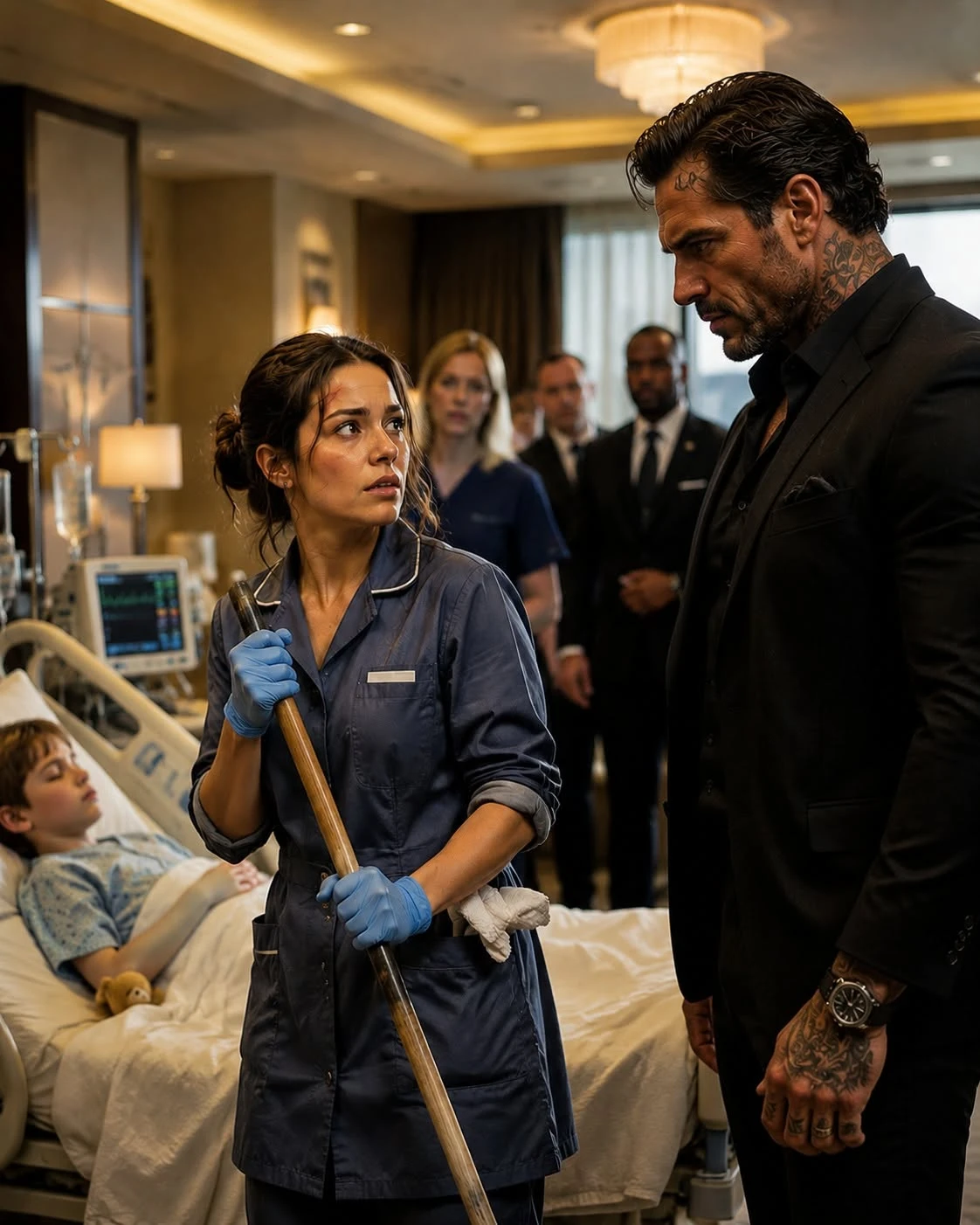
By dawn, Micah was moved temporarily to a hospital under protected status.
His medication was replaced through normal hospital channels.
No Hopewell.
No Matteo.
No secret benefactor.
For the first time in six years, our family’s survival was no longer attached to their money.
I expected relief.
Instead, I felt terrified.
Dependence, even dangerous dependence, creates a strange kind of security.
Cutting the rope means discovering whether you can stand without it.
Micah slept after his infusion.
Raphael and I stood outside the room.
“You should go home,” I said.
“So should you.”
“I’m his sister.”
“I know.”
“You have an empire.”
He looked tired.
“It seems to be mostly paperwork and betrayal this week.”
I almost laughed.
Then his expression became serious.
“I owe you an apology.”
“For what?”
“Your father.”
“You didn’t kill him.”
“I don’t know that yet.”
“Raphael.”
“My family did something.”
He stared through the glass at Micah.
“I spent years benefiting from systems I didn’t inspect because they worked.”
“That’s not the same as ordering a murder.”
“No.”
He looked at me.
“But ignorance becomes a choice after enough warnings.”
That sounded like something I needed to remember too.
My father’s old friend Dr. Vane disappeared that morning.
He skipped appointments.
His phone shut off.
Hopewell’s office closed without notice.
By afternoon, investigators froze several linked accounts.
Matteo finally called Raphael.
I was standing beside him when the phone rang.
Raphael answered on speaker.
“Nephew.”
Matteo sounded almost disappointed.
“You’ve made this unnecessarily dramatic.”
“You sent someone to Micah Ellis’s apartment.”
“I sent someone to retrieve property.”
“Medication?”
“Company-funded medication.”
My hands clenched.
Raphael’s voice lowered.
“You broke into a sick child’s home.”
“He is fourteen.”
“Still a child.”
Matteo laughed.
“You’re emotional.”
That word.
The favorite weapon of men who dislike being challenged.
Raphael looked toward me.
Then answered.
“Yes.”
Matteo became quiet.
“Yes?”
“I care what happens to them.”
A long silence.
“That makes you weak.”
“No.”
Raphael’s voice remained calm.
“Hiding behind sick children makes you weak.”
Matteo hung up.
I stared at Raphael.
“You shouldn’t have said that.”
“Why?”
“Because now he knows exactly how much we matter.”
“He already knew.”
Fair.
Then Raphael added, “And I’m done pretending caring is something he can shame out of me.”
That sentence stayed with me.
Federal investigators found Dr. Vane forty-eight hours later.
Not dead.
Hiding in a motel outside Indianapolis.
He agreed to cooperate.
His testimony changed everything.
My father had discovered that Matteo was moving stolen immunotherapy drugs through Orsini warehouses and selling them through private clinics.
He confronted Dr. Vane first.
Vane panicked.
Told Matteo.
Matteo ordered the warehouse elevator sabotaged.
Dad died.
My hands shook while the investigator explained.
Micah sat beside me.
He did not cry.
Not until later.
Neither did I.
Sometimes confirmation is quieter than uncertainty because the body has already grieved the truth before hearing it.
Dr. Vane admitted that after Dad’s death, Matteo ordered him to place Micah inside Hopewell’s program.
“Why?”
I asked.
The investigator answered.
“To monitor your family.”
Matteo believed Dad might have left evidence.
If I ever started asking questions, Micah’s funding could be threatened.
They created leverage before I even knew I possessed information.
“But Dad didn’t leave anything.”
Micah looked toward me.
Then frowned.
“Maybe he did.”
“What?”
He looked embarrassed.
“When we moved after Dad died, I kept his old toolbox.”
I stared at him.
“Why?”
“I liked the smell.”
That nearly broke me.
Dad’s toolbox remained in a storage locker outside the city.
We drove there under federal supervision.
Raphael came only because Micah insisted.
“Bring terrifying boss,” he said.
Apparently they were bonding.
Inside the toolbox, beneath a removable metal tray, we found a flash drive.
My father had labeled it:
FOR CLARA IF THEY SAY I FELL.
I stopped breathing.
For six years, the truth had been sitting inside a rusted toolbox because my little brother could not bear to throw away something that smelled like our father.
The drive contained everything.
Warehouse manifests.
Photographs.
Emails.
Audio.
And one recording.
Dad’s voice.
“Clara, if you’re hearing this, something happened.”
My knees weakened.
Raphael moved closer but did not touch me.
I listened.
Dad explained the stolen drugs.
Dr. Vane.
Matteo.
Then he said something I didn’t expect.
“Raphael doesn’t know.”
I looked toward him.
He looked equally shocked.
Dad continued.
“He’s young and angry, but I don’t think he knows what his uncle is doing. If he ever finds this, give him the chance his father never gave him. Let him decide which kind of man he wants to be.”
Raphael turned away.
My father had never met the man Raphael became.
But somehow he had seen the possibility.
The recording ended.
Micah wiped his face.
Then looked at Raphael.
“Well?”
Raphael turned back.
“What?”
“Dad said decide.”
Micah crossed his arms.
“What kind of man are you going to be?”
Raphael stared at the fourteen-year-old.
Then at me.
For once, the most feared man in Chicago had no immediate answer.
Good.
Some answers should take time.
Other posts