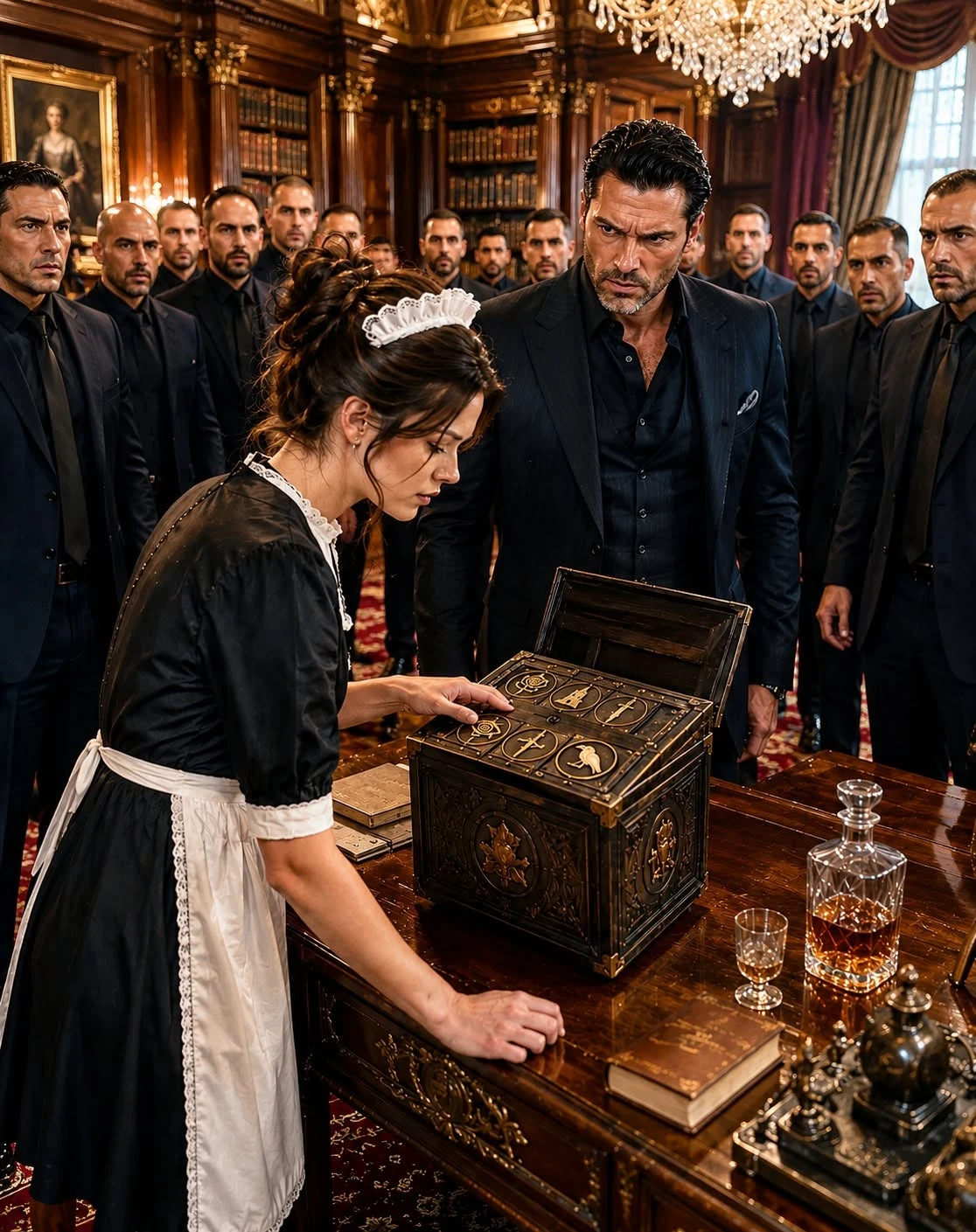
Chapter 4 - Greenwich Turns Its Face

Table of Contents 6
By morning, the house felt different.
Not quieter. Worse than that. It felt watched.
Emily moved through the kitchen with the same steady hands she had always had, but I could see the strain in the set of her shoulders. She kept glancing toward the windows, toward the drive, toward the long stretch of road that led back to town. Every sound made her pause. The old fear had not left her when she told me the truth. It had only changed shape.
I was still holding the envelope when I found my mother in the sunroom, as if some part of me had known exactly where to begin. Mrs. Brooks sat beside the pale silk curtains with a cup of tea untouched in front of her. She looked composed in the way only powerful people could look composed when they were already preparing a defense.
She took one look at my face and knew.
“What has that woman told you?” she asked.
I did not waste time with politeness. “She told me enough. She told me the rumor was a lie.”
My mother’s mouth tightened. “Nathan, this is not the time for theatrical phrases.”
“It’s not theatrical. It’s disgraceful.” I laid the envelope on the table between us. “You knew there was more to those children than gossip.”
Her eyes flicked to the paperwork, and for the first time I saw something close to alarm. Not guilt. People like my mother rarely allowed themselves guilt. But alarm, yes. The kind that came when a neatly managed story started losing its shape.
“I knew,” she said carefully, “that a great many people were talking. In families like ours, one does not repeat everything one hears.”
“That is not an answer.”
“It is the only answer you need.” She folded her hands. “Emily Carter is your wife now. If she has brought you private complications, those should remain private.”
The coldness in her voice made something inside me snap cleanly into place. Not a suspicion. A fact. She had heard enough to know the rumors were vicious, and instead of stopping them, she had let them live because they served their purpose. They made Emily small. They made my decision look foolish. They kept our family safe from embarrassment.
“You helped spread it,” I said.
Her expression sharpened. “I did nothing of the sort.”
“You did less, then. You heard lies and decided silence was acceptable.”
She stood up so quickly her chair scraped the floor. “Be careful, Nathan. You are speaking about a servant who has manipulated this family from the moment she entered it.”
I laughed once, but there was no humor in it. “No. I’m speaking about a woman who sat beside my hospital bed for two weeks while everyone else sent flowers.”
My mother’s face changed at that. Not softened. Hardened.
“Emotional loyalty does not erase facts,” she said.
“Then let’s talk about facts.” I tapped the envelope. “There’s a law firm name in here that belongs to your world, not Emily’s. There’s a house in one of these photographs I recognized from childhood. And there are legal papers that suggest somebody with your kind of connections thought they could manage three children like property.”
For the first time, she looked genuinely unsettled.
That was all the confirmation I needed.
Before she could answer, one of the house staff passed the open doorway and stopped dead, hearing enough to understand that something serious had broken loose. I saw it in her face at once: the story had begun moving through the house faster than any rumor ever did. It would reach the butler, the cook, the driver, and by evening it would reach half of Greenwich. Not because people knew the truth, but because they could smell conflict.
Emily appeared in the doorway just then, carrying folded laundry she no longer needed to pretend to finish. Her eyes went from my face to my mother’s and back again. She did not ask questions. She had lived too long with danger to waste time on them.
“Mrs. Brooks,” she said quietly.
My mother gave her a look so polished it might have been carved from ice. “Emily. I hope you are not encouraging my son to make a scandal of himself.”
Emily’s jaw tightened, but she did not flinch. That alone made me love her more fiercely than I had the night before.
I stepped in front of her without thinking. “Do not speak to her that way.”
My mother stared at me as if she had never seen me clearly until now. “Nathan.”
“No,” I said. “You do not get to decide that Emily is the problem just because she is the easiest person in the room to blame.”
The silence that followed was thick enough to bruise. I could feel Emily’s breath beside me, shallow and careful. She had given me the truth, but I could see she had not expected the cost to begin this quickly.
My mother finally picked up her tea, then set it back down untouched. “If you continue this, there will be consequences. Socially, and perhaps legally, if you insist on dragging old matters into daylight.”
“Then let them come,” I said.
That seemed to strike her harder than anything else. Because for once, I was not asking for her approval. I was telling her where I stood.
When she left the room, Emily gripped the edge of the laundry basket so hard her knuckles whitened.
“You should not have done that,” she whispered.
“I should have done it sooner.”
Her eyes filled, but she shook her head. “You don’t understand what this will do. People will start asking questions.”
“Good.”
“No, Nathan.” Her voice dropped to a desperate edge. “Not good. They will ask the wrong people. And if the record gets into the wrong hands before I can prove what it says, they can bury it again.”
I looked down at the envelope. For the first time, the paper in my hands felt less like a clue and more like a fuse.
“Then I’m not letting it leave my sight,” I said.
Emily swallowed hard. “There’s an attorney named in those papers. If you go to him, you may open everything at once.”
I held her gaze. The whole house seemed to lean toward us, listening.
“Then that’s what I’ll do,” I said.
And the way her face changed told me I had just stepped through a door that could not be closed again.
Other posts