Chapter 4 - Clara Finally Told Me the Whole Truth
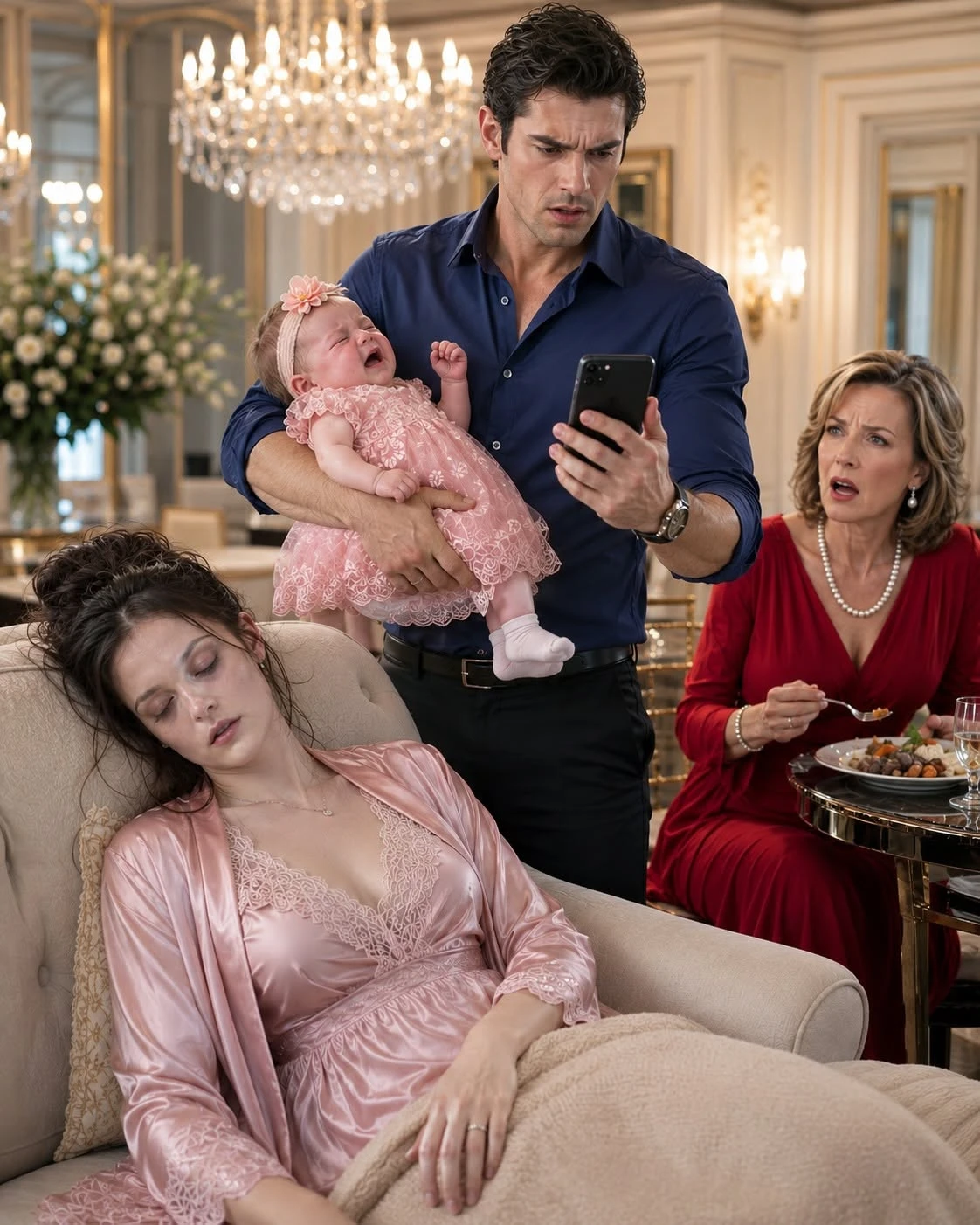
Table of Contents 8
The first month after the hospital was harder than I expected.
Clara recovered physically, but emotionally she became quieter. Our son started sleeping in longer stretches, yet Clara often stayed awake after he settled. Sometimes I found her sitting beside the bassinet staring at nothing.
I suggested therapy.
She agreed on one condition.
I had to go too.
That was fair.
Our first sessions were uncomfortable because I entered expecting the therapist to help Clara process what Mom had done.
Instead, we talked about me.
Clara described years of small incidents I had forgotten because they were never important enough to me at the time.
Mom criticizing the way Clara cooked.
Mom entering our bedroom without knocking.
Mom rearranging kitchen cabinets because she claimed Clara stored things incorrectly.
Mom telling relatives that Clara was too focused on her career to become a good mother.
Each time, Clara came to me.
Each time, I found a reason she should ignore it.
The therapist asked why.
I knew the answer immediately.
Confronting Mom always became exhausting.
Ignoring her felt easier.
My convenience became Clara’s burden.
There was no elegant way to say that.
I apologized.
The therapist stopped me from turning the session into repeated apologies.
Change had to become practical.
So we created boundaries.
No unannounced visits.
No access to our keys.
No discussion of our finances with extended family.
No insults disguised as advice.
If Mom violated a boundary, contact would decrease instead of becoming another argument.
We also changed our own finances.
Clara’s separate account remained.
I did not ask her to close it.
Instead, we met with an estate attorney and clarified ownership, beneficiaries, emergency access, guardianship for our son, and individual accounts.
Security became explicit rather than assumed.
Mom somehow heard about the meetings through a cousin.
She sent a letter saying Clara had manipulated me into “giving away half my life.”
I threw it away.
That was progress.
Then Mom tried another route.
She began calling relatives.
Suddenly, aunts and cousins contacted me about the “elderly woman I abandoned after everything she sacrificed.”
Her version of the hospital story was remarkable.
According to Mom, Clara insisted on cooking because she wanted to prove she could handle motherhood. Mom simply encouraged her to rest, then Clara dramatically fainted when I came home.
There was no mention of the grocery list.
No mention of the insults.
No mention of the changed locks or stolen boxes.
I considered sending every relative a detailed explanation.
Then Aunt Susan beat me to it.
She posted in the family group that Mom had controlled stories for decades and that Dad’s separation had been hidden from his own children.
Other relatives began responding.
One cousin remembered Mom destroying a family holiday after someone refused to change dinner plans.
An aunt described money borrowed and never repaid.
Emma shared several childhood memories.
For the first time, isolated incidents stood beside one another.
The pattern became visible.
Mom left the family group.
A week later, she appeared at my workplace.
I was still on partial leave, but security called because she demanded to speak with my manager. She claimed my wife was isolating me and that I needed intervention.
My manager refused to discuss anything.
Mom drove to Clara’s sister’s house afterward.
Nobody answered.
She left a note accusing the family of kidnapping me emotionally.
David sent a formal no-contact warning.
Mom responded by threatening to remove me from her will.
I surprised myself by laughing.
The old version of me would have panicked.
Not because I needed the inheritance.
Because disinheritance meant Mom was angry, and Mom’s anger had always felt like an emergency.
This time, I wrote back through David.
Her estate was hers to handle however she wished.
That answer made her angrier than any insult could have.
Then something changed.
Two weeks later, Emma called.
Mom had been taken to the hospital with chest pain.
The emergency was real.
My first instinct was to drive immediately.
Clara looked at me and said nothing.
She did not need to.
I went.
But I went because Mom was my mother, not because boundaries disappeared whenever she was sick.
Sitting beside her hospital bed, I saw someone I had rarely allowed myself to see.
An older woman.
Scared.
Lonely.
Still angry.
She asked whether I was satisfied now.
Even there, she needed a villain.
I told her no.
I wanted her healthy.
I also wanted our boundaries to remain.
Mom stared at me like I had spoken a foreign language.
For the first time in my life, I cared about her without surrendering.
That felt strange.
It also felt like freedom.
Other posts