Chapter 1 - The Empty Groom's Chair
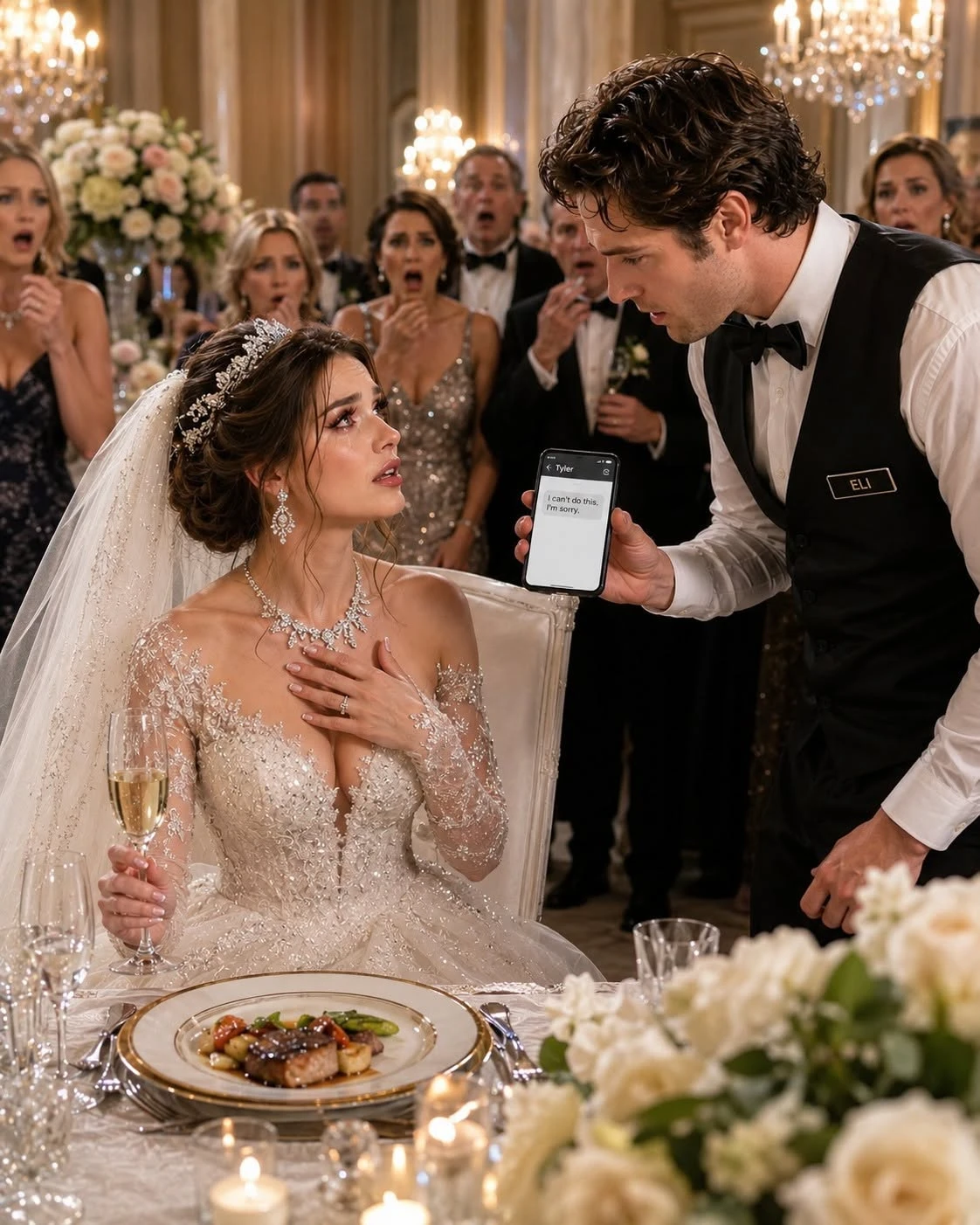
Table of Contents 6
At 9:17 that night, I lifted my veil and stared at the closest waiter as if I were asking for water instead of dignity.
“Bring me every course,” I said.
He looked up from the tray in his hands, calm in a way that made the whole ballroom feel even louder. Around us, 187 guests had begun their slow retreat, the kind of polite escape people make when they want a disaster to belong to someone else. My mother was at the far side of the room, frozen with one hand over her mouth. My father stood near the head table with his jaw locked so tight I could see the muscle jumping beneath his cheek.
And beside me, in the chair marked Groom, nothing but empty linen and a ribbon tied too neatly for the humiliation sitting there.
The waiter blinked once. “You mean all five courses?”
“Every single one.” I kept my eyes on the chair with Tyler’s name card in front of it. “My dad paid for this dinner. Someone should enjoy it.”
A murmur moved through the room like wind through dry grass. They had all expected tears, a collapsed bride, maybe a dramatic exit with mascara running and my heels in my hand. They wanted the version of me that would make their conversations easier tomorrow. Poor Marin. So brave. Such a shame.
I refused to give them that.
The waiter’s name tag read Eli. He glanced at the groom’s empty chair, then back at me, and something in his expression shifted from professional courtesy to quiet respect. No pity. No awkward softness. Just attention.
“Champagne first?” he asked.
I almost laughed, and that startled me more than anything else had all night. “Now you’re talking.”
He moved without rushing, carrying the bottle with a steadiness that made the room feel smaller around him. A few guests paused near the doorway, pretending to adjust jackets or check phones while really watching to see whether I would break. When Eli poured the first glass, I took it with both hands.
That was when my father crossed the floor and stopped beside my chair.
“Marin,” he said softly, like he was afraid the word itself might shatter. “You don’t have to stay.”
I looked up at him. The face that had taught me how to ride a bike, how to stand up straight, how to keep calm when life made you feel small. Tonight he looked older than he had at dinner, like the hours had taken years off him.
“I know,” I said.
His eyes flicked to the empty seat beside mine. He had paid for most of this wedding, all the things Tyler said he couldn’t cover, all the little details that were supposed to turn into a family memory instead of a public wound. My father had done that for me, not because he owed me a perfect day, but because he loved me enough to believe in the promise behind it.
That made Tyler’s disappearance feel uglier than simple cowardice.
Dad swallowed hard. “We can leave through the back.”
I understood what he was really offering. A hidden exit. No cameras. No one seeing me become the story.
I set the champagne down untouched.
“No,” I said. “If he’s gone, he’s gone. I’m not the one who needs to disappear.”
My father stared at me for a long second, then gave a single, slow nod. He squeezed my shoulder once and walked back to my mother, who was still refusing to cry in front of the cousins clustered near the door.
The guests kept thinning out. Some left with the careful sympathy of people who thought they were being kind. Others left hungry for the details they would later trade over dinner tables of their own. One woman actually paused long enough to whisper, “I’m so sorry,” in the exact tone people use when they are already enjoying the tragedy.
I didn’t answer any of them.
Instead, I sat straighter and let Eli bring the soup, then the salad, then the main course that should have been the center of a night Tyler had promised would be unforgettable. He placed each plate in front of me as if this were the most normal thing in the world: a bride eating alone under crystal chandeliers while her marriage evaporated around her.
He never asked where Tyler was. Never said, “I’m sorry this happened.” Never tried to fill the silence with a speech designed to make himself feel useful.
When dessert came, the ballroom had gone nearly quiet. The string quartet had stopped. The remaining candles flickered against all the empty chairs.
Eli set down the final plate, then stood there for a moment as if he were deciding whether to cross some invisible line.
Finally, he pulled one hand from behind his back. “I found this near the service corridor.”
It was a small white envelope, plain and unmarked, and he held it out to me with two fingers.
I took it, confused, but before I could open it, he folded his napkin neatly over his arm and looked directly into my face.
“Would you allow me one dance?”
For a moment, the room stopped pretending I was the tragedy.
All eyes turned toward me, toward him, toward the question hanging between us like a door I hadn’t known was there.
And for the first time that night, I realized Eli wasn’t watching me like everyone else.
He was watching the whole room like he already knew something none of us did.
Other posts