Chapter 6 - The Last Thing Troy Left Us
Table of Contents 6
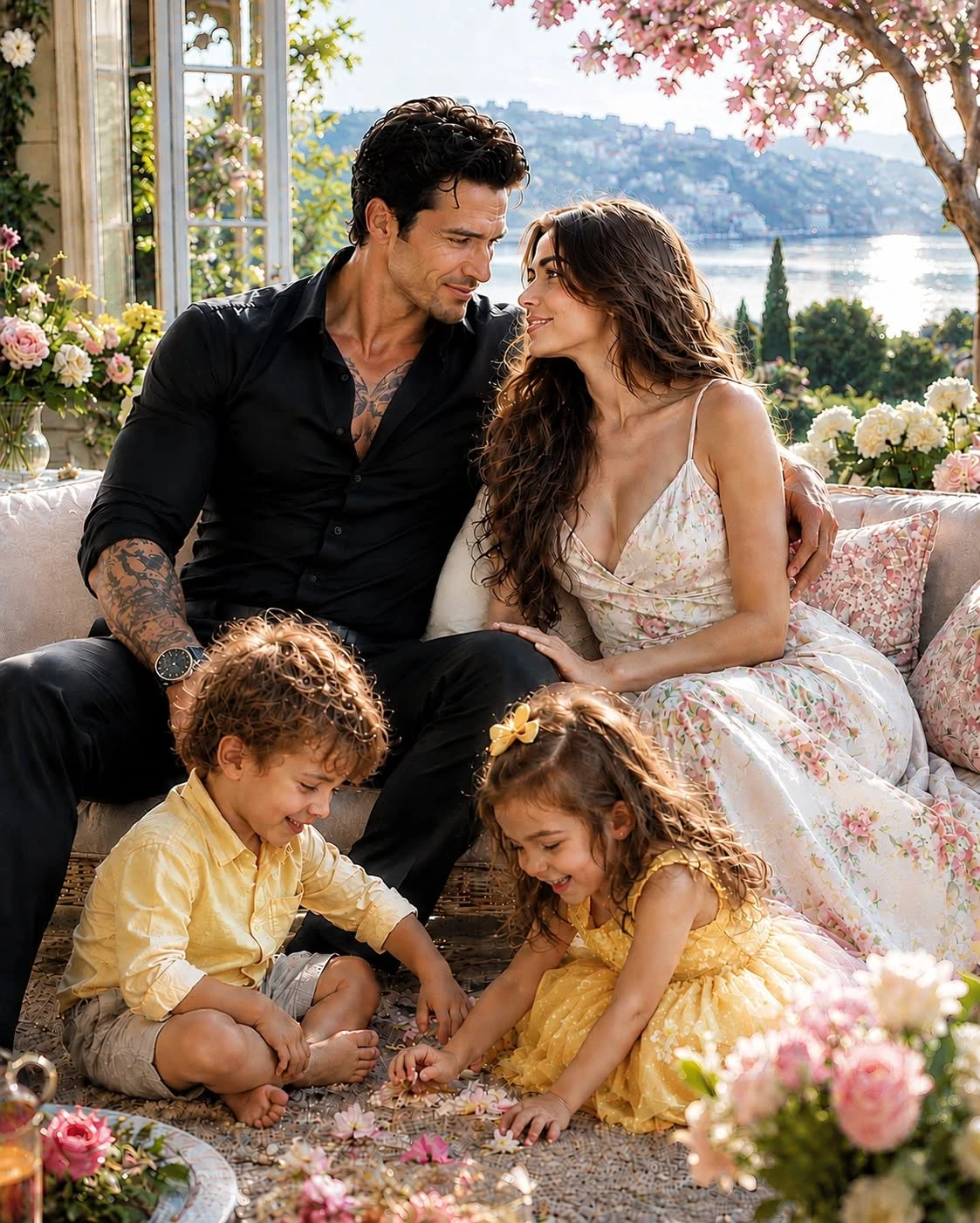
Two months later, the three of us stood together in the backyard Troy had once insisted would be the perfect place for a family reunion if we ever got around to fixing the deck.
The deck never got fixed.
Troy never saw the new porch light, or the tree Megan planted in the corner, or the wildflowers Ryan’s daughter had scattered along the fence line because she liked the idea of making grandpa’s yard “look happy.”
But we were there.
All of us.
Even Walter, though he arrived in silence and stood apart for a while with his hands folded behind his back like a man attending a court judgment. He had cut back on the whiskey. Not completely, but enough that his eyes were clearer than they had been at the funeral.
I had invited him because I understood, finally, that grief can make monsters out of ordinary people.
And I no longer wanted to be one.
We had chosen that day for Troy’s memorial in the backyard because it was where he had been happiest. It was where he taught Ryan to throw a football. It was where he strung Christmas lights one summer because he said the yard looked too lonely after dark. It was where he sat with Megan after her divorce and told her that surviving a broken heart was not the same as failing.
We brought a small table outside and placed the things he had left behind on it: the notebook, a framed photo of him with the children, and the brass key from the hotel room.
I had almost thrown the key away.
Instead, I kept it.
Not because I needed the room number anymore, but because I had finally learned what it meant. It was the key to a place where he had gone to suffer privately, to hope quietly, to survive long enough to make sure I would be safe after he was gone.
Before the meal, I stood up and told the family what the lawyer had shown me.
The cancer.
The trust.
The letters.
The way Troy had spent his last years trying to make sure no one would drown because he was no longer there to hold the line.
Megan was crying openly by the time I finished. Ryan had to look away. Walter bowed his head and wiped his eyes with the heel of his hand.
“I thought he betrayed me,” I said, my voice shaking, “and I made a decision that I will probably regret for the rest of my life. But I also know this now: he loved us enough to try to carry his pain alone. I don’t forgive the silence completely. I’m not sure I ever will. But I forgive the man.”
No one argued with that.
After we ate, I handed Megan the letters from the hospital families and asked if she would help me turn them into something useful. She was a teacher, practical and compassionate in the way Troy had always admired. She suggested a scholarship fund for local families dealing with cancer treatment costs. Ryan offered to manage the paperwork because he could not bear to let Dad’s money sit unused while people struggled.
Walter, unexpectedly, cleared his throat and said, “He’d like that.”
I looked at him. “You think so?”
He nodded, eyes wet. “He always wanted to leave things better than he found them.”
So we did.
We used a portion of the trust Troy had built to create the Whitmore Family Relief Fund, which helped patients cover travel, prescriptions, and hotel stays near the city clinic. The irony of it made me smile through tears. The room number that had once broken my marriage became the seed of something that helped other people hold theirs together.
As for me, I sold the house the following spring.
Not because I wanted to erase Troy, but because I had spent too long living in rooms full of ghosts. I moved into a smaller place with a bright kitchen and a garden out back. Megan brought me herbs. Ryan fixed the fence. Walter came by on Sundays with terrible jokes and better coffee than he used to make.
Sometimes, on quiet evenings, I still miss Troy so hard it feels like a physical ache.
But the pain is no longer sharpened by betrayal.
It is softened by truth.
There are still things I wish he had told me. I wish he had trusted me with his fear. I wish he had let me sit beside him in the dark instead of forcing me to guess at the shape of it. I wish I had known enough to ask kinder questions before I signed the papers that ended our marriage.
Yet life rarely gives us the version of closure we deserve.
It gives us the version we can survive.
One late afternoon, nearly a year after the funeral, I stood in my new kitchen with the windows open and the smell of rain coming in from the garden. I was chopping tomatoes when my phone rang.
It was the hospital clinic, calling to say that the first scholarship recipient wanted to send a thank-you video.
I watched the little boy on the screen grin into the camera, his mother beside him, both of them standing outside the same building Troy had entered so many times in secret. The child held up a drawing of a man with a kind face and a ridiculous cap.
Underneath, in crooked marker, were the words: THANK YOU, MR. T.
I laughed, and then I cried, and then I laughed again.
Because that was Troy too.
A man who had once hidden his pain behind hotel receipts and silence, and who still managed to leave behind something good enough to outlive the lie.
I looked out at the garden, at the bright new green of it, and felt—for the first time in years—not the weight of a marriage ending, but the strange, steady peace of a life continuing.
He had not had a double life after all.
He had had one life, full of love, fear, sacrifice, and mistakes.
And somehow, in the end, that was enough to bring us home again.
Other posts