Chapter 6 - A House Worth Staying In
Table of Contents 6
The first time Jacob laughed again, I nearly cried.
It happened nine days after the twins were moved into the specialist pediatric unit in Hartford. Until then, improvement had come in small, fragile pieces: a little more color in their faces, fewer coughing spells, longer stretches without exhaustion dragging them under. Their doctors finally had something solid to treat now that the environmental exposure had been identified. They spoke in careful terms about inflamed airways, toxic irritation, and gradual recovery. No one promised speed.
But they did promise hope.
That morning, Jonah was building a crooked tower out of plastic blocks on the blanket between their beds. Jacob watched him with the stern concentration only six-year-old boys could give to something completely ridiculous.
“It’s going to fall,” Jacob whispered.
“No, it’s not,” Jonah whispered back, as if the tower might overhear them.
Three seconds later, it collapsed sideways.
Jacob laughed so suddenly and so hard that Jonah started laughing too.
I turned toward the window because I could not let them see my face.
Nathan saw it anyway.
He had been standing beside the door with a coffee he had forgotten to drink, his jacket still on, his phone silent for once in his hand. Over the past week, I had watched him do something far more difficult than ordering men around or signing papers.
I had watched him stay.
Not for an hour. Not for an appearance. Not for a doctor’s update he could delegate.
He stayed through blood tests, through nightmares, through the boys waking frightened in an unfamiliar room and reaching for whoever was closest. Sometimes that was me.
Sometimes, to his own surprise, it was him.
The legal consequences had moved quickly after the inspection results and the maintenance records were turned over. Dr. Malcolm Reeves was finished long before any courtroom date arrived. His license was suspended, his accounts were being investigated, and his name had become poison in every room that mattered. Mrs. Alvarez had given a full statement. She admitted she had been intimidated into silence after Lena died, terrified of losing her livelihood and equally terrified of the man Nathan had trusted. Nathan did not forgive easily, but he did something I had not expected.
He drew a line between fear and malice.
Mrs. Alvarez kept her position under one condition: no more silence in this house, ever, for any reason.
By the second week, Nathan had the upstairs wing stripped to the framework. Every vent, every filter housing, every service panel was removed and replaced by an independent company with no ties to anyone in his world. The old nursery suite was cleared out entirely. The hidden passages were sealed except for documented maintenance access. Air quality monitors were installed throughout the house, not because he trusted machines more than people, but because he had learned what happened when people were too frightened to speak.
He changed the house the same way the truth had changed him: completely, and without pretending it was painless.
One evening, after the boys had fallen asleep with cartoons muttering softly from the television, Nathan asked me to step into the hallway.
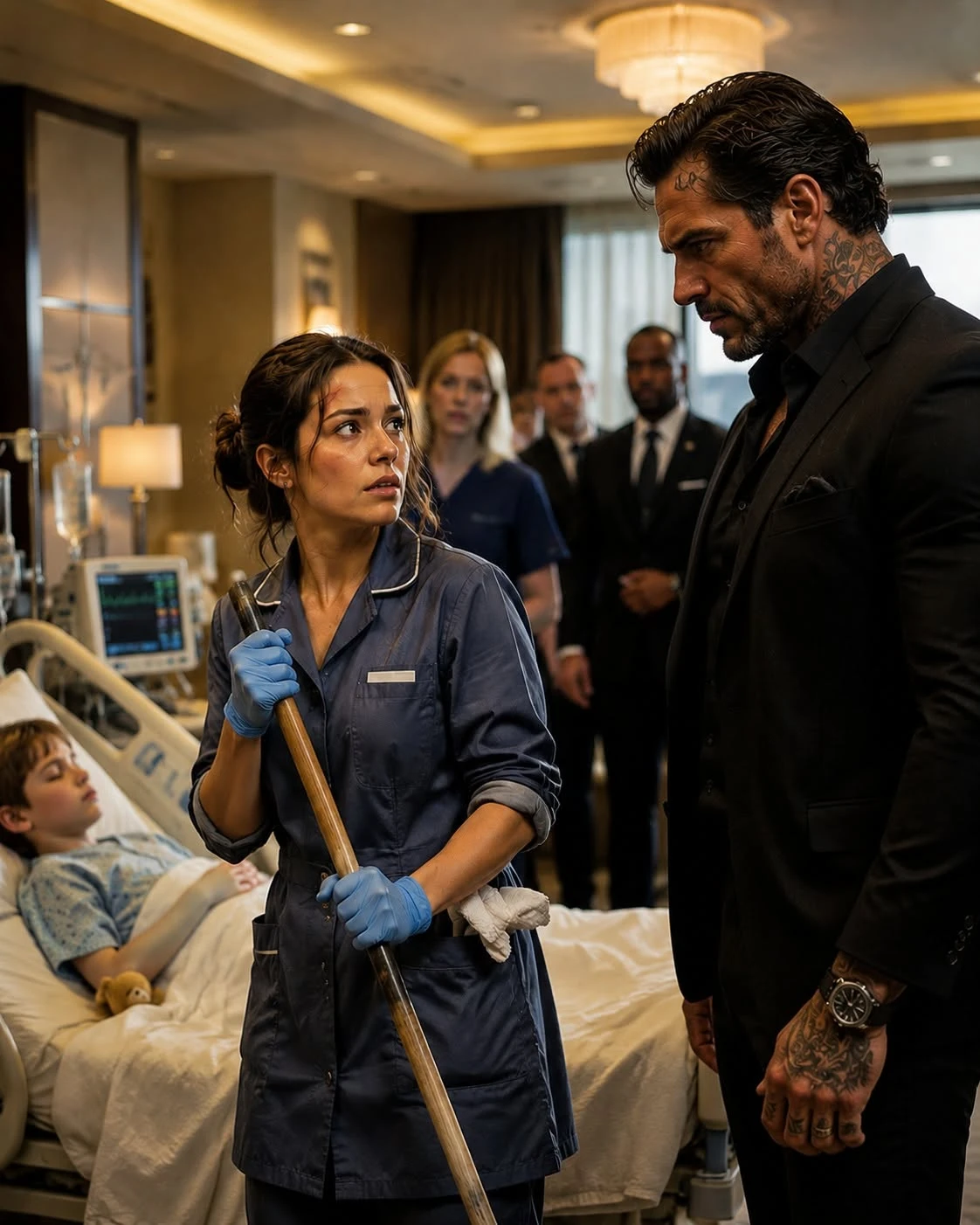
For a moment I thought he was about to discuss schedules, doctors, or security. Instead, he stood there in the dim hospital light looking less like the man who owned half the city and more like a father who had almost buried both his sons.
“I was ready to lose them,” he said quietly. “Not because I didn’t love them. Because I stopped believing anyone could save them.”
I said nothing.
He looked at me then, directly, without the wall he usually kept between himself and the world.
“You walked into my house with one suitcase and more courage than everyone I paid to protect my family.”
My throat tightened.
“I almost listened to him over you,” he continued. “If I had, my boys would still be breathing poison.”
“They’re here now,” I said. “That’s what matters.”
“It matters to me,” he said. “What you did. What it cost you to keep pushing when every person with authority tried to shut you up.”
Then he held out an envelope.
I didn’t take it.
“If that’s a bonus,” I told him, “keep it.”
A faint, tired smile touched his face. “It’s not.”
Inside was a new employment contract, but the title at the top had changed.
Not nanny.
Guardian of Household Care.
Below that, in Nathan’s own handwriting, were seven simple words:
You answer to the children’s safety first.
I looked up at him. “You wrote this?”
“I meant every word.”
For most of my life, I had mistaken silence for caution and caution for wisdom. I had learned to lower my voice in rooms where powerful people spoke over me. I had told myself that surviving was enough.
But standing there outside the twins’ hospital room, I understood something my sister Lena had known before me.
When children are in danger, quiet is not kindness.
It is surrender.
“I’ll stay,” I said.
Not because of the salary.
Not because the mansion was beautiful, or because Nathan Coleman’s name could open or close doors.
I stayed because Jacob and Jonah were alive, and because when they reached home again, they deserved a house that no longer kept secrets in its walls.
A month later, they ran through the back garden under a clean autumn sky.
Not far. Not for long. Their recovery still came in measured steps, with inhalers, checkups, and strict routines. But they ran. They shouted. They argued over a red ball and accused each other of cheating in games with rules that changed every five minutes.
They sounded like children.
Nathan stood on the terrace beside me, hands in his coat pockets, watching them with the stunned expression of a man learning how joy could feel after terror.
“This place used to feel like a fortress,” he said.
I watched the twins race toward the hedges and turn back, breathless and grinning.
“What does it feel like now?” I asked.
He was quiet for a second.
“Like a home,” he said.
And for the first time since I had walked through those iron gates, I believed him.
Other posts