Chapter 5 - EMMA REFUSED MY MONEY
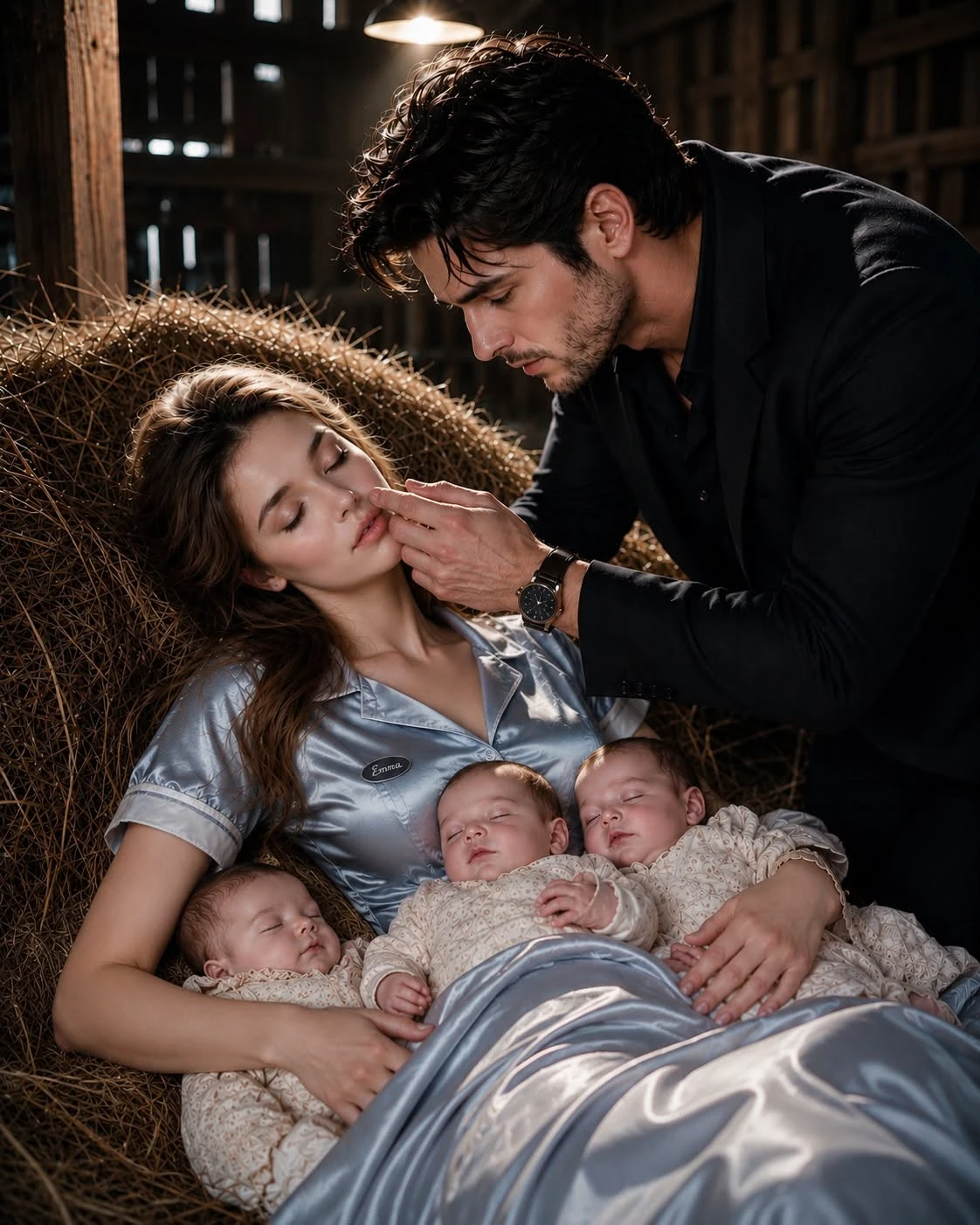
Table of Contents 6
Six weeks after the blizzard, I asked Emma to come to my office.
She arrived wearing clean jeans, a heavy sweater, and the same suspicious expression she always developed whenever someone wealthy offered to “help.”
I had prepared an envelope.
She saw it and immediately shook her head.
“No.”
“You don’t know what’s inside.”
“Money.”
“It could be a heartfelt letter.”
“Is it?”
“No.”
“Then no.”
I almost smiled.
Inside was a check large enough to pay off Emma’s debts, replace her battered car, and give her several years of financial security.
She refused to touch it.
“You carried three infants through a blizzard.”
“I wasn’t charging by the baby.”
“You saved their lives.”
“Then take care of them.”
“I am.”
“Good.”
She stood.
Conversation apparently finished.
“Emma.”
She looked back.
“What do you actually want?”
That question stopped her.
For years, she had moved between low-paying jobs while helping care for her younger sister after their mother died. Her sister was now living with an aunt and doing well, but Emma had postponed everything she once planned for herself.
“I wanted to be a nurse.”
“Wanted?”
“School costs money.”
I tapped the check.
“No.”
I sighed.
“You’re very difficult.”
“I’ve heard.”
Eventually, we reached an agreement she considered sufficiently respectable.
Willow Creek created an employee education program available to all staff members, not only Emma. Anyone who had worked at the ranch for six months could apply for tuition support in fields relevant to healthcare, agriculture, business, or skilled trades.
Emma accepted because it no longer felt like I was buying gratitude.
She enrolled in nursing school the following fall.
She continued working part-time at Ridgeway Diner because, according to her, nobody at Willow Creek tipped properly.
The triplets adored her.
That created complications I was not emotionally prepared to examine.
Sophie reached for Emma whenever she entered a room.
Lily laughed at almost everything she did.
Grace developed an obsession with the blue diner apron Emma still occasionally wore during shifts.
I watched them together and felt something I initially mistook for guilt.
Then fear.
Then something more dangerous.
Hope.
I hated it.
Claire had been dead less than a year.
Emma was younger than me by twelve years.
She had entered my life as an accidental witness on the night I nearly lost everything.
Any emotion between us could become confused with gratitude, grief, rescue, or loneliness.
So I kept distance.
Emma seemed determined to do the same.
That worked for almost two years.
During that time, Willow Creek changed.
I returned to managing the ranch myself.
Not perfectly.
I made mistakes Victor would never have made.
I forgot a supplier meeting because Grace had an ear infection. I arrived at a cattle auction with baby formula dried across my sleeve. Once, I signed a payroll document using a purple crayon because Lily had hidden every pen in my office.
The ranch survived.
So did I.
Claire’s letter remained inside my desk.
I read it whenever grief tempted me to disappear again.
The triplets learned to walk.
Then talk.
Then argue.
Sophie’s first complete sentence was, “Lily took mine.”
Claire would have laughed for a week.
When the girls turned three, Emma finished her nursing degree.
Willow Creek hosted a small celebration.
Halfway through dinner, Grace climbed into Emma’s lap and announced, “You should live here.”
The table became very quiet.
Emma laughed nervously.
“I already have an apartment.”
“Too far.”
“It’s twelve minutes away.”
“Too far.”
Lily joined the campaign.
“You sleep here.”
Sophie looked at me.
“Daddy has big bed.”
I nearly inhaled my drink.
Emma turned bright red.
Several ranch employees suddenly found the ceiling fascinating.
I changed the subject.
Badly.
Later that evening, Emma found me on the porch.
“You looked terrified.”
“I’ve faced lawsuits with less fear.”
She smiled.
We stood quietly overlooking the pasture.
Then she said, “I don’t want them thinking I’m replacing Claire.”
That sentence removed every joke from the moment.
“You aren’t.”
“I know. But they barely remember her.”
“They’ll know her.”
I had made sure Claire existed in our home without becoming a ghost that controlled it.
Photographs.
Stories.
Videos.
The girls knew their mother loved horses, hated mushrooms, laughed too loudly at terrible jokes, and once drove six hours because she thought she had left the oven on.
Emma looked toward the house.
“They love you.”
“So do I.”
The words came out before I could stop them.
Emma became completely still.
I stared at the pasture.
Apparently after years of silence, my romantic instincts had become spectacularly incompetent.
“I didn’t mean—”
“Yes, you did.”
I finally looked at her.
She was crying.
“I’m terrified of getting this wrong.”
“So am I.”
“I loved Claire.”
“I know.”
“I still love Claire.”
“I know.”
I swallowed.
“That doesn’t make this fair to you.”
Emma shook her head.
“You don’t get to decide what’s fair to me.”
I almost laughed because the sentence sounded exactly like something Claire would have said.
Emma stepped closer.
“If you’re asking me to become Claire, the answer is no.”
“I’m not.”
“If you’re asking me to fix you, also no.”
“I’m beginning to regret this conversation.”
That made her smile.
Then she took my hand.
“If you’re asking whether there could eventually be something else…”
She paused.
“Maybe.”
It was the least romantic answer imaginable.
It felt perfect.
We started with dinner.
Then another.
No dramatic declaration.
No instant family.
The girls knew Emma already, but we were careful not to let their affection decide our relationship for us.
For the first time in years, I built something slowly.
Victor had taught me what happened when trust was given without questions.
Claire taught me what happened when love remained honest.
Emma taught me there was room for both caution and hope.
Other posts