Chapter 6 - WHAT THE WOLF BECAME
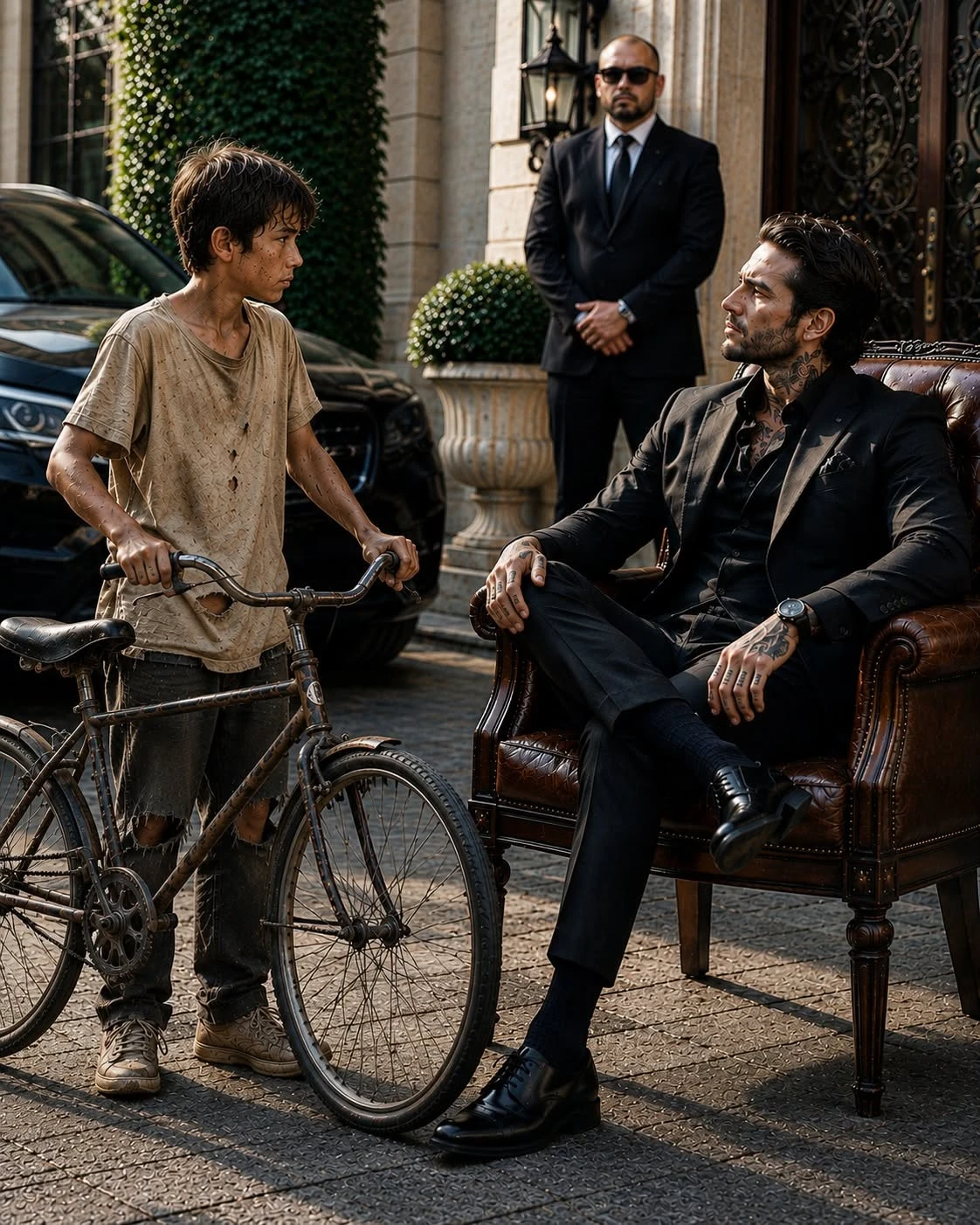
Table of Contents 6
Twelve years later, Noah left for college.
I hated it.
This surprised no one.
Marcus had warned me for months.
“You cannot buy a university closer to the house.”
“I can buy property nearby.”
“That’s worse.”
“I could fund a new campus.”
“Vincent.”
“No?”
“No.”
Noah chose Northwestern.
Close enough that my complaints lacked credibility.
Far enough that he insisted on living in a dorm.
The first night after he left, the house felt enormous.
Bicycle had died two years earlier, old and spoiled beyond reason.
We had another dog now.
Noah named him Helmet.
Still terrible at names.
I sat in the kitchen staring at my phone.
Marcus entered.
“No.”
“I haven’t done anything.”
“You’re thinking about calling.”
“He could be in danger.”
“He’s eighteen.”
“Exactly.”
Marcus opened the refrigerator.
“You raised him to become independent.”
“That was clearly a mistake.”
He laughed.
I eventually called once.
No answer.
I called again.
No answer.
Then a text arrived.
DAD I AM EATING. I AM ALIVE. STOP.
I slept better.
My own life had changed dramatically by then.
The organization once known as Crowe’s empire existed mostly as a collection of legitimate logistics, construction, hospitality, and real-estate companies.
The illegal parts were gone.
Some by choice.
Some through settlements.
Some because men who depended on fear had no reason to stay after I stopped offering it.
I was still wealthy.
Still intimidating according to Noah.
But nobody called me the Wolf in front of him anymore.
Except Marcus when he wanted to embarrass me.
Noah studied social work and public policy.
I asked why.
He said one sentence.
“Kids shouldn’t disappear because somebody forgot a form.”
Rachel’s story stayed with him.
He wanted to work with homeless families, foster children, and parents on the edge of losing custody because poverty looked like neglect on paperwork.
I offered to fund everything.
He refused at first.
Like mother, like son.
Eventually, we created the Rachel Bennett Family Center.
Noah chose the name.
The center provided emergency housing, food, legal navigation, school enrollment assistance, and childcare support.
No giant portrait of me.
I asked once.
Noah stared.
I never asked again.
His mother’s photograph hung near the entrance instead.
Under it:
SHE KEPT HER SON SAFE LONG ENOUGH FOR HIM TO FIND HOME.
The first time I read that plaque, I stood there for almost ten minutes.
Noah found me.
“You okay?”
“Yes.”
“You’re crying.”
“Building ventilation.”
“Inside your eyes?”
“Engineering problem.”
He hugged me.
At twenty-four, Noah became the center’s director.
He earned the position through a board I deliberately did not control.
That annoyed me but made him proud.
One winter evening, he asked me to visit after closing.
A little boy sat in the lobby.
Seven years old.
His mother was upstairs speaking with a housing counselor.
The boy held a broken skateboard.
He stared at me.
“You’re Noah’s dad?”
“Yes.”
“Are you rich?”
“Unfortunately.”
Noah shouted from the office, “Ignore him.”
The boy looked toward the skateboard.
“Do you know how to fix this?”
I smiled.
“A little.”
We sat on the floor.
I tightened a wheel.
Replaced a bearing.
Nothing dramatic.
When we finished, the boy pushed it back and forth.
“Cool.”
Then he asked, “Who taught you?”
That question returned me instantly to Grant Park.
A six-year-old beside a broken bicycle.
Who taught you?
No one.
That had once been my answer.
Now I looked toward Noah working behind the reception desk.
“My son.”
The boy frowned.
“Kids can teach dads?”
“More than dads like admitting.”
He accepted that.
Later, Noah and I walked outside together.
Snow had begun falling.
“You remember our first day?”
“I remember the burger.”
“Of course you do.”
“I remember saving half.”
My chest tightened.
“You never need to do that again.”
“I know.”
He stopped.
“That’s why the center matters.”
I looked at him.
“So other kids know?”
“So they don’t have to save half because they’re afraid tomorrow disappears.”
That sounded like Rachel.
Not words she had written.
Something deeper.
Her son had inherited her understanding of insecurity.
Then Noah smiled.
“You know what’s weird?”
“Everything about you?”
“The first thing I asked you for was one day.”
“You negotiated badly.”
“I was six.”
“You should have requested a week.”
He laughed.
Then became serious.
“Did you really decide to adopt me after seven days?”
“Yes.”
“That’s insane.”
“Yes.”
“What if I had been terrible?”
“You were.”
He shoved me.
I nearly slipped on the snow.
At sixty-three, dignity becomes fragile on ice.
We continued walking.
People sometimes asked whether Noah saved me.
I disliked the question.
Children should not be given responsibility for repairing adults.
Noah did not save the Wolf.
He didn’t cure loneliness.
He didn’t erase the orphanage, the violence, the years when I believed fear was the same thing as respect.
What he did was simpler.
He asked.
Can you be my dad for one day?
I said yes.
Then I discovered being needed and being obeyed were completely different experiences.
One made me powerful.
The other made me responsible.
Responsibility changed me.
Slowly.
Painfully.
Not perfectly.
There were still things in my past I regretted.
People I could not apologize to.
Damage money could not repair.
Noah never asked me to pretend those things disappeared.
He only expected me to choose differently when the next choice arrived.
That became the man I tried to be.
Years after Leonard died in prison, I received a box containing his personal effects related to Noah.
The court had no reason to send them to me.
A former attorney did.
Inside were photographs.
Rachel.
Noah as a baby.
Copies of old legal documents.
At the bottom was one letter Leonard never sent.
To Noah.
I almost destroyed it.
Then I stopped.
The letter belonged to him.
I called.
Noah came over.
I gave him the box.
“Do I have to read it?”
“No.”
“Did you?”
“No.”
He looked surprised.
“You could have.”
“Yes.”
“Why didn’t you?”
“Because it’s yours.”
He stared at me for a long moment.
Then smiled.
“You really changed.”
“Don’t spread that around.”
He took the letter home.
Two weeks later, I asked whether he read it.
“Yes.”
“What did it say?”
He looked at me.
“Mine.”
Fair.
I never asked again.
That moment mattered because twenty years earlier I would have believed love gave me the right to know.
Fatherhood taught me otherwise.
Love was not ownership.
Protection was not surveillance.
Family was not blood forcing access to someone’s life.
It was trust built through thousands of ordinary decisions.
Showing up.
Listening.
Coming back.
One summer morning, decades after our first meeting, Noah and I returned to Grant Park.
I was old enough to complain about my knees.
He brought his daughter.
Emma.
Five years old.
She had a tiny purple bicycle.
No training wheels.
No fear.
Noah held the back of the seat.
“Ready?”
Emma nodded.
He pushed.
She wobbled.
Fell.
Stood.
Tried again.
I watched from the same bench where I had once pretended to be an ordinary man before sunrise.
Emma eventually looked toward me.
“Grandpa!”
That word still felt impossible.
“What?”
“Watch!”
“I’m watching.”
“No, watch more!”
Apparently some things are hereditary.
Noah laughed.
Then he released the bicycle.
Emma kept going.
He stood there watching her ride away.
For one second, I saw the six-year-old boy again.
Oversized coat.
Broken shoes.
Rusty bike.
A child who asked a stranger for something so small because he had learned not to expect anything large.
One day.
That was all.
He got forever.
So did I.
Noah sat beside me.
“You crying?”
“Wind.”
“There’s no wind.”
“Age.”
“That’s not how age works.”
“You sound like Marcus.”
We watched Emma circle back.
No enemies.
No watchers.
No one trying to use love as leverage.
Just family.
I once believed the most dangerous thing a feared man could possess was someone he loved.
I was wrong.
Loving Noah did make me vulnerable.
Leonard proved that.
But vulnerability was not the weakness I had spent my life avoiding.
It was the price of finally having something worth becoming better for.
The Wolf disappeared slowly after Noah came into my life.
Not because I became harmless.
Because I finally understood that fear was the easiest kind of power.
The harder kind was restraint.
Staying.
Choosing differently.
Letting a child grow without needing him to become proof of anything about me.
Emma rode past us laughing.
Noah stood.
“Come on, Dad.”
“Where?”
“Breakfast.”
“I already ate.”
“Grandpa pays.”
Emma shouted that from fifty feet away.
I looked at Noah.
“You’re raising her badly.”
“She learned from you.”
Unfortunately true.
I stood and followed them.
Years earlier, I entered that park because I wanted one hour when nobody needed anything from me.
Then a six-year-old asked for a father.
I thought I was giving him one day.
It took me years to understand what really happened.
He gave me a home to return to for the rest of my life.
THE END
Other posts